
茶 FIRST IMPRESSIONS
茶 REVIEW OF BOOKS & FILMS
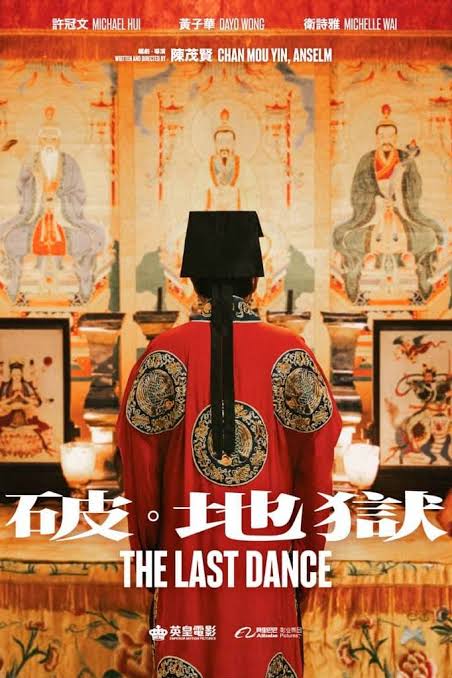
[FIRST IMPRESSIONS] “Anselm Chan’s The Last Dance: The Way We Grieve as Hong Kongers” by Stella Kwok
Anselm Chan (director). The Last Dance, 2024. 126 min.
What happens when two generations of comedians meet in a film about death?
For us Hong Kong kids from the 1980s, Michael Hui was the gold standard before Stephen Chow came along. The same generation then grew up watching Dayo Wong sell out stadiums with his stand-up comedy, the first of its kind in the city.
Anselm Chan brings these two together to explore separation and grief against the backdrop of a rapidly changing city. The Last Dance is about finding closure in the only way we know how as Hong Kongers, through rituals rather than words.
)
The film follows Dominic (Dayo Wong), a fledgling wedding planner turned funeral director, and his journey to earn the trust of his partner, Master Man (Michael Hui), a seasoned Taoist priest. The “last dance” in question is a Taoist funeral ritual known as “Breaking Hell’s Gates”, in which a Taoist priest symbolically enters hell to guide the deceased towards redemption through its ten gates. This ritual is listed as part of Hong Kong’s intangible cultural heritage.
In a culture where we are better known for our swear words than our ability to say “I love you”, rituals become our shared language. Rituals such as embalming and preserving the body of a boy so that his grieving mother can finally put him to rest; dressing a loved one in her favourite jumper for the afterlife because she is afraid of the cold; making medicinal soup for a wayward child; buying your father his favourite treat after an argument.
As Dominic navigates the intricacies of the funeral industry, he realises that the priest’s role is to transcend the dead, while the funeral director’s is to transcend the living.
“The living need their hell’s gates broken too. Living can be hell.”
Among the vignettes of funeral-parlour clients is the overarching story of Master Man’s troubled family. A resentful son, a bitter daughter, and a lonely old man struggle to find their way out of hell, only to be driven deeper into it. The stability of their home hinges on the unspoken rules around the dinner table, and all hell breaks loose at the sight of a cross in a Taoist household. A family of hungry ghosts starves before premium sushi and suckling pigs. Each unspoken word is a hell’s gate they cannot break.
)
In contrast, the growing connection between Dominic and Master Man feels like redemption. The two men bond over the classic Cantonese opera “The Autumn Lament of the Traveller” (客途秋恨). The line “It is hard to meet when we are separated by the breadth of the sky” (今日天隔一方, 難見面) is woven throughout the film as an expression of shared grief and understanding, sung in the melancholic Cantonese narrative singing tradition of naamyam (南音), a distinctive Hong Kong sound. In a city born of immigration and subsequently shaped by emigration, learning to let go, or being unable to do so, is carved into our DNA.
The Last Dance broke box-office records as the highest-grossing Chinese-language film ever in Hong Kong. The film arrived at a time when things are dismantled, forgotten, and even outlawed faster than people can mourn them. Nobody lovingly wraps our collective memories in muslin and lays them to rest in a golden zhennan-wood coffin. Most of us did not even get to say a proper goodbye.
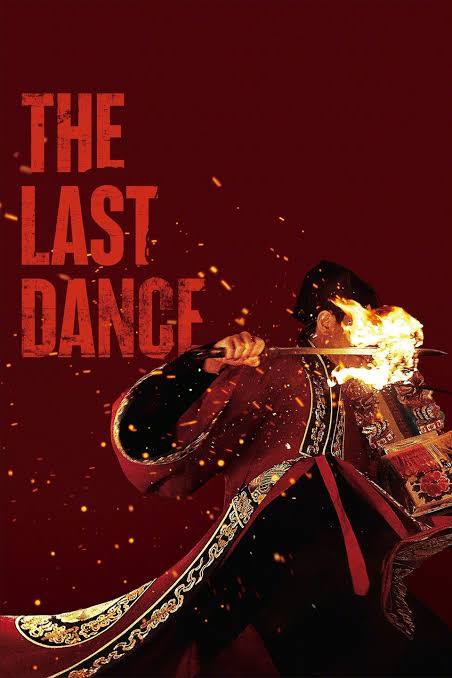
At the climactic end of the film, the estranged brother and sister perform the “Breaking Hell’s Gates” ceremony together to transcend their father and free themselves from their personal hell. We are drawn into this mystical and intimate moment of redemption as the siblings spin in synchrony. At the end, Man Yuet jumps through the fire bearing her father’s paper altar. A flash of burning ash flies from the tip of her sword before fading into the darkness. That last diminishing spark feels like forgiveness, a memory set free, a held breath finally released. She lands on her feet, back in the land of the living, and we know we did not grieve alone.
How to cite: Kwok, Stella. “Anselm Chan’s The Last Dance: The Way We Grieve as Hong Kongers.” Cha: An Asian Literary Journal, 2 Sept. 2026. chajournal.com/2026/09/02/last-dance.

Stella Kwok is a third-culture kid raised in Hong Kong, Singapore and Los Angeles. Her writing explores bilingualism, multiple cultural identities and a lifelong pursuit of belonging. She is a writer by night, a product designer by day and a mother at all times. [All contributions by Stella Kwok.]
 Cha
Cha 