
Editor’s note: In his reflection “A Slower Mode of Time”, Chris Sullivan contrasts urban haste with nature’s unhurried rhythms, weaving cicadas, childhood memories, and captive flamingos into a meditation on suspended instincts, looping time, and the quiet grace of slower living.

[EXCLUSIVE] “A Slower Mode of Time” by Chris Sullivan
The drone of cicada song drifts into the apartment from the wooded hillside across the road. It arrives in waves. Internal chorus and coda mingle, abruptly fade, and restart—reminding me of an internet dial-up connection from 1999. The ebb and flow of their song becomes less discernible as the morning wears on, subsumed by more powerful currents—ones I know well. Twenty floors below, fleets of buses discharge their human cargo at places of employment. My neighbour is chopping vegetables, and another is vacuuming their floor—my ceiling. I succumb to the morning’s gravitational pull and drift out of bed.
I watch people crossing the footbridge from the MTR into office towers—a blur of bodies attuned to globalised time.
My thoughts remain muddled as I wake, still buffering. I think back to when I was young, post-Mum, when my next-door neighbour, Gail, would sometimes drive me to school. I remember sitting in her old car, the upholstery carrying an aged yet intoxicating scent—leather mingled with cigarette smoke—waiting the requisite few minutes for the engine to warm, and watching Skittles—her cat—through the window, perched upon the hot water heater down the side of our house, herself observing the morning, practising her own mindfulness. I think I am trying to be that cat.
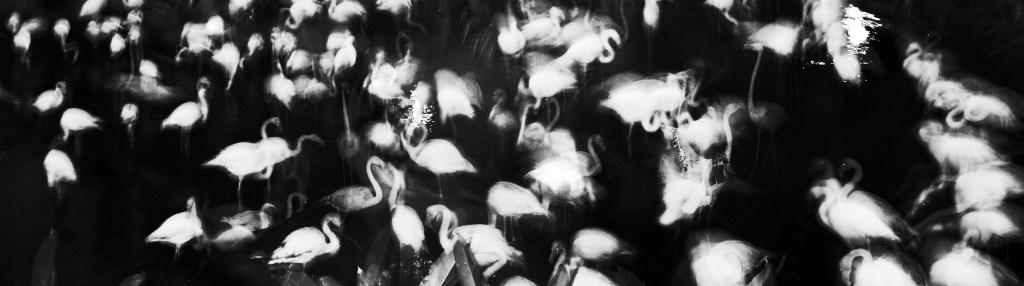
Perhaps that is what I am chasing—a slower mode of time. I think about such modes as I pass by the flamingos in Kowloon Park in the late hours of the evening. The flamingos shift as a cohort, almost imperceptibly, the adults a pinkish-white against the shadows of their enclosure, the younger ones—greyish—blending with the water. I watch them watching nothing in particular, immersed in their own kind of flux. Their own time. Their wings must be clipped. Are they conscious of their innate ability to fly? Do they still carry that instinct? Migration is hardwired into their bodies—into bone, into feather. A seasonal impulse, now artificially suspended. I wonder if they feel the invisible tug of elsewhere while standing in this Tsim Sha Tsui pond.
Perhaps time circles back upon itself in a loop—a repeat button of sorts. Like our earthbound flamingos, migratory creatures with nowhere to go. When I arrive home at night, the cicadas are singing once more. They have reclaimed the soundscape now that the traffic has ebbed and the last tram has returned to the Shau Kei Wan Depot. I open the sliding door. Their song drifts again into the apartment. I resist switching on the air conditioning and sit for a while beneath the ceiling fan. Their arrhythmic chorus prepares me for sleep.

A high-contrast black-and-white photograph of a dense cluster of flamingos at night. Their bodies appear blurred and layered, capturing motion through the camera’s slow shutter speed. Flecks of water glint in the frame, hinting at their movement through the pond. Photograph © Chris Sullivan.
How to cite: Sullivan, Chris. “A Slower Mode of Time.” Cha: An Asian Literary Journal. 14 Aug. 2025, chajournal.com/2025/08/14/slower.

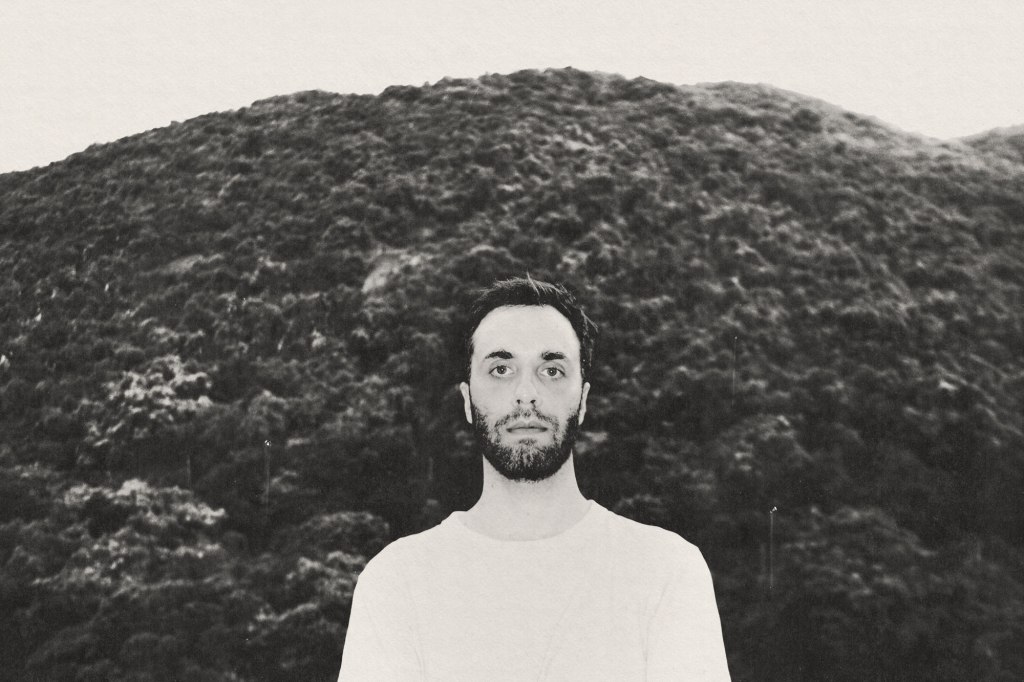
Chris Sullivan is a photographer based in Hong Kong, where he has lived and worked for over a decade. His practice examines compression, mediation, and the limits of seeing. Working primarily in black-and-white photography, he explores whether photographs can do more than document, and whether they might also think. [All contributions by Chris Sullivan.]
 Cha
Cha 