
茶 FIRST IMPRESSIONS
茶 REVIEW OF BOOKS & FILMS
[REVIEW] “How Jhumpa Lahiri’s Interpreter of Maladies Makes Ordinary Moments Unforgettable” by Abhinav Tulachan
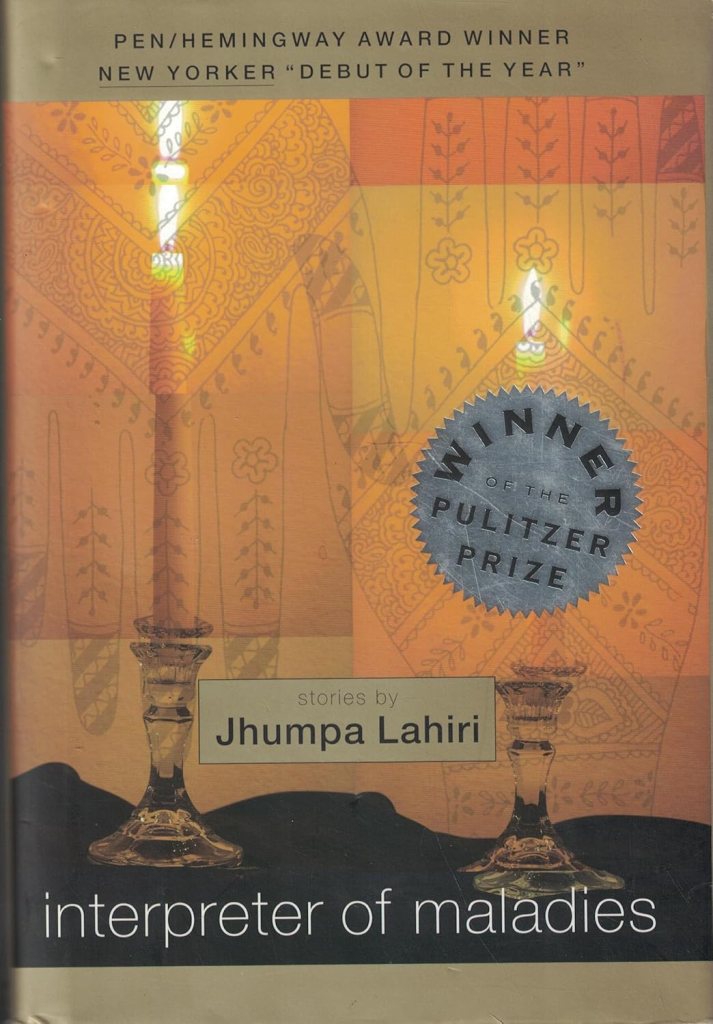
Jhumpa Lahiri. Interpreter of Maladies, Houghton Mifflin, 1999. 198 pgs.
You will find no shortage of stories about people struggling on foreign soil. The pattern is as natural as the way the youth of South Asia, to this day (myself included), leave their homes, their families, and everything they have known, to toil and endure in a distant land, perhaps in search of happiness, which could mean fortune, contentment, and stability, or some combination thereof, or simply out of necessity.
South Asian countries have always had a tendency to drive their youth abroad.
South Asian countries have always had a tendency to drive their youth abroad, having even glorified the practice by instilling within our minds from a young age the belief that success can only be found beyond our borders. I still recall how my own school, like most others in this region, encouraged children to go abroad; I remember one of my teachers saying, “You cannot cultivate a comfortable future here.” Whether such a future can indeed be “cultivated” abroad remains a matter for debate. People can build happy lives abroad, certainly, yet equally there are those who continue to struggle regardless of how much effort they invest in their work. For both, however, the effort often results in a loss of identity, or of home.
The nine stories collected in Jhumpa Lahiri’s Interpreter of Maladies (her debut collection) are, likewise, of people seeking belonging in a world far removed from home.
)
Yet what distinguishes these tales from others is their uniform, remarkable beauty, and I cannot help but note that this observation has already been made by many before me. This is the only word that begins to convey the impression one receives while slowly acclimatising to the pacing and perspectives within these pages, perspectives evoked in so singular a manner that one cannot help but feel moved by the narratives unfolding before one’s eyes.
The best way to illustrate such a feeling is through example. “When Mr. Pirzada Came to Dine” (my personal favourite among the nine) unfolds through the eyes and thoughts of a young girl who learns of a conflict in her homeland through a visiting house guest. Mr. Pirzada, who has left his wife and seven daughters behind to pursue research work in the United States, arrives as a polite, anxious presence in the eyes of our narrator. To her, he is a man who comes for dinner, bringing candy she is uncertain how to feel about, and watches the evening news with her parents, with a gravity the child can sense but not fully comprehend.
The story achieves such singularity, such depth, such remarkableness, through its deployment of perspective. Lahiri chooses a child’s limited vocabulary and attentive curiosity as the lens through which to view the foreign strife suffocating her home. And while the narrator does not understand the technicalities of war, she is shown to grasp the shape of worry, learning to measure a person’s sadness by the way they react to events unfolding on the television:
What I remember during those twelve days of the war was that my father no longer asked me to watch the news with them, and that Mr. Pirzada stopped bringing me candy, and that my mother refused to serve anything other than boiled eggs with rice for dinner…
…Most of all I remember the three of them operating during that time as if they were a single person, sharing a single meal, a single body, a single silence, and a single fear.
And the impact of reading such lines is rendered far, far greater.
Such limited sight gives the book itself a remarkably strong start. This innocent perspective belongs to a child scarcely old enough to comprehend the conflict, yet her attempts to visualise her homeland and its troubles feel so tender; and in that tenderness, Lahiri conveys the effects of political conflict. The result of such a device? A perspective that enlarges rather than diminishes its subject.
)
The titular “Interpreter of Maladies” is equally engaging, offering as it does a fresh perspective, and in turn, a fresh worldview. We follow a driver, Mr. Kalsi, touring an Indian-American family around notable sites in India. The family consists of three young children, a father obsessed with photography, and a detached mother who feels, or rather looks, as though she would rather be anywhere but on this trip.
Now here is the twist: Mr. Kalsi begins to harbour feelings for the mother after she shows interest in his work as a medical interpreter (she calls it “romantic”; he is taken aback, as no one has ever given his work such attention). What follows are moments of him fantasising about exchanging letters with her, striving to capture her attention for even a moment, adjusting the rear-view mirror, arranging his hair, until one seemingly has a scandalous romance unfolding just beneath the surface of this tale of identity and displacement.
Just when the story appears to be heading (pun unintended) towards some clichéd romantic betrayal, one is met with the punchline instead. Mrs. Das, the wife, fully lays bare her soul to this driver, and the secrets she reveals are astonishing, to say the least, entirely out of the blue. I will not spoil the conversation itself (my apologies), but the story once again demonstrates Lahiri’s masterful use of perspective, as she filters the narrative through the eyes of Mr. Kalsi rather than through the family itself, as would be typical of most such stories.
)
In a similarly striking fashion, “The Treatment of Bibi Haldar” took me by surprise in the way it concluded. The story follows the life of Bibi, a chronically ill young woman in India who suffers episodes of seizures and delirium. Her condition is regarded as a curse, yet she longs for marriage, which she considers her only means of treatment, and for the normalcy of a society that has entirely ostracised and isolated her, both physically and emotionally.
In writing this, I found myself stuck for five minutes attempting to find the right term.
The wordplay in this tale was so… I am not sure how best to describe it (in writing this, I found myself stuck for five minutes attempting to find the right term), but it is captivating. Tears are discarded as easily as rubbish on the roadside. Watching the way her relatives treat Bibi Haldar is sad, nigh inhumane; it feels as though it is building towards death by starvation as she is abandoned in utter isolation, yet one cannot help but keep one’s eyes on these pages, perhaps out of curiosity, perhaps out of an obligation to see the story through. At least, that was how it felt to me.
Then, the ending: an unknown visitor enters Bibi Haldar’s house, and within a few months she is declared pregnant, yet no one pursues her assaulter, for Bibi Haldar has never looked livelier than now that she has entered adulthood. Justice is sacrificed for the sake of fulfilment.
All of this unfolds within a few short sentences, and by the end, one is left thinking, “What just happened?” It is this captivating manner of writing that kept me reading through each story, even deep into the night.
)
And this quality continues to shine in a manner few other stories manage, in “The Third and Final Continent.” The plot, at first, may sound unambitious in the grandest sense: a young Bengali man travels from Calcutta to London, then to Boston, finds lodging in an old woman’s house, arranges for his wife to join him, and finally settles into a modest life after parting ways with the elderly lady. Yet it is precisely this modesty that is the point; within these pages, one finds something far more worthwhile.
Watching this young man interact with his hundred-year-old landlady is quietly beautiful; from his fumbling with American manners, to discussing the Moon landing for the umpteenth time, to the precise rituals of the old lady’s day, these quotidian details slowly accumulate into a feeling of belonging within this house. Lahiri’s prose, unsentimental, luminous, and patiently observant, makes that sense of belonging feel both inevitable and earned.
Within the span of only a few pages, she draws the narrator (who, I believe, remains unnamed throughout) and Mrs. Croft, and by extension the reader, into something that feels almost familial. With the narrator, we share their routines, their small irritations, and these tiny moments, insignificant at first but ultimately affecting, until the characters feel as familiar to us as neighbours known for years. This is why, when Mrs. Croft dies, it is the absence of those repetitions that begins to sting first, yet soon one cannot help but mourn the sudden passing of a character known for only a few pages.
The narrator’s own words best convey the feelings I experienced:
I had not thought of her in several months—by then those six weeks of the summer were already a remote interlude in my past—but when I learned of her death I was stricken… Mrs. Croft’s was the first death I mourned in America, for hers was the first life I had admired…
That, I think, is why Lahiri’s stories are so “uniquely beautiful.” Lahiri’s characters are not always unhappy people, per se; most simply feel “lost” in some sense. Rather, they are people finding, or forging, a form of happiness of their own without a complete overhaul of their identities, which many assume one must shed in order to acclimatise to an alien society. But as I have come to learn, and as you may too, contentment often arises from blending old and new, not from a wholesale erasure of the past.
)
I will not say more here, not out of laziness (I would genuinely love nothing more than to sit down and ramble on about this book, which my father has been carrying since long before I was born), but because there is greater joy in beholding these stories for oneself, without the interference of another reader’s impressions. Part of my personal philosophy, my stubborn belief, is that the details one unexpectedly discovers, the single line that makes one catch one’s breath, the small joke that makes one wince, mean so much more when found unaided.
Did I discover a connection, something I found relatable? Yes. And not only I; everyone will surely find something to appreciate within these nine tales. Did it offer a fresh perspective? More than I have found in any other book thus far. This, I have come to realise, is what makes Lahiri’s writing so elegant, so personal, that one cannot help but feel a measure of connection to each of the nine stories. Notice the details these stories trust you with. Then tell someone which line refused to let you forget.
How to cite: Tulachan, Abhinav. “How Jhumpa Lahiri’s Interpreter of Maladies Makes Ordinary Moments Unforgettable.” Cha: An Asian Literary Journal, 5 Jul. 2026, chajournal.com/2026/07/05/maladies.



Abhinav Tulachan is an undergraduate student in the Department of English Language and Literature at Hong Kong Baptist University. He loves reading, writing, and sharing the knowledge he has gained through his academic journey. [All contributions by Abhinav Tulachan.]
 Cha
Cha 