
茶 FIRST IMPRESSIONS
茶 REVIEW OF BOOKS & FILMS
[REVIEW] “Aftershock—When the Report Becomes the Story: Journalism as the Literature of Crisis” by Andrew Barker
Click HERE to read all entries in Cha on Aftershock.
Holmes Chan (editor), Aftershock: Essays from Hong Kong, Small Tune Press, 2020. 93 pgs.
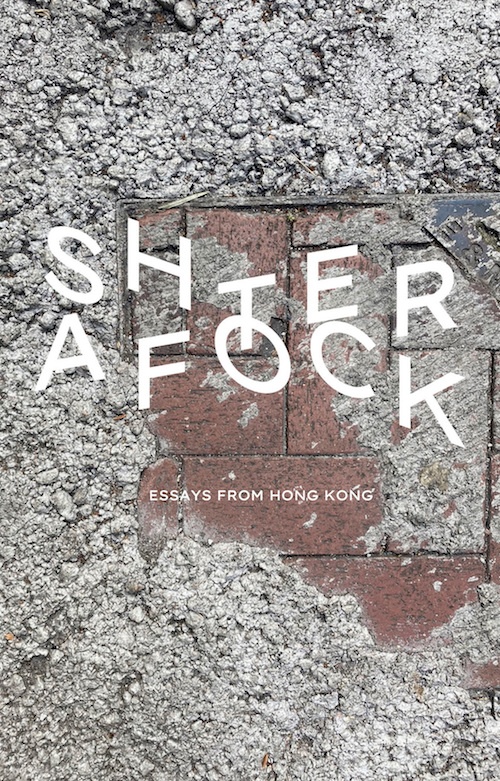
Journalism may well be “the first rough draft of history,” as former Washington Post president Philip L. Graham is often credited with saying, but that honour—and it is an honour—must surely now belong to the television journalist rather than the print reporter. The pen may be mightier than the sword, but it is not swifter than the live news-link, and the capacity to describe, extemporaneously, what one has just witnessed—or is, indeed, witnessing in real time—constitutes history’s first recorded draft before the written word even enters the scene. In comparison, print journalism now carries the reputation of a more studied, more deliberately composed discourse, reminiscent of the reflective pace of the quill-wielders of old. “Print journalism is the second rough draft of history, or the first none-rough draft of history,” lacks, admittedly, the pith of an epigram.
Graham’s oft-quoted phrase places emphasis on the rough in “rough draft.” There must, however, come a point at which the draft is sufficiently refined that we may consider ourselves to be reading actual history—at which moment, so Graham’s reasoning implies, we are no longer reading journalism. Presumably, this moment arrives when the journalist, having moved beyond the immediacy of live broadcast and the reflective pause afforded by print, proceeds further—this time unshackled by the thought-fracturing demands of deadline—and assembles a considered account, an essay born of contemplation and experience. That, I would suggest, is what we have here: a third draft of history, if you will—and I mean that neither flippantly nor disrespectfully, to history, to journalism, or to this small but excellent collection, Aftershock: Essays from Hong Kong, edited by Holmes Chan.
Aftershock: Essays from Hong Kong offers us eleven essays—each never less than compelling—on what it was like to report on, about, and often from within, the Hong Kong protests of 2019. As editor Holmes Chan remarks of the writers: “What unites them is their choice to care: not just as a matter of professional interest, but in a way that opens themselves up to the risk of loss and heartbreak. And what irony it is that, despite their by-lines appearing literally thousands of times, we so rarely hear what they want to say.” Chan’s observation is astute, and one of the strengths of Aftershock lies in its illumination of a lacuna—a gap in literary genre—within the “Books Written On, In, or By People From Hong Kong” shelf: namely, the evaluative essay. Jason Y. Ng, among a few others, has deservedly made headway in this space, and here again we find that direct engagement with Hong Kong’s unfolding realities to which the essay form is so uniquely well suited.
The writing here is good. I say this with full sense of proportion. These essays are crafted by professionals—journalists who quite literally write for a living—and at the sentence-by-sentence, paragraph-by-paragraph level, it shows. Each piece runs to about five pages and often possesses the precision I most admire in poetry. I am not sure whether this says more about my poetic preferences than it does about the essays in Aftershock, but I frequently enjoyed them in the same way I enjoy a fine poem—many of which, by comparison, I rarely find as engaging, well written, or, strangely enough, poetic, particularly in the economy and weight of each word. As with evaluative essays such as these, no one expects poetry to provide—nor perhaps can it provide—a comprehensive presentation of a subject or situation; its task is rather to illuminate a corner of experience. But there are those of us who turn to Hong Kong poetry searching precisely for the kinds of incidents and insights revealed in this book. The comparison of these essays to poems arises in part—and most immediately—from their length, which creates both an immediacy and a pause for reflection that is often demanded by, and usually reserved for, poetry.
The kinds of experiences recounted in Aftershock are often regarded—by many writers, I think—as raw material for a work of fiction or a poem. But this, to my mind, is not merely unfortunate; it borders on being symptomatic of a wider issue within the publishing industry. Or perhaps it is better viewed as an opportunity. What we encounter in Aftershock, both in subject and in execution, is not the draft of something else—it is the thing itself. The question, then, is: why are there not more books of this kind being published?1
Art keeps things alive. Representation preserves presence—and journalism is a form of art. Even those reluctant to call it art must surely concede that there is an art to doing it well. Those of us who read Hong Kong poetry are often—not starved, exactly, but certainly hungry—for the mention of locations and situations we recognise, places we can name. The satisfaction of these seemingly modest desires has done much to lend poetry in this region a sense of relevance and resonance.
How often it is that when I compare fine journalism with fine poetry, it is not the explicitly “poetic” pieces that endure in my mind. And I think I know why. With no accompanying cry of “Look at me—I’m a poem,” the written word is required to stand on its own, unshielded, to justify itself through craft alone. When the incoming scrutiny takes the form of persistent accusations—of bias, misrepresentation, inaccuracy, lack of balance, or even outright fabrication—then some modern iteration of “skill with a quill is undeniable” is most certainly required. Journalists, driven by the pressures of circumstance, and subjected to both public and peer examination, are often compelled to become better writers than poets are ever forced to be. The operative word there is forced.
I do not believe that a statement becomes any less spurious, absurd, or simply untrue merely because it possesses the dubious distinction of being couched in what we call a poem. If anything, given the typically abbreviated form of the poem, its author should be expected to exercise even greater care—that what is written with such elevated nomenclature cannot be punctured by the simple rejoinder: “No, it isn’t!” Confusingly, the opposite often seems true. It is frequently the writers of longer, non-poetic prose who take greater pains to avoid such easy ridicule. The label poem, meanwhile, is too often assumed to exempt its creator from such responsibilities, even while conferring upon the work a supposed artistic gravitas through the accumulation of obscurely presented sentiments—precisely the kind of imprecision a journalist and editor would be at pains to avoid.
As in: “It might sound silly if you read it literally, but you’re missing the point. You must read it as poetry!” To which one can only respond that the first half is soundly reasoned; the second, however, might just as well be the plea of an inarticulate adolescent attempting to pass off confusion as profundity—or it might not be. In the spirit that it might not, we grant the work a serious and attentive reading. Either way, it is journalism that bears the heavier burden of scrutiny. There is no literary defence that says, “Well, it’s journalism—you’re not supposed to take it literally!” And it is, at least in part, our collective recognition of this peculiar artistic hierarchy—with journalism firmly anchored at the bottom—that compels me to say this: work like that found in Aftershock deserves more. More consideration, more recognition, more attention, more publicity. In truth, the word I am reaching for is love. Work like that in Aftershock deserves more love.
***
Among the essays in Aftershock: Essays from Hong Kong, edited by Holmes Chan, there is—almost unbelievably—not a single weak piece. Implausible as it sounds, each one is strong. Naturally, there is no shortage of genuinely compelling subject matter here, but we all know that this alone is no guarantee of a consistently worthwhile result. And yet, that is precisely what this collection offers: sustained quality. I would therefore like to take the opportunity to examine these essays in poetic terms—of form and content. By form, I refer to the manner of their construction: historically relevant evaluative essays. By content, I mean their thematic focus: the experiences of journalists in the 2019 Hong Kong protests. The writing throughout is particularly accomplished—professional is the word I prefer—and I want to allow space for a few of the writers to speak largely for themselves.
Frances Sit’s “New Territories” addresses the lives of front-line protestors and the toll of the movement on Hong Kong families:
And then I saw my aunt giving a thumbs-up to a social media post from a pro-Beijing media outlet, which praised the police for protecting Hongkongers by beating up “cockroaches.” I was infuriated. I texted her: “Are protesters not Hongkongers?” I had hoped to have an open discussion with her, because I felt it would be meaningless if we only talked to people in our circles. To this day she hasn’t replied, and we haven’t spoken to each other since.
A more powerful paragraph to contextualise the fractured familial dynamics of 2019 would be difficult to find. There is poetry in Sit’s prose—abundant poetry: “On the sidewalk, concrete was poured into holes where bricks had been ripped out—to remove an item in the protestor’s toolbox. What an appropriate allegory for Hong Kong, I thought.” That is sharply observed. That is not raw material for something to be written later. That is the something.
Hsiuwen Liu’s “Faces at a Distance” addresses how Hong Kong is perceived in Taiwan. Liu aims to demonstrate the extent to which events in Hong Kong influence Taiwanese elections, and how those events are reported across the strait:
Taiwan has idealised the protests, and we have also idealised Taiwan. We project hope onto Taiwan because it’s our only option, and we wish Taiwan will live up to it. No one and no place needs to be idealised and I wish that Hong Kong’s protests could be understood on their own terms, and remembered for its complex nature and many dimensions.
In its depiction of Taiwan’s Democratic Progressive Party manipulating the situation in Hong Kong to its own ends, the piece illustrates just how decisively “One Country, Two Systems” has failed as a viable template to lure Taiwan into a comparable political structure. Nonetheless, it is perhaps the most pro-Beijing essay in the collection.
Jessie Pang’s “After He Fell” emerges from within the siege of the Polytechnic University. This is journalism in its purest form—the “this-is-what-it-felt-like-to-be-there” type. Pang has a fine ear for the telling quotation: a protester declaring, “I want to write down that I don’t have any severe injuries before leaving the campus. And that I am an optimist and I won’t commit suicide.” Another asserts, “They are throwing down the gauntlet at CUHK. If we don’t fight back now we will never be able to revolt in the future.” Or, “Decide on your own whether you want to leave or not. Use your own feet to decide. There’s no need for discussion.” Or: “If it’s really so unfortunate that we become martyrs, I hope Hongkongers can remember this day and continue to walk for us.” To Pang’s question about the very real possibility of prison time, one student replies: “With one man serving ten years in prison in exchange for the freedom of seven million, I can’t say it’s not worth it.” There is a commendable restraint in Pang’s writing; she is especially adept at gauging her place within the events—knowing she can always leave, recognising the space as a conflict zone rather than a war zone—and that takes poise. But it is the quotes themselves that do the heaviest lifting. Whether they reflect the words of truly selfless martyrs or those labouring under a distorted messiah complex is left to the reader. Either way, we should be grateful for this record—this preservation—of what people actually said and believed in that moment.
Ezra Cheung’s contribution, “Missing Person”, recalls the individual who murdered his girlfriend in Taiwan, thereby igniting the extradition debate that reactivated the protest movement. “Voiceless”, by an anonymous narrator, recounts the experience of being doxxed in China, while the particularly compelling “The Cost of Living” by Nicolle Liu addresses the class and wealth disparities unearthed by the protests.
Holmes Chan’s “The Adversary” addresses the difficulties of reporting on police violence one has personally witnessed, within a news environment that uses the principle of critical balance to neutralise accounts of the very aggression observed. Rachel Cheung’s “A Day’s Work” is similarly revealing in its exploration of the day-to-day challenges of getting a story into print when that story runs counter to the paper’s editorial line. Both are illuminating, demystifying accounts of the realities of contemporary print journalism—accounts that grapple with issues extending far beyond the media landscape of Hong Kong or even China. That said, the fact that these accounts were recorded specifically in and about Hong Kong remains vitally important.
The violence at Chinese University in November 2019 is addressed in “Home Front”, by Sum Lok-kei. “People are not going to forget what happened just because these words are gone,” Sum says, after graffiti is removed from a wall. I am not so sure. I suspect they will. The speed at which people forget is one of life’s grimmer certainties. Consider, for instance, the bushfires in Australia—those vast, catastrophic fires that seemed, in early 2020, to herald the defining global disaster of the year. Don’t remember them? They were real. They were devastating. Google it, if time allows. I say this only partly in jest to underline the point—but only partly. People do forget, and they forget quickly. Much of what happened in Hong Kong in 2019, I fear, will also fade—unless something intervenes to keep it alive in public memory. The continued publication of books containing these essays, stories, or poems can only help.
The finest essays in the collection are by Elaine Yu and Karen Cheung—both of which deserve closer attention.
Yu’s piece, “Feathery Down”, reflects on her experience as a journalist reporting on the protestors not simply as subjects but as children. Her contrast between her own time in school and the school-age youths involved in the protests is poignant and instructive, offering moments of striking, poetic reportage: “From afar, it was easy to call them a black bloc; but up close, they were teens barely old enough to be sent to prison.” Yu also has a talent for metaphor; her essay contains moments of finely tuned poetic resonance: “I kept trying to type **, the ‘valiant’ wing of the movement, into my phone but it always showed up as **, no matter how aggressively I’d stressed the Cantonese intonations.” Indeed, if one were to pick up the book and flip to a single page to decide whether or not to purchase it, I would suggest turning to page 26—it is a brilliant page, and the metaphorical weight there is beautifully judged. (It also occurs to me to wonder whether the particular interpretation available in Yu’s final paragraph is, in fact, intentional.) As any professional reporter should be, Yu was present in the Legislative Council building when it was occupied. Her presence on the ground lends her reflections a palpable authority and authenticity—and the craft with which she renders them affirms her as a writer of professional calibre.
Karen Cheung was not in the LegCo building when it was occupied, as Elaine Yu was; nor was she at Chinese University during the clashes with police, as Sum Lok-kei was; nor at PolyU when it was similarly occupied by protestors and besieged by police, as Jessie Pang was. And yet, paradoxically, her essay “My Fish Tank Days” is arguably the most entertaining in the collection. Reflecting on what it means not to be in the right place at the right time to “get the story”, Cheung’s piece is the least directly connected to the protests, and perhaps the most personal. Although Hong Kong remains the setting, the essay possesses the universality of a finely observed short story—one centred on thwarted enthusiasm and belated understanding. Cheung missed the protests of 2014: “There were those who fought and those who watched, and I was the latter,” she writes. She is acutely aware of “the historical event she brushed shoulders with, to which we were unable to bear witness.” She reflects on her uncertainty: “hesitant about whether I could call myself a Hong Kong journalist, when I had not been involved in what was the biggest political movement of my lifetime.” She works diligently in the field, learning that “decisive moments are not just about coincidence and curiosity, but patience and the willingness to wait.” Eventually, she leaves journalism—only for history to reassert itself. By the time the 2019 protests unfold, she remarks, “Finally, I was at the right place at the right time, but it didn’t seem so important anymore.” The essay is wry, honest, quietly comical. And as Freud once said, “Sometimes a cigar is just a cigar, but a joke is never just a joke.” Cheung’s story suggests that without some form of success, enthusiasm cannot be sustained indefinitely. And notice here how I am already distancing Cheung’s piece from journalism. I am doing precisely what I have argued we should not do—instinctively invoking a literary hierarchy in which journalism, even the evaluative, journalistically grounded essay, is ranked beneath the short story.
Why? Perhaps because it should be. Or perhaps because this is what I, like most readers, have been conditioned to believe. Perhaps the instinct will remain until more evaluative essays of the sort found in this collection are published and read—and valued.
To anticipate a likely question about the volume: none of the essays are strongly critical of the protestors. None side, in any meaningful way, with the police over the students—and a few go out of their way to explain why this is so. Readers looking for an account of the protests from a pro-police perspective will need to look elsewhere—and hope, in doing so, for honesty. Accusations of bias here would be unproductive. These essays are assessments of lived and observed experience. To dismiss what is written, one would have to accuse the authors of deliberate fabrication. And if we do not believe they are lying, then we must extend due credence to what they have written.
“There is no big takeaway, no call to action,” says Holmes Chan of the collection. The book “doesn’t pretend to do anything heroic for Hong Kong.” Heroism would indeed be a bold claim for any literary endeavour. But when I noted earlier a literary genre gap on the “Books Written On, In, or By People From Hong Kong Shelf”, this is precisely the gap I had in mind—a space waiting to be filled by works like Aftershock, written in the form of Aftershock, and offering the kind of content that Aftershock presents.
My call for greater literary validation, recognition, and appreciation of the essay as an artistic form—and for acknowledgement of the sentence-by-sentence, fact-by-fact rigour that the evaluative essayist or working journalist must endure—may well go unheeded. But I remain convinced that there is a readership for collections such as Aftershock: Essays from Hong Kong. And I hope there are publishers willing to try to meet it.
- I can imagine numerous responses to this point, and I do not intend to engage with them here. Financial constraints, publishing realities, and the habits of online readership all offer explanations—but despite these, I maintain that the artistic arena afforded to this kind of writing seldom allows the event itself, and the writer’s ability to express it, a fair contest against the fading hope that others might attend seriously to the finished work. And that is more than a shame. ↩︎
How to cite: Barker, Andrew. “Aftershock—When the Report Becomes the Story: Journalism as the Literature of Crisis.” Cha: An Asian Literary Journal, 30 Jun. 2025, chajournal.com/2025/06/30/aftershock-holmes-chans.

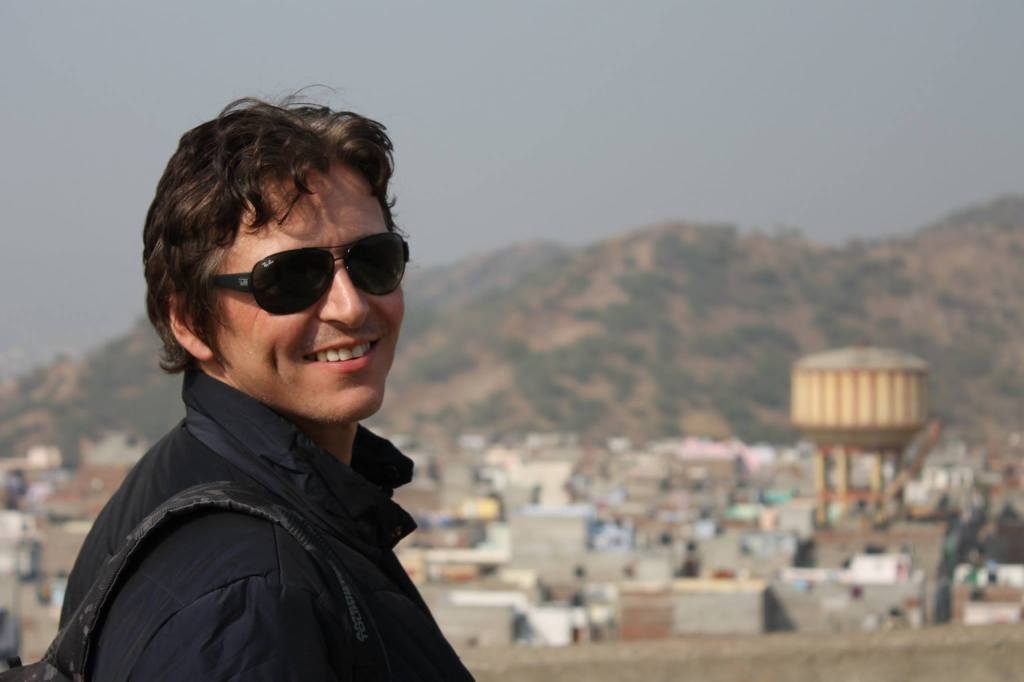
Andrew Barker holds a BA (Hons) in English Literature, an MA in Anglo/Irish Literature and a PhD in American Literature. He currently teaches at Hong Kong University, Lingnan University, and Chinese University. His poetry has been published in Asia Literary Review, Fifty/Fifty, Outloud Too, City Voices, Voice and Verse Poetry Magazine and Cha. Snowblind from my Protective Colouring, his first book of poetry, was published in 2009 with the villanelle-sequence Everything in Life is Contagious performed at the Fringe Theatre as part of The Hong Kong Literary Festival. His books, Joyce is Not Here: 101 Modern Shakespearean Sonnets and Orange Peel: Modern Shakespearean Sonnets 102-203 are available on Amazon, with the third volume Social Room: Modern Shakespearean Sonnets 204 to 305 arriving shortly. He is the operator of the poetry lectures website mycroftlectures where readings of his work can be found. [All contributions by Andrew Barker.]
 Cha
Cha 