

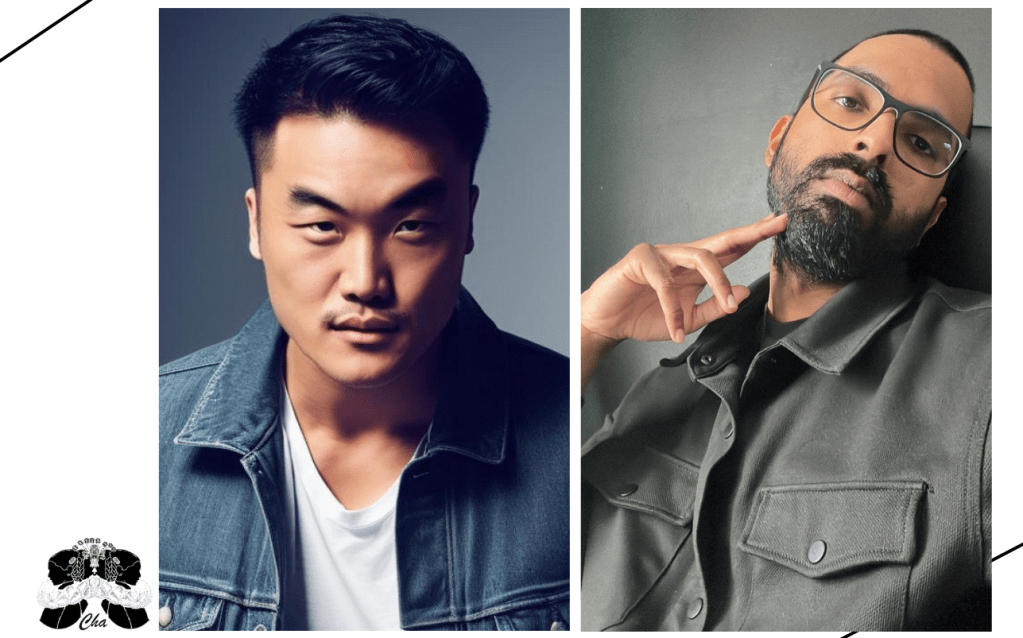
Doua Moua and Nirris Nagendrarajah
Editor’s note: In this interview, Nirris Nagendrarajah talks to screenwriter and actor Doua Moua; they discuss The Harvest, a tender exploration of a Hmong family navigating illness, identity, and intergenerational conflict. Inspired by his own experiences as a caregiver, Moua—who also wrote and produced the film—captures the quiet complexities of love and duty, particularly through the strained relationship between Thai, a reluctant caretaker, and his ailing father, Cher. The film foregrounds the weight of cultural expectations, especially for daughters like Sue, who must carve space for self-determination within patriarchal norms. Moua speaks to the importance of nuanced representation—not only in casting, but in capturing the lived textures of immigrant life through small yet resonant details. Influenced by films such as Minari, The Tree of Life, and Gran Torino, Moua eschews linear storytelling in favour of emotional resonance, crafting a narrative rich in ambiguity and reflection. The interview also touches on themes of belonging, displacement, and the quiet power of familial love, culminating in the assertion that “real love is time.” Looking ahead, Moua is developing Last Exit, a dark comedy about ageing and agency, and DABBA, a horror film examining surveillance and power. At the heart of his work is a commitment to love, storytelling, and the radical act of being seen.

Caylee So (director), The Harvest, 2025. 110 min.

Directed by Caylee So, The Harvest tenderly portrays a fraught period in the life of a Hmong family in California, seen through the eyes of its eldest son, Thai—played by Doua Moua—who returns from the secret life he leads in San Francisco. Thai is an aspiring writer and part-time restaurant worker, burdened by the shame of his unrealised ambitions. He finds himself thrust into the role of caretaker for his younger sister Sue (Chrisna Chhor), his mother Youa (Dawn Ying Yuen), and his exacting father Cher (Perry Yung), who suffers from end-stage renal failure while awaiting a kidney transplant. The household is in disarray; their lives equally so—yet the parents continue to perpetuate the clichés familiar in many Asian households: commenting on their children’s weight, fixating on their future marriages, and imploring Thai to prolong his stay.
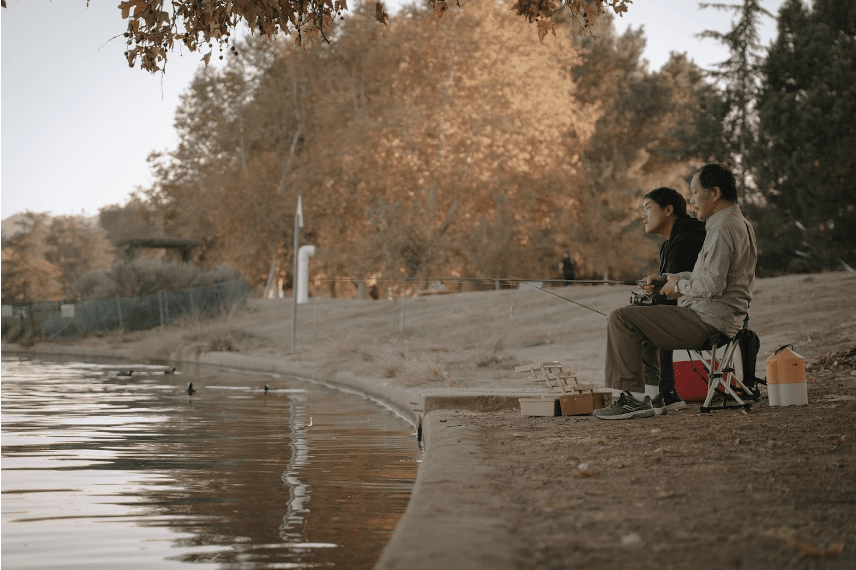
During his time “back home,” Thai reconnects with old friends and a former flame, deepens his bond with his sister, and goes fishing with his father—who, unable to articulate his emotions healthily, resorts to outbursts of violence, acts of self-harm, and grand gestures that distort rather than clarify his good intentions. No matter how near they draw to one another, an unspoken force persists beneath the surface, keeping them apart. Yet what Moua—who also serves as producer and screenwriter—has crafted is a narrative that seems to steer toward familiar terrain, only to subvert expectations with quiet poignancy, offering a fresh perspective on a well-worn theme.
The Harvest is not merely “a love letter to immigrant families,” but also a tribute from a son to his father—a meditation on the nature of unconditional love as experienced by the second generation. We had the pleasure of speaking with Doua about how his own life experiences shaped the content and structure of his writing, the significance of representing Hmong culture, and the things currently bringing him joy.

ORIGINS
◯
Nirris Nagendrarajah (NN): The Harvest opens with a line spoken by your character Thai that offers the audience a lens through which to interpret the film’s events: “Where there’s destruction, there’s birth.” In the family’s backyard, two forms of creation unfold simultaneously—the construction of the father’s chicken coop and the nurturing of the mother’s garden of Hmong herbs, which, in a pivotal scene, is destroyed. In life, such contrasts are ever-present. As the screenwriter, where did the seed of this story originate for you? What cleared the way for this film to come into being?
Doua Moua (DM): The seed of The Harvest grew from a deeply personal space. It stemmed from the tension I experienced growing up—as the youngest son—between a sense of duty and the pull between cultural preservation and self-identity. That line, “Where there’s destruction, there’s birth,” encapsulates a paradox I believe many children of immigrants and refugees will recognise. Growth often requires breaking away from the very foundations that raised you. But in doing so, you are not rejecting your roots—you are reshaping them, making room for something new to emerge.
The father’s construction of the chicken coop, the mother’s tending of the Hmong herb garden—these were their means of maintaining a connection to their heritage. These elements are drawn directly from my own childhood. The garden, in particular, held profound emotional resonance for me—it taught me that what is lovingly cultivated can also be heartbreakingly fragile. Its destruction in the film serves as a metaphor for generational rupture, but also signals a moment of possibility—a space in which healing, understanding, and renewal may begin.
INSPIRATIONS
◯
NN: What were some of the works of art that inspired the film?
DM: Films such as A Better Life and Minari helped pave the way for honest, intimate portrayals of immigrant and refugee families. I was also influenced by The Tree of Life by Terrence Malick, particularly for its spiritual atmosphere and memory-driven narrative. However, it was after working with Clint Eastwood on Gran Torino that a question struck a deep chord within me: When will there be another film written for someone like me?
We live in an era of cultural correctness, where Southeast Asians are often told they cannot portray East Asian roles—yet the reverse seldom receives the same scrutiny. The imbalance is unmistakable. This issue extends beyond opportunity; it touches upon authorship, authenticity, and the urgent necessity of redefining whose stories are deemed worthy of being told.
Music also played a vital role—particularly traditional Hmong songs and the evocative timbres of Southeast Asian instruments—which helped shape the emotional cadence of the film. I aspired to tell a story that was profoundly specific yet universally resonant, one in which beauty and grief coexist—like a garden flourishing amidst construction.
BIG BROTHER, LITTLE SISTER
◯
NN: The older brother/younger sister dynamic is given particular weight here. Thai is protective; Sue chastises him for having left her behind. After a heated argument with their father, they attend a party, where Sue remarks on the similarities between the two stubborn men. “That’s how you see me,” Thai says. “No,” Sue responds—“That’s how you are.” At this moment, director Caylee So captures Chhor in close-up, ensuring the line lands with its intended force: the realisation that our siblings sometimes see us more clearly than we see ourselves. Why was it important for you to develop Sue as a character—especially one navigating the immense pressures immigrant families often place on women, particularly around the question of marriage? “You are the only one that can make your own choices,” her mother later tells her—one of the film’s most powerful and resonant declarations.
DM: The sibling dynamic in The Harvest was something I knew had to feel authentic and nuanced. Growing up, I often found that my siblings were both mirrors and protectors. With Thai and Sue, I wanted to explore how siblings can carry contradictory truths. They can love each other deeply and still clash—precisely because they see each other with such piercing clarity. That line, “That’s how you are,” lands with weight because it isn’t merely an insult; it’s a truth spoken by someone who has witnessed your growth and has been wounded by the same forces that shaped you.
It was vital that Sue be a fully realised character. In many immigrant and refugee families, daughters are expected to be selfless, obedient, and sacrificial. They are often taught—sometimes subtly, sometimes explicitly—that their worth is bound to how well they uphold tradition, often through the lens of marriage. I wanted Sue to resist that. She is caught within that expectation, yes—but she is not defined by it. She is not a rebel for rebellion’s sake; she is a young woman striving to assert her agency in a world that has already prescribed her identity.
That is why the mother’s line, “You are the only one that can make your own choices,” carries such significance. It is quiet yet profound. It shifts the narrative from one of obligation to one of empowerment. It also reflects the mother’s own life—she, too, made choices, though later in life and not without consequence. In that moment, she is not simply advising Sue—she is passing down hard-earned wisdom, hoping her daughter will not have to pay the same price for freedom.
For Sue, and for so many women like her, the journey is not merely about love or family—it is about self-determination. And within the broader fabric of the film, her voice becomes just as central as Thai’s. She is not merely the sister—she is the echo of the mother, the challenge to the father, and the future breaking through the weight of the past.

THE FIGURE OF THE PATRIARCH
◯
NN: The first time we see Cher, the family’s patriarch, he is seated on the living room sofa watching HmongTV, with a framed portrait of General Vang Pao hanging above his head. In a Facebook post, you mentioned the importance of including this image in the film—something that might be lost on viewers unfamiliar with the history of the Hmong people in both China and America. As a second-generation immigrant, however, I found myself relating to other, subtler gestures throughout the film: the belief that expired coupons can still be redeemed; the superstition that eating the tip of a chicken wing dooms one to an unhappy marriage; the blood oath that binds lovers; coat hangers repurposed for keys; the velvet tapestry on the wall; making a wish at 11:11 (I’ve since graduated to 12:34). These details give the film a vivid, lived-in texture. When we speak of representation, I believe it goes beyond casting minorities—it lies in these intimate, culturally resonant moments. Why was that important to you?
DM: That is precisely it. Representation isn’t merely about who appears on screen—it’s about how they live, what they believe, and what they hold dear. For me, it was never enough simply to cast Hmong actors. It’s about inclusivity, about opening the door for other Asian actors to take part in a deeply human story. A story that resists caricature and instead allows us to be whole, complicated people—navigating family, love, grief, and identity. I wanted to draw the audience into a world that felt profoundly lived in, not over-explained. A world where the emotional and cultural logic speaks intuitively to those who grew up within it—and stirs a quiet curiosity in those who didn’t.
The image of General Vang Pao was essential. He is a complex, even contentious, figure—but for many Hmong families like mine, his portrait hung in our homes as a reminder of what was lost, and of the sacrifices made so that we could be here. That photograph was never just a set dressing—it was a quiet political gesture, a symbol of displacement, survival, and reverence. You don’t need to know the entire history to feel the weight of that gaze watching over the characters.
All those small details—the expired coupons, the chicken wing superstition, the tapestry, the wish at 11:11—were never included for the sake of quirkiness. They are drawn directly from my childhood, from my aunties’ homes, my cousins’ beliefs. They root the story in something genuine. These textures tell you who a family is, without a single word needing to be spoken.
I wanted The Harvest to feel like stepping into someone’s home and catching the scent of a dish you’d forgotten you loved, or hearing a language you can’t fully translate but somehow still understand. That, to me, is what representation truly is—not merely being seen, but being felt. Felt through the objects we carry, the stories we inherit, and the small rituals that quietly anchor our lives.
THTHE STRUCTURE OF THE SCRIPT
◯
NN: One of the admirable aspects of this film is its screenwriting, which refrains from providing all the information up front and allows certain events and dynamics to exist off-screen. At the outset, for instance, we hear mention of a broken-down car—its consequences subtly weighing on everyone. Thai’s relationship with Jenny is initially ambiguous, and an encounter with a man and his white boyfriend at the wedding seems significant but is not clarified until much later. There’s even a hospital scene toward the end which left me uncertain as to whether it was real or imagined—something that appears to be a deliberate choice. You ask the audience to be patient, to hold these threads in mind so that, by the film’s climax—when the various plots converge and truths are revealed—it creates a palpable sense of unease and conflict. What was your approach to structuring the drama, particularly with a prologue that we return to so movingly, and a narrative that juggles the characters’ struggles simultaneously?
DM: From the outset, I knew The Harvest wouldn’t follow a conventional linear structure. Life rarely unfolds that way—particularly within immigrant and refugee households, where so much remains unspoken. Silence carries weight. The unsaid lingers. I wanted the film’s structure to reflect this kind of emotional architecture—to capture the tension that builds when things are suspended, not because they are forgotten, but because they are too heavy to confront all at once.
My approach to structure was guided as much by what is felt as by what is spoken. I was asking a certain patience of the audience, because that’s the patience I grew up with—watching family members carry grief, secrets, grudges, and love, all without naming them. The broken-down car, the ambiguity around Thai and Jenny, the quiet discomfort at the wedding—these are designed to hum in the background like emotional static. You may not grasp their full meaning at first, but they shape the atmosphere the characters inhabit.
The hospital scene you mentioned is intentionally ambiguous. I wanted to preserve that liminal space where dreams and regrets coexist—where memory, guilt, and longing begin to blur into one another. I wasn’t interested in offering a neat resolution, because in real life, healing is rarely tidy.
Structurally, the film moves like a spiral. We begin with the prologue and return to it—not for symmetry alone, but because it contains the emotional seed from which everything else grows. As the story widens to encompass the different characters’ struggles, the aim was not to make these plotlines intersect neatly, but to allow them to resonate with one another. When those revelations finally converge, I wanted it to feel earned—like pressure that has been building quietly beneath the surface has at last broken through.
That tension—between what is visible and what is withheld—is where the film’s truth resides.

THE AMERICAN MEDICAL SYSTEM
◯
NN: One of the more sobering realities depicted in the film is that of America’s medical system. There’s a lingering shot of bills and forms that the mother cannot bring herself to address. We watch Thai cleaning up the household’s chaos, assuming the role of primary—albeit reluctant—caretaker. We witness the father’s resistance to treatment, including his return to the facility where he receives dialysis. “What good does it do if I can’t do what I want?” he asks Thai. In one wordless scene, Cher glances at a white woman seated beside him, whose vacant, indifferent stare reflects not hope but something bleaker. What I saw in Yung’s restrained performance at that moment was not despair, but a quiet resignation—a recognition of one’s imminent decline. What was your intention in confronting this aspect of life, one faced by so many? Was it drawn from personal experience, or did it emerge through research?
DM: That part of the story is profoundly personal. I didn’t need to conduct research or interview caregivers—because I was one. My father underwent dialysis, and it was my mother, my sisters, and I who cared for him. We lived it from the inside. We witnessed how the American healthcare system wears people down—not only physically, but emotionally and spiritually. The unending paperwork, the mounting medical bills, the sterile repetition of treatment—there is a quiet cruelty in how impersonal it all becomes.
The scenes with Cher in dialysis are drawn from memory. I remember those rooms, the humming machines, the suspended sense of time. What has stayed with me most was the look in my father’s eyes—not fear, not even pain, but a kind of weary acceptance. The moment where Cher glances at the woman beside him and receives nothing in return—not kindness, not even acknowledgement—encapsulates what I remember witnessing in those spaces. It is a bone-deep loneliness, a disconnection that becomes routine. The line, “What good does it do if I can’t do what I want?” is something I heard, in various forms, from my father and from others enduring similar circumstances. There’s a heartbreaking dissonance between surviving and truly living—and that question sits at the heart of the film’s emotional truth.
For Thai, stepping into the role of caretaker is not about saving his family—it’s about being present, however briefly, in a moment that matters. Like many children of immigrants and refugees, he is suspended between the demands of duty and the pull of his own life. This act of caregiving—hesitant and fleeting though it may be—is his way of offering a reprieve, a moment of relief, a breath of life before the weight returns. It’s not heroic. It’s human. And it reflects the quiet, often invisible sacrifices so many of us make without recognition or reward.

A SENSE OF BELONGING
◯
NN: While not a direct critique, the film quietly illuminates the ways in which certain lifestyles can isolate individuals. At a party celebrating Freddie and Jenny’s wedding—where shots are taken and small talk exchanged—Thai seems out of place, just as he does at the wedding itself, where he remains indoors with the aunties, rocking a baby to sleep rather than socialising with the men drinking whisky. Sue, whose home life is fraught and volatile, also finds herself distanced from her peers at a party. Towards the end, Cher—having made his decision about whether or not to accept his son’s way of life—is visually excluded from a warmly lit scene in which the rest of the family appears at ease. As immigrants, these lifestyles are not ones we were born into, yet many of us come to accept them as givens. Whether it’s the mother, the sister, or Thai, you’ve allowed each character their own sense of liberation in relation to the desires of the patriarch, who—as the mother puts it—is neither good nor bad. Where do you believe minorities can find a sense of belonging?
DM: Belonging is complex, especially for those of us who inhabit in-between spaces. As immigrants, refugees, or the children of both, we grow up straddling two worlds—one shaped by the traditions and values of our origins, and the other defined by the culture just beyond our doorstep. That duality can be deeply isolating. You become a shape-shifter, constantly adapting, always seeking a place to fit—yet never quite certain whether you truly belong.
In The Harvest, I wanted each character to negotiate that isolation in their own way. Thai feels estranged in the very places where connection is supposed to come easily. At the party, the wedding, even within his own family. He ends up in the kitchen, rocking a baby beside the aunties—not because he’s expected to, but because that’s where he feels safest. Sue experiences a similar dissonance. Her friends dance and laugh around her, but their carefree energy only underscores how unmoored she feels. And Cher, the patriarch, is left quite literally outside the frame of joy—watching from a distance as the family moves forward without him. That choice was deliberate.
It serves as a visual metaphor for how certain belief systems—when held too rigidly—can estrange even those we love most. Yet I also wanted to offer each character some measure of quiet liberation. For the mother, it’s the courage to voice a truth long buried. For Sue, it’s choosing herself over inherited expectations. For Thai, it’s showing up for his family in his own way, even when it doesn’t conform to tradition. These moments of release are subtle, but they matter. They suggest that belonging doesn’t have to be dictated by others—it can be defined from within.
As a storyteller, cinema has been one of the only places where I’ve ever felt a true sense of belonging. Not always within the industry itself, which has often treated underrepresented communities as if there’s no audience for our stories. But in the act of storytelling—in the process of creating—I’ve found freedom. I want The Harvest to stand as proof that Asian stories are not monolithic. We contain multitudes. We are capable of telling deeply specific narratives that still speak to universal truths—love, grief, family, forgiveness. Stories that, at their core, remind us that we are more alike than different.
Cinema is where I can bring all the parts of myself—cultural, emotional, generational—into something whole. That is what I hope The Harvest offers to others as well. Not a blueprint for belonging, but a mirror for those who’ve been told, whether overtly or silently, that they don’t.
“LOVE IS TIME”
◯
NN: “Real love is defined by the sacrifices we make,” Jenny says to Thai. “It’s a choice. It’s not an obligation… love is time.” And perhaps the act of creation is among the greatest acts of love. With so many devastating events unfolding around the world, it can be difficult to find joy—but the film ends on a hopeful note that gently reorients us: “The nature of a son is love.” To conclude our conversation, Doua, I wanted to ask what you are loving these days—and now that The Harvest is finally being released into the world, what you’ve chosen to work on next?
DM: Lately, I’ve been learning to love stillness. After carrying The Harvest for so long, finally letting it go feels like coming up for air. These days, I’m leaning into presence—sharing the film with others, and allowing myself to sit with the emotions it brings forth.
At the moment, I’m working on a new screenplay titled Last Exit. It centres on a fiercely independent woman facing terminal illness, who orchestrates one last, chaotic reunion with her lifelong friends. Together, they stage an unhinged “kidnapping” in an attempt to save one another from the futures they fear most—loneliness, nursing homes, and the slow fade into irrelevance. It’s a dark comedy with a big heart—my love letter to my mother and her late sister. A story about friendship, ageing, dignity, and the freedom to leave this world on your own terms.
I’m also developing a horror film titled DABBA, which explores surveillance, power, and morality through the eerie prism of a mysterious delivery app. It’s a very different tone—but like all my work, it’s grounded in human behaviour and the difficult choices we make under pressure.
At the heart of it all, I keep returning to love. Love that disrupts. Love that haunts. Love that liberates. Whether through comedy, horror, or quiet family drama, storytelling remains the way I try to make sense of the world—and offer something meaningful back to it.
I hope The Harvest resonates with everyone who sees it. It’s a story grounded in universal emotions—grief, healing, identity, and family. But beyond that, I hope people support it, because that support becomes data. Data we can bring back to the industry to challenge the outdated notion that stories from underrepresented communities are not commercially viable.
We know that isn’t true. Our stories matter. Our audiences are here. And the more we show up for each other, the harder it becomes for anyone to look away.

How to cite: Nagendrarajah, Nirris and Doua Moua. “Love Is Time: A Conversation on The Harvest.” Cha: An Asian Literary Journal, 20 Jun. 2025, chajournal.blog/2025/06/20/the-harvest.


Nirris Nagendrarajah (he/him) is a Toronto-based writer whose work has appeared in paloma, Polyester, Fête Chinoise, In the Mood Magazine, Tamil Culture, in addition to Substack. He is currently at work on a novel about waiting. [All contributions by Nirris Nagendrarajah.]

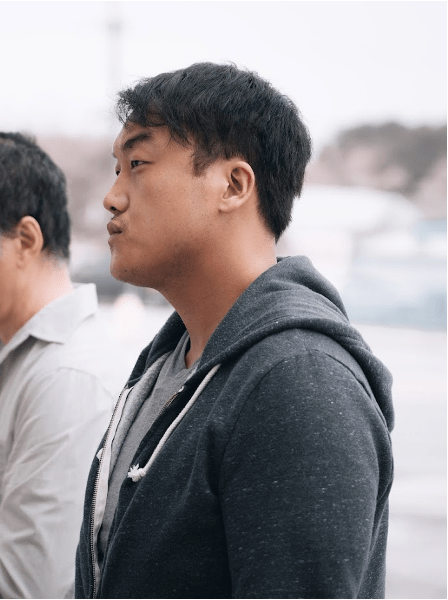
Doua Moua is best known for his breakout role as Fong/Spider in Clint Eastwood’s Gran Torino and as Po in Disney’s live-action Mulan, directed by Niki Caro. His television credits include Blue Bloods (CBS), The Naked Brothers Band (Nickelodeon), Michael & Michael Have Issues (Comedy Central), The Captive (Sundance Channel), and One Bad Choice (MTV). On stage, he appeared in Richard Greenberg’s Take Me Out, in which The New York Post praised his performance as “terrific”. An award-winning author of the children’s book Today is Different, Doua is a passionate storyteller committed to amplifying underrepresented voices. His screenplays have received recognition on the CAPE List, as a semifinalist for the Nicholl Fellowship, and among the Top 50 on Launch Pad. Through both his acting and writing, Doua continues to champion immigrant and refugee narratives—using storytelling as a means to shift cultural paradigms and create space for marginalised communities in film and television.
 Cha
Cha 