


Chris Song and Simona Gallo
Dwelling in Tongues
◉ Part I—”Hong Kong & Poetry”
◉ Part II—”A Translingual Self and The Art of Self-Translation”

Editor’s note: This is the second in a two-part series of interview entitled “Dwelling in Tongues: A Conversation on Language, Identity, and Self-Translation” between Simona Gallo and Chris Song. In this conversation, “A Translingual Self: The Art of Self-Translation”, Song reflects on the fluid boundaries between languages, the formative role of self-translation, and his evolving poetic practice across Cantonese, Mandarin, English, and Chinese dialects. He challenges the notion of linguistic fidelity, explores aesthetic freedom, and considers language as both companion and creative medium.
Simona Gallo
You were born into a diglossic environment, in which Cantonese constitutes your mother tongue, though not the standard language. What is your relationship with these two languages now? Does a certain hierarchy of affiliation exist?
Chris Song
Language politics manifests itself in a distinctive way within my family. My grandfather hailed from Hebei province and spoke Mandarin Chinese. He never acquired Cantonese, even after settling in Guangdong, where my father was born. My father adopted a local li dialect, which bears similarities to the Minnan dialect. My mother is a native speaker of this local variety, but she made an effort to learn Cantonese after marrying my father and has always spoken to me in Cantonese. She perceived Cantonese to possess higher social prestige than the local dialect within her social milieu.
Mandarin retained a certain respect within the family, yet socially, it was regarded as the language of outsiders—northerners, drifters, beggars from the north. Thus, while Cantonese is my mother tongue, I also began acquiring Mandarin from as early as I can remember. My late grandfather was the sole Mandarin speaker in the household, and he bore a certain solitude because of it. Mandarin remains my only linguistic connection to him.
Personally, I do not perceive a strict hierarchy between the two languages, though my spoken Cantonese far surpasses my Mandarin. I have also adapted to the variety of Cantonese spoken in Hong Kong. Although Mandarin and Cantonese are relatively similar in formal written form, it is always the voice of Cantonese I hear when I write.

Simona Gallo
You have been “residing” in English for some time now, inhabiting it both in your personal and professional life. Do you find that English offers a hospitable space for your aesthetic sensibilities?
Chris Song
Like many who learned English as a second language, I initially struggled with it, but gradually discovered in English a space where I could write with ease—a space I could not find in Chinese. When I began writing poetry, I found it difficult to compose lines. Chinese, as an ideographic language, encourages the perception of reality through images, yet it presents challenges for beginners attempting to write poetry, particularly modernist poetry, which tends to become either excessively verbose or starkly minimalist. I belonged to the latter camp, gripped by a fear of writing anything superfluous.
This sense of self-restraint did not surface in the same way when I wrote in English. Instead, I found myself able to articulate my thoughts more freely. In a sense, writing in English illuminated my thinking in the act of composing poetry—and it still does. On the one hand, it marked the first step in my becoming a poet; on the other, my instinctive restraint in language aligns my aesthetic with both Chinese and Western modernist poetics.
At first, I believed this was the result of inspiration from Western Imagism, but I later realised it also enabled the expression of intricate and latent spatial relationships between images—resonant with classical Chinese poetry and the nature of the Chinese language itself.
Simona Gallo
Many translingual authors perceive a shift in the inner self when inhabiting another tongue—in that the new language may offer an opportunity to confront and unveil one’s own Otherness. Is this true for you as well?
Chris Song
It would have been so compelling to say “yes” to this—but unfortunately, no. Rather than feeling that I live in languages, I feel that languages live in me; thus, I do not perceive within myself a self that can be divided by tongues. This is not an egoistic claim, but quite the opposite—an informed, reflective realisation.
My grandmother had Alzheimer’s. In the final years of her life, she appeared to have forgotten all other languages and dialects except for her mother tongue, ai dialect (similar to Hakka), which none of the other family members could understand. She was profoundly lonely in those years. It made me realise that languages remain with us only for a time—they accompany us, but eventually, they depart. I live with languages, rather than in them.
To be a translingual author is not to experience a divided self, but rather to gain the privilege of more deeply understanding the self’s relationship with language—not as fragmented, but as richly intertwined.
Simona Gallo
When did you start translating yourself?
Chris Song
More than fifteen years ago, I began translating myself when I first started writing poetry. I was a university student at the time, majoring in English. My mentor was Steven Schroeder, an American poet, who encouraged me to write poetry and to translate my poems from whichever language I chose.
Simona Gallo
How often do you translate yourself? From which languages?
Chris Song
During the first ten years of writing poetry, I translated almost all of my poems. I would typically compose the English version first, then translate it into Chinese. At a certain point, however, I found myself writing more frequently in Chinese than in English.
That said, the act of writing in both English and Chinese has, at times, become an integral part of the creative process itself. The two versions influence one another—I revise each in light of the other until I am satisfied with both. In such instances, it becomes difficult to determine which version is the original.
Nonetheless, I do not always publish the poems in both languages.
Simona Gallo
Why do you translate yourself? Why don’t you always translate yourself?
Chris Song
In the beginning, no one else translated my poems for me. 😊 Translation also became one of the ways through which I learned the craft of poetry. During my MA, my mentor Christopher Kelen encouraged me to study poetry through the lens of translation. I gained a great deal from translating both others’ and my own poems.
About six years ago, I developed a particular poetics centred around the complex spatial relationships of images in the Chinese language—relationships that often make the poems challenging to translate. To bridge this, I would send my work to my friends Lucas Klein and Tammy Lai-Ming Ho for translation into English.
Simona Gallo
How important is creativity in your poetics of self-translation? How important is “fidelity”?
Chris Song
I don’t consider “fidelity” to be of particular importance. While the versions are usually faithful to one another by the time they are published, they often diverge significantly during the creative process. This divergence allows the poem to come into being—and enables the versions in the two languages to eventually converge, not as a poem and its translation, but as a singular poem realised in two tongues. That is the ideal. In any case, the versions need not be faithful to each other.
Simona Gallo
How important is the intended audience in your translating process?
Chris Song
I do not write or translate with an intended audience in mind. I find the utilitarian mindset of tailoring creative work to a presumed readership antithetical to the spirit of poetry. For me, writing poetry is a noble—even virtuous—undertaking. I do not concern myself with who might eventually read the poem, nor do I allow such considerations to influence the act of writing—unless, of course, the poem is dedicated to someone.
How to cite: Gallo, Simona and Chris Song. “A Translingual Self & The Art of Self-Translation.” Cha: An Asian Literary Journal, 11 Jun. 2025, chajournal.blog/2025/06/11/translingual.

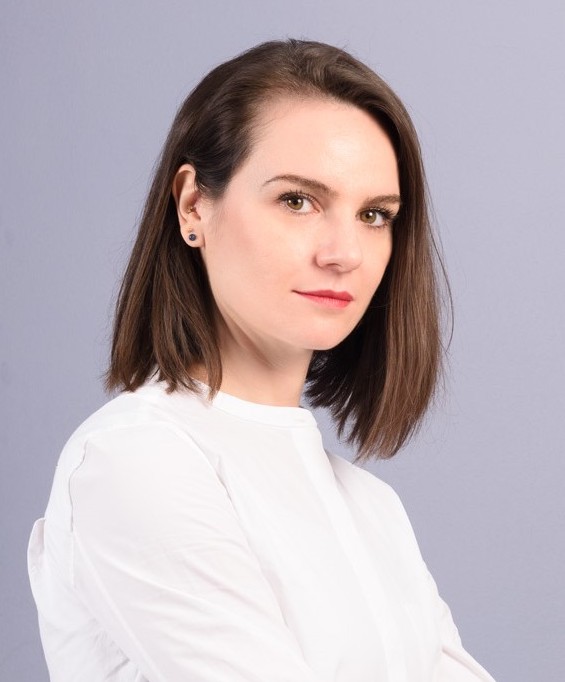
Simona Gallo is Associate Professor of Chinese Studies at the University of Milan. She specialises in contemporary Chinese and Sinophone literatures, with her literary research closely intertwined with translation and cultural studies. Her publications focus primarily on cultural translation, self-translation, and contemporary Sinophone poetry—areas that now constitute the core of her scholarly interests. She is the co-editor of Mother Tongues and Other Tongues: Creating and Translating Sinophone Poetry (Brill, 2024), and currently leads the EU- and MUR-funded project Re-visualising the ‘West’: Geo-literary Images of Europe in Contemporary Sinophone Writings. [All contributions by Simona Gallo.]


Chris Song is a poet, editor, and translator from Hong Kong, and is an assistant professor teaching Hong Kong literature and culture as well as English and Chinese translation at the University of Toronto. He won the “Extraordinary Mention” of the 2013 Nosside International Poetry Prize in Italy and the Award for Young Artist (Literary Arts) of the 2017 Hong Kong Arts Development Awards. In 2019, he won the 5th Haizi Poetry Award. He is a founding councilor of the Hong Kong Poetry Festival Foundation, executive director of the International Poetry Nights in Hong Kong, and editor-in-chief of Voice & Verse Poetry Magazine. He also serves as an advisor to various literary organisations. [Hong Kong Fiction in Translation.] [Chris Song & ChaJournal.]
 Cha
Cha 