
📁 RETURN TO FIRST IMPRESSIONS
📁RETURN TO CHA REVIEW OF BOOKS AND FILMS
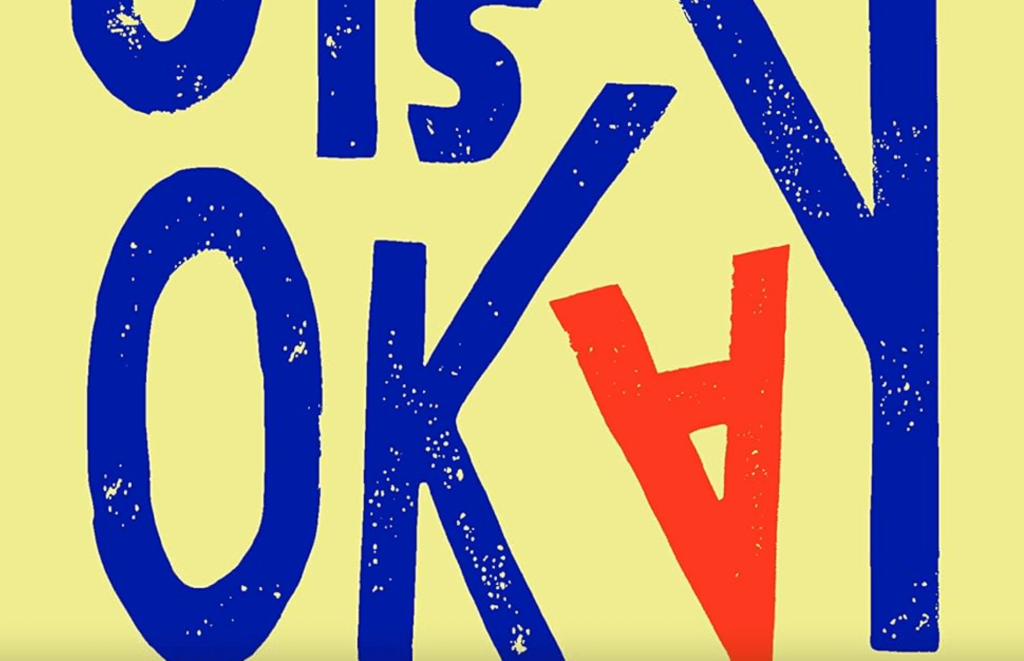
Weike Wang, Joan Is Okay, Penguin Random House, 2022. 224 pgs.

Joan is Okay, the sophomore novel by Weike Wang, opens with the line: “When I think about space, I think about space, how much space a person takes up and how much use that person provides.” Joan, the eponymous narrator, conceptualises space as a relational construct—one tied to entitlement and utility. In contrast to her diminutive stature (five feet), Joan’s academic credentials are described as “large and framed”—though, as she remarks, “[she doesn’t] carry them around.” The novel foregrounds the ways Joan is persistently interrogated, particularly by her patients: “He asked how old I was. What schools had I gone to, and were they prestigious? Then were were my degrees from these prestigious schools?” This passive-aggressive scrutiny becomes the lens through which Joan introduces herself to the reader, through her experience of being incessantly challenged—by patients, coworkers, family members, and even her neighbour.
Set just before the COVID-19 lockdown in March 2020 at “West Side Hospital” in New York City, Joan is Okay presents a protagonist who calls to mind Woo Young-Woo from the Netflix series Extraordinary Attorney Woo. Both Joan and Young-Woo are perceived externally as genius, emotionally reserved workaholics. Yet their interior lives—revealed only to those who draw close—are marked by eccentricity and depth. That, however, is where the resemblance ends. Joan is not “cute” but dispassionately pragmatic, and her modus operandi is solitude—something she values deeply. Her upbringing is weighted with the complexities of the Asian-American experience: poverty, familial discord (frequent arguments between her parents were the norm), and patriarchy. Unlike the episodic momentum of Extraordinary Attorney Woo, Joan’s journey unfolds in her quiet, methodical embodiment of the “model minority”—stoic, affectless, and obsessively devoted to work. She craves “everybody’s hours” (52), and is so removed from discourses critiquing capitalism that she utters tone-deaf remarks like, “Cogs were essential and an experience that anyone could enjoy,” in response to a colleague’s discontent at being “a cog.” Where Extraordinary Attorney Woo foregrounds themes of social justice and moral aspiration, Joan is Okay resists such transcendental arcs.
At least, that is how Joan is initially perceived—the sole family member who missed all the calls because she was “busy,” even if that busyness was self-imposed. In her place stands an unapologetic Joan, the dependable colleague everyone turns to when seeking a schedule change. She carries a muted detachment from pain, choosing not to reveal that she speaks Chinese (“to avoid any confusion”), nor that “we’d been poor” (because it “meant admitting to having felt less, and thus having too much to prove”). Her relentless work ethic is traced back to chī kǔ—a defining Chinese value: the ability to endure hardship without complaint. In many conventional Western novels, the plot often resembles a hero’s journey, where adversity leads to moral or spiritual growth. In Joan is Okay, by contrast, the narrative arc is one of relentless repetition—Joan working day after day, in the belief that the white, clinical space of the hospital is where she truly belongs. When asked by the hospital director why she refused to take a mandatory six-week paid leave, Joan replies—surprising even herself:
Director, the first time I put on my white coat, it felt like home. From having moved around so much and with no childhood or ancestral home to return to, I didn’t think myself capable. I didn’t prioritize home or comfort, because if everyone did, then immigrants like my parents, brother, and sister-in-law couldn’t exist. Home was not a viable concept for them until later, and it wasn’t a concept for me until the day I put on that coat, this coat. I pulled at my white lapel to show him. From then on, I knew that my occupation would become my home. To have a home is a luxury, but I now understand why people attach great value to it and are loyal to defend it. Home is where you fit in and take up space.
In this sense, work has evolved beyond a mere coping mechanism to become the very telos of Joan’s existence. She works to the exclusion of texts from her brother, mother, and father; and while she decries the materialism of her brother, Fang, and his wife, she has no hobby or interest outside the sphere of her profession. Joan internalises her mother’s assertion: “A woman must make her own money, because without money there is no power, and a woman must have power.” Yet her conception of power amounts to overseeing her hospital unit—an authority undercut by her disconcertingly limited recall of individual patients. Indeed, patients themselves receive minimal narrative attention, with one notable exception involving an iPad compared to a Robot Vacuum—devices that become, in Joan’s world, the millennial equivalents of a child, a partner, or a pet. Joan resists the misogynistic projections placed upon women past the age of thirty: “Once I passed thirty, many things had, according to some, become my surrogate child. If I bent down to admire a dog around Tami, it became my child. If I stared too long at a clock, it became my biological clock. Once I passed thirty-five, the frequency of child references doubled.”
In contrast to her socially ambitious elder brother, Fang, Joan finds his insistence on a traditional notion of “home” suffocating. Her sense of purpose lies outside the domestic sphere—in her professional identity at the hospital. She is, as she might put it, as happy as a bee in its hive, even if the institution sees her less as a whole person than as a valuable, replaceable asset.
Perhaps, though, that is the point—that readers may live their lives, and Joan may live hers. Over the course of the novel, Joan navigates the death of her father and the unfolding COVID-19 pandemic, ultimately forging a path of her own—one not contingent on a surrogate child, a partner, or indeed on anyone at all. She reflects on the meaning of the Chinese transliteration of her English name: Jiù (就), fourth tone, twelve strokes, signifies “at once,” “right away,” or “moving toward.” Ān (安), first tone, six strokes, means “peace”—or, broken down, a roof (宀) sheltering a woman (女). What this woman does beneath the roof is unknown. She may be joyful or sorrowful, diligent or idle—but within that structure lies serenity and ease. Jiù-ān (就安), then, is simply peace—or a woman in a house.
And so, we find Joan where she is: in her apartment with her Robot Vacuum, in the annex of Fang’s mansion in Connecticut, or at the hospital. “Okay” implies acquiescence, approval, or quiet acceptance. At the end of Joan is Okay, there is no triumphant catharsis, no exuberant crescendo—such emotions are not consonant with Joan’s disposition. Instead, there is something more subtle, more quietly profound: a movement towards her own form of peace, achieved through perseverance and work.
How to cite: Troy, Tiffany. “The Telos of Toil: Reading Weike Wang’s Joan is Okay Through Labour and Identity.” Cha: An Asian Literary Journal, 27 May 2025, chajournal.blog/2025/05/27/joan.

Tiffany Troy is the author of Dominus (BlazeVOX [books]) and the chapbook When Ilium Burns (Bottlecap Press). She translated Catalina Vergara’s diamonds & rust for the Toad Press International Chapbook Series. She serves as Managing Editor of Tupelo Quarterly, Associate Editor at Tupelo Press, Book Review Co-Editor at The Los Angeles Review, Assistant Poetry Editor at Asymptote, and Co-Editor of Matter. [All contributions by Tiffany Troy.]
 Cha
Cha 