

📁 RETURN TO FIRST IMPRESSIONS
📁RETURN TO CHA REVIEW OF BOOKS AND FILMS
Shunji Iwai (director), Undo, 1994. 47 min.
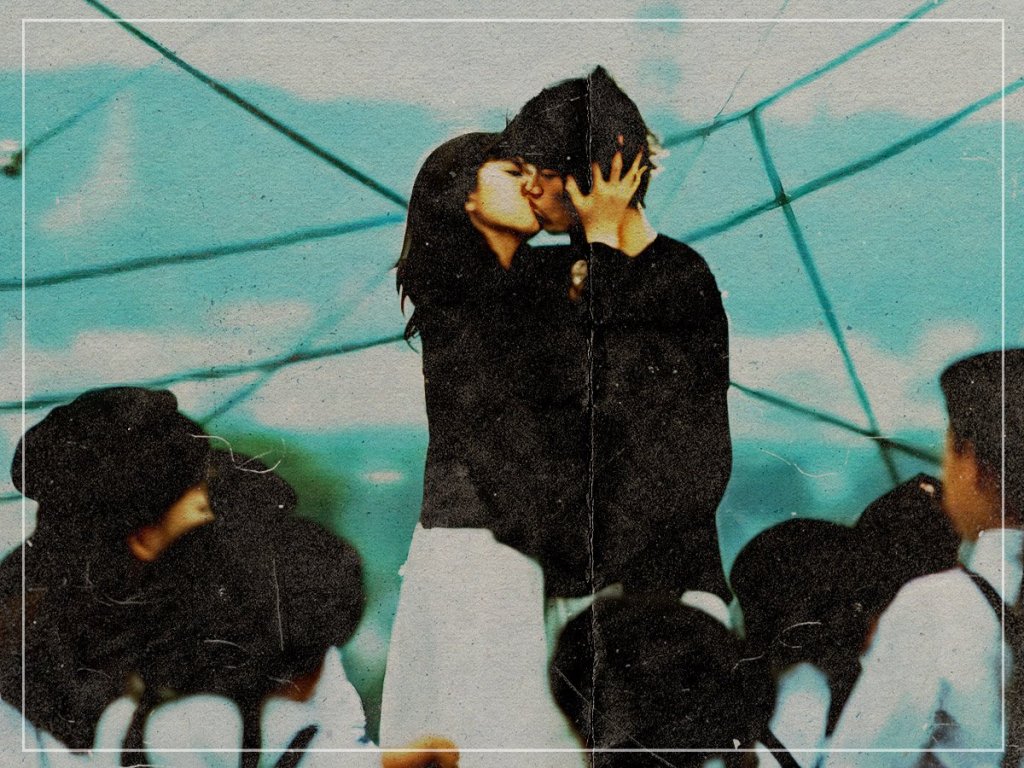
The film Undo (1994) by Shunji Iwai is modest in length at just 47 minutes. Yet the narrative never feels rushed, and the scenes even less so. Shots linger in silence or in the soft white noise of a running bath. Dialogue is strikingly sparse—sound, even more so. Gentle classical music often overrides the couple’s conversations, asserting both their privacy and the audience’s exclusion. The intimacy of the film verges on voyeuristic: a young couple quietly falling out of love. Iwai deliberately abstracts the narrative, allowing the film to meditate on both the disintegration of communication between former lovers and the subtle interplay between film and viewer.
I first consumed Undo a few years ago, pressed for time and unable to commit to a standard two-hour film, yet craving Iwai’s signature touch—his delicately melancholic storytelling. As I was (and still am) learning Japanese, I watched the film with auto-generated subtitles. I skimmed the English text while catching familiar Japanese verbs, playing a haphazard game of mismatched comprehension. As always, I was struck by how far even a basic vocabulary can carry you. When the boy brings home a cardboard box, his girlfriend Moemi exclaims: “これ、これ、何に!教えて。” (Kore, kore, nani? Oshiete.) Literally: “This, this, what? Tell me.” She laughs.
There’s a mix of excitement and indignation in Moemi’s voice. It hardly matters whether she’s speaking in Japanese, English, or a language I’ve never heard—her drawn-out whine makes her desire unmistakable. She knows Yukio is hiding something, and she wants to know what it is. I would argue that much of the film’s dialogue functions in a similar manner; the tone of the words and the context of the scenes convey the essence of the couple’s communication—particularly given that they are scarcely listening to one another.
The film remains quiet throughout. In many scenes, there is no music at all—not even ambient sound—and the dialogue is minimal. When the couple walk along a pier with their newly adopted turtles, Iwai overlays soft classical music once more. It is as if the characters are beyond earshot. They balance on the rocks, exchanging words and laughter, yet we hear none of it. The conversation belongs only to them.
One of the most striking scenes occurs just after Moemi is diagnosed with her condition. The couple are walking up a road when she suddenly stops to kiss Yukio. She runs her fingers through his hair and showers his face with kisses, but he remains still. He neither recoils nor reciprocates. The camera slowly zooms in on them, and the shot of her kissing him lingers for over a minute. Slow, melancholic music overlays her desperation and his apathy. The extended duration transforms the scene into a deliberate statement.
It was this scene that convinced me he no longer wants her. Throughout the film, he cares for her—buying her pets despite the landlord’s objections, taking her to the doctor, and treating her with gentleness. But I would argue that there is a difference between sustaining what already exists and desiring its growth. Yukio allows her to kiss him; he stands there and endures her affection. But he does not want her. He admires her beauty, he respects her—perhaps he even loves her—but he does not desire her. That is to say, he no longer wishes to continue being with her. And yet, he is not offered a clean exit until the film’s close, when the camera lingers on their now-empty living room.
Iwai frequently replaces natural audio with music in Undo. The camera shakily pans across the disarray of their apartment, or focuses on Moemi and the turtles she has bound with string. When I recently rewatched Undo without subtitles, there were surprisingly few moments when I felt dialogue would have offered me something essential. While my Japanese has improved, the film does not so much transcend language—as the words, in fact, make their fractured communication more explicit—as it relegates language to a secondary role in the act of communication. The abstract portrayal of Moemi’s compulsive wrapping of household objects in rope—entangling more and more of their domestic space and, by extension, their relationship, until eventually she binds herself—calls for a visual reading from the outset. Interiors, faces, and landscapes linger onscreen, almost insistently. The recurring motif of the white string demands our attention. The camera follows Moemi as she winds it around books, their new pet turtles, and ultimately herself—to increasingly troubling degrees. The lack of communication between Yukio and Moemi is almost uncanny: she ties, he watches. Much like the kissing scene. Perhaps much like their relationship. And certainly like the film’s pervasive, unsettling quietness.
One day, I hope to watch Undo in its original language without the aid of subtitles. I do believe there is something to be said for hearing the dialogue precisely as Iwai intended. But for now—after four viewings—I no longer worry that I am missing something fundamental. I no longer worry that my Japanese has not improved quickly enough for this film. In Undo, language and sound seem to take on a complementary, rather than central, role. The visuals become the primary mode of communication. The colours matter. The actors’ movements matter. Moemi’s frenetic actions and Yukio’s lack of action matter. And I have watched—wide-eyed.
How to cite: Tsay, Miran. “Beyond Earshot: Transcribing Meaning in Shunji Iwai’s Undo.” Cha: An Asian Literary Journal, 26 May 2025, chajournal.blog/2025/05/26/undo.

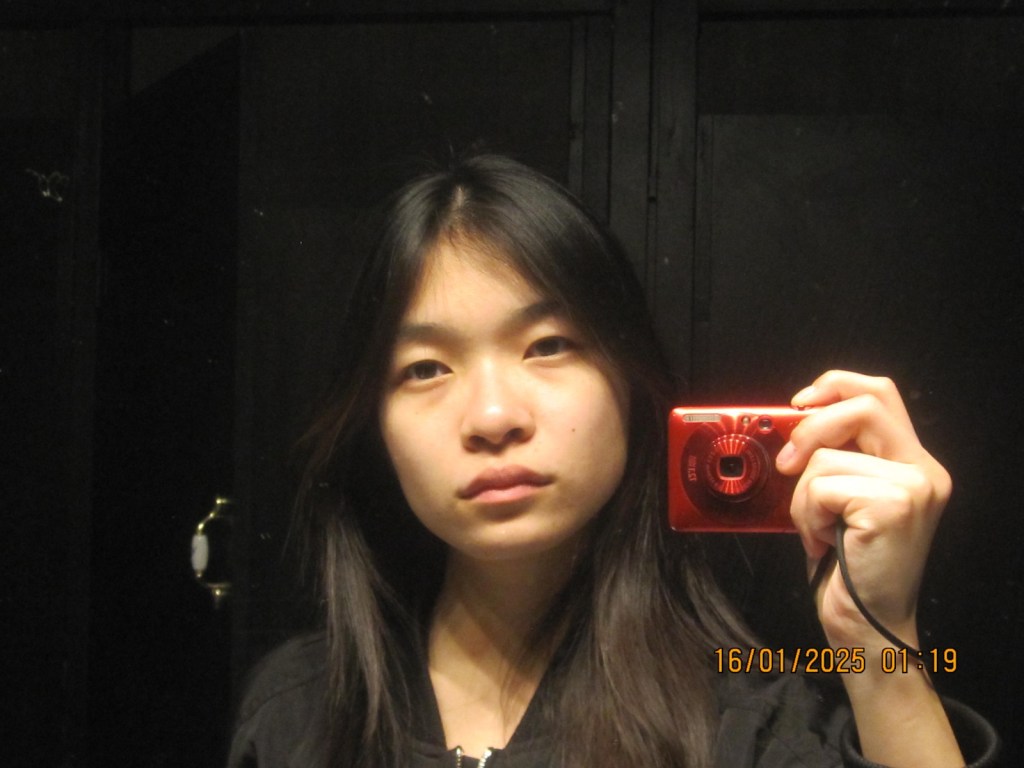

Miran Tsay is currently pursuing a BA in English Literature and East Asian Studies at the University of Toronto. Of Korean, Japanese, and Taiwanese heritage, she has spent most of her life in Canada and often finds herself reaching for culture through prose. She writes both fiction and essays, and is especially proud to be the incoming Editor-in-Chief of The UC Gargoyle, a bi-weekly campus newspaper.
 Cha
Cha 