

📁 RETURN TO FIRST IMPRESSIONS
📁RETURN TO CHA REVIEW OF BOOKS AND FILMS
Anru Lee, Haunted Modernities: Gender, Memory and Placemaking in Post-industrial Taiwan, University of Hawai’i Press, 2023. 246 pgs.
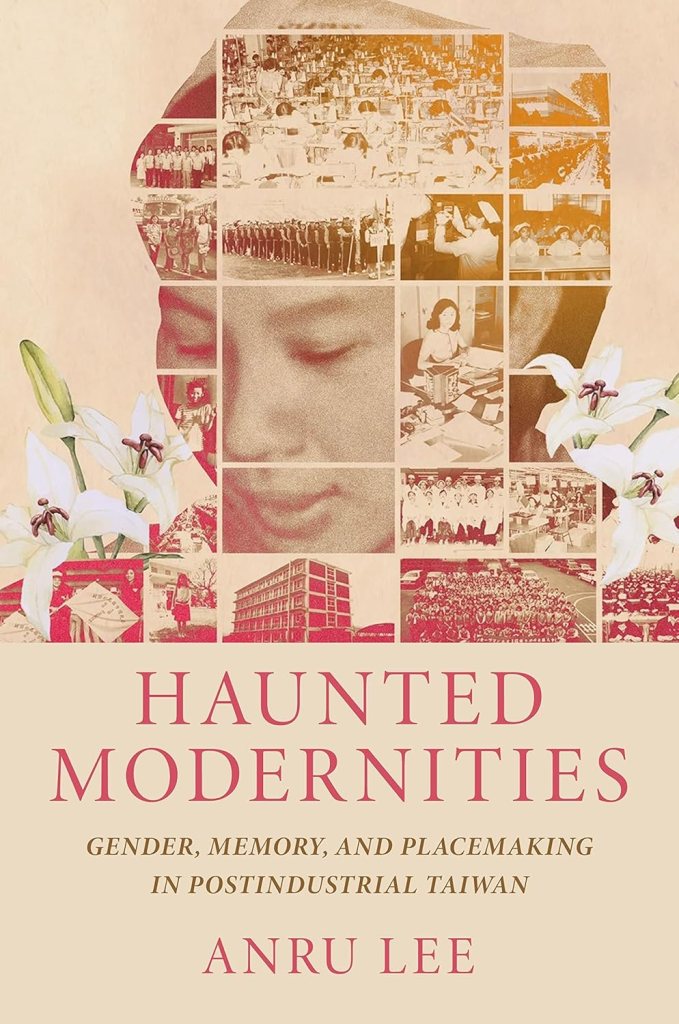
Anru Lee first learned of the 25 Maiden Ladies’ Tomb upon her arrival at the Department of Sociology at Sun Yat-sen University as a visiting scholar in 2008. Intrigued, she embarked on an inquiry into the socio-cultural and political dynamics surrounding the remembrance and positioning of these deceased young women within a deeply patrilineal Taiwanese society. In doing so, she assiduously examines the processes of memory-making and placemaking, delving into new realms within feminist studies, hauntology, and urban studies.
The book employs a rich array of anecdotes and interviews to animate the lived experiences and struggles of those connected to the narrative. It is not merely a chronicle of how the 25 Maiden Ladies’ Tomb came to be reimagined as the Memorial Park for Women Labourers—it is also a probing enquiry into the evolution of Kaohsiung’s economy, the role of young female workers, the emergence of the women’s movement at both national and local levels, the city’s economic decline in the twenty-first century, and municipal efforts toward urban modernisation.
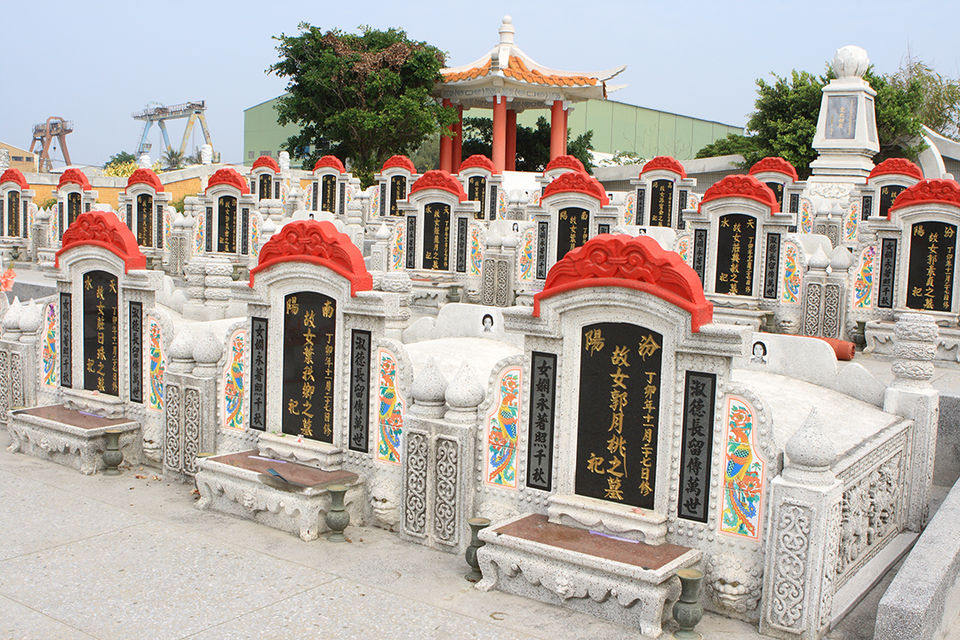
Twenty-five Ladies’ Tomb (via)
At the heart of the book lies the tragic sampan ferry accident that claimed the lives of 25 young women labourers employed in Kaohsiung’s Export Processing Zone (EPZ) in the Cijin district, situated along Taiwan’s southwestern coast. The incident occurred on 3 September 1973, when an overloaded sampan ferry capsized near Kaohsiung Harbour. Although the rescue team managed to save the majority of the passengers, 25 young women—ranging in age from 13 to 30—tragically lost their lives.
Even as Lee traces the image of deceased, unmarried women in society and the dilemmas surrounding their deification, she underscores the patrilineal structure of Taiwanese society—one in which women attain respectability primarily through marriage and are only admitted into the family’s ancestral hall after death. This, however, does not extend to women who died unmarried. It is commonly believed that unmarried women who meet a violent end often linger as restless spirits.
Here, Lee guides the reader through the intricate contours of hauntology. Drawing upon the work of socio-cultural anthropologist Paul Stevens Sangren, whose research centres on China and Taiwan; the French philosopher Jacques Derrida, who pioneered the study of hauntology; and Avery Gordon, Professor of Sociology at the University of California, Santa Barbara, she contends that hauntings are manifestations of what is absent or lost.
She characterises the activism of Taiwanese feminists to reframe the significance of the burial site as “spectropolitical”, in that it focuses squarely on the politics of historical memory. These activists mobilised the imagery of the women’s ghosts as a powerful trope to resist the erasure of female productive labour from Taiwan’s historical narrative.
Lee posits that haunted places are fertile ground for the formation of alternative memories. Ghosts are often regarded as conduits of the past—yet what truly matters is how certain memories are invested with meaning, institutionalised, or transformed for public consumption (Lee, 2023).
In Taiwanese society, ghosts occupy a significant and culturally resonant role. Within a rigidly patrilineal framework—where sons are regarded as the inheritors of filial legacy and women are seen as transient members who attain respect only within their marital households, though never full equality—only married women are traditionally accorded a place in the ancestral hall after death and thereby venerated. The placement and veneration of deceased, unmarried women thus presented a profound dilemma for their families. While these women were acknowledged as part of the social collectivity and cultural imagination, they were denied formal inclusion in ancestral rites.
Soon after their deaths, however, some family members began experiencing inexplicable phenomena—such as difficulty swallowing or the uncanny sensation that someone was sitting upon their heads. When medical practitioners found no physiological cause, they turned to a tâng-ki (spirit medium), who revealed that these were the means through which the departed daughters were expressing a desire to be honoured with their own god statues. In due course, 22 of the 25 deceased young women were each enshrined with their own statues, placed in private household altars. Some speculated that their deification precluded them from returning to seek marriage—“gods did not marry”, it was said.
In 1988, when the Kaohsiung Harbour authorities sought to expand, it was decided that the burial site of the 25 women would be relocated. The Port Authority of Kaohsiung was expected to pay NT $10 million in compensation. However, when negotiations reached an impasse, tales began to circulate of the 25 women—dressed in white—appearing in broad daylight to assert their rights. This spectral intervention prompted the port authority to agree to purchase the land for the tomb’s relocation. Thus, wherever human agency faltered, it was the ghosts who intervened.
However, despite the performance of rituals and acts of deification within private spaces, tales of hauntings and sightings of the young women’s spirits persisted in the public sphere. The burial site could be described as an industrial ruin—abandoned, derelict, and absent from the city’s social and productive fabric, yet imbued with a lingering aura of mystery. Numerous stories circulated among taxi drivers and motorcyclists, recounting encounters with young female passengers picked up near the 25 Maiden Ladies’ Tomb, who would vanish without a trace mid-journey. These ghostly narratives would later draw the ire of local feminists.
Lee meticulously outlines the socio-cultural significance of working young women in Taiwanese society in Chapter 2, “The Significance of Insignificant People”. The chapter opens poignantly with the pop song “A Lone Girl’s Dream” by Yeh Chun-Li, in which a solitary young girl dreams of factory work as a path to a better future. The song continues to resonate, particularly with those who lived through Taiwan’s early period of economic transformation.
The chapter further illuminates the critical role played by young women in Kaohsiung’s socio-economic development. Lee elaborates on how their labour was instrumental in the city’s transition from a primarily agrarian economy—one that generated modest income—into an industrial powerhouse marked by increased prosperity. Taiwan’s economy, largely driven by Small and Medium Enterprises (SMEs), relied on a decentralised network of factories supported by extensive subcontracting relationships. Known as “network capitalism”, this economic model is characterised by its reliance on personal and familial ties as the basis for business transactions.
In this context, the employment of female labour was deemed ideal—they could be paid below market rates and compelled to work overtime. The wages earned by these young women were often used as seed capital by their brothers to establish their own enterprises, thereby contributing further to Taiwan’s economic growth. Working women were frequently valued within their families, who sought suitable husbands for them as a means of securing their futures. With nearly 85 per cent of the labour force in Kaohsiung’s Export Processing Zone (EPZ) comprising women, their role in the development of the Taiwanese economy was both significant and undeniable.
In light of these women’s contributions to the economic advancement of both Kaohsiung and Taiwan, feminists lamented the lack of respect accorded to their tomb. Since 2004, the Kaohsiung Association for the Promotion of Women’s Rights (KAPWR) has sought to restore the rightful place of the 25 deceased women within the societal memory. They questioned the deeply patriarchal structure of Taiwanese society and challenged the unequal gender dynamics that denied unmarried women posthumous veneration in the ancestral hall.
KAPWR actively campaigned to dismantle the stigma associated with unwed female workers and their persistent portrayal as ghosts or spirits in the public imagination. For the organisation, the term “maiden ladies” was pejorative, as it reflected prevailing socio-cultural perceptions rather than acknowledging the women’s economic agency. They called for the women to be recognised not as tragic figures, but as labourers whose contributions were vital to Taiwan’s economic development.
Chapter 4 examines not only KAPWR’s activism but also the broader emergence of the feminist movement in Taiwan. While women’s rights were increasingly acknowledged at the national level, they continued to be contested and fought for within local contexts. In line with the broader national struggle for gender equality, KAPWR began campaigning in 2003 to secure rightful recognition for the deceased young women workers within both historical and societal narratives. Following extensive negotiations, conferences, and moments of upheaval, the 25 Maiden Ladies’ Tomb was officially renamed the Memorial Park for Women Labourers in 2006.
However, the ascent of the women’s movement coincided with the decline of Kaohsiung as an industrial centre. Over the decades, as Taiwan’s industrial focus shifted from the south to the north, much of Kaohsiung’s economic policy came to centre on aligning the city with global economic trends. This required the reinvention of Kaohsiung as a modern, commerce-friendly city capable of attracting tourism and leisure. The transformation of Cijin’s 25 Maiden Ladies’ Tomb was a small yet symbolically significant gesture in this broader project—underscoring the fact that spatial reinvention and modernisation must also accommodate the evolving metaphors and meanings of an increasingly globalised world.
To conclude, Haunted Modernities is not merely the story of how the 25 Maiden Ladies’ Tomb came to be reimagined as the Memorial Park for Women Labourers. It is equally a chronicle of Kaohsiung’s economic development, the mobilisation of its youth—particularly young women—as labourers, their tragic deaths in a ferry accident, and the subsequent emergence of a spectral narrative that parallels the city’s industrial trajectory. It offers a compelling enquiry into the representation of women as ghosts—their imagined vulnerabilities, desires, and spiritual potency—which are often invoked by the community to advance material or symbolic interests. Moreover, the book traces the rise of the women’s movement in Taiwan at the macro level and its influence on local struggles, such as KAPWR’s efforts to honour the 25 deceased women as workers who had meaningfully contributed to the city’s early economic development.
The success of KAPWR’s campaign intersects with Kaohsiung’s economic decline and the city administration’s efforts to reimagine its identity in line with contemporary global models—an effort that included reclaiming and recognising the labour history of women as part of the city’s modern narrative.
Lee deftly weaves together these strands of history, community, imagination, economics, and urban development. A seemingly localised event is examined through multiple lenses and ultimately employed to illuminate larger processes—feminism, industrialisation, and urban regeneration.
How to cite: Mathews, Elsa. “From Spirits to Statues: Commemorating Women Workers in Anru Lee’s Haunted Modernities.” Cha: An Asian Literary Journal, 13 May 2025, chajournal.blog/2025/05/13/modernities.

Elsa Mathews has worked as a journalist and in various communication roles with international organisations. She holds a Master’s degree in Media, Communication, and Cultural Studies from Université Stendhal, Grenoble (France) and Aarhus University (Denmark). She is currently a freelance writer and a French language teacher. She is also the translator of Chroniques Indiennes: Marguerite de Bure, Feuilleton Épistolaire d’une Française à Bombay 1902–1904 / Indian Chronicles: Marguerite de Bure, Letters from a French Woman in Bombay 1902–1904 (Sanbun Publishers, 2020).
 Cha
Cha 
