

📁 RETURN TO FIRST IMPRESSIONS
📁RETURN TO CHA REVIEW OF BOOKS AND FILMS
Robin Visser, Questioning Borders: Ecoliteratures of China and Taiwan, Columbia University Press, 2023. 352 pgs.

In recent years, the escalating global urgency surrounding ecological crises has prompted renewed attention to the ways in which literature engages with environmental concerns—particularly across diverse cultural and geopolitical contexts. Within Sinophone studies, ecoliterature has frequently been approached either as a mirror of environmental degradation or as a critique of modernisation. Yet relatively little scholarship has fully examined how narratives of ecological entanglement simultaneously interrogate, blur, or reimagine political boundaries. Robin Visser’s Questioning Borders: Ecoliteratures of China and Taiwan (2023) enters this critical conversation with considerable force. The book offers an ambitious analysis of how literary texts from China and Taiwan problematise conventional territorial and epistemological demarcations through an ecological lens. Visser argues that environmental narratives in the Sinophone world destabilise entrenched binaries—human versus nonhuman, centre versus periphery, settler versus Indigenous—thereby inviting a relational rethinking of space, identity, and belonging. Rejecting nationalist and anthropocentric paradigms, Visser illuminates pluralistic, localised, and Indigenous ecological imaginaries that resist imperial frameworks.
The book is structured around an Introduction, five richly layered chapters, and a concluding Epilogue. Each chapter explores distinct yet interrelated dimensions of Sinophone ecoliterature. The study encompasses a wide-ranging corpus that includes novels, poetry, film, and visual art. Thematically, it interweaves several critical strands: a critique of China’s “Ecological Civilisation” project and its entanglement with imperial and developmental aspirations; the articulation of relational cosmologies rooted in Indigenous traditions; and the revelation of environmental degradation as a form of geopolitical violence. Subsequently, it reconsiders “borderlands” not merely as peripheral spaces, but as sites of epistemic resistance and ecological renewal. In centring marginalised voices and localised narratives, Visser challenges the ideological coherence of both national and environmental boundaries.
Deconstructing
the Centre-Periphery Binary
◯
One of the major achievements of Questioning Borders lies in its nuanced dismantling of the centre–periphery dynamic—particularly within Chinese literary and environmental imaginaries. In the Introduction and Chapters 1 and 2, Visser outlines how state-sponsored narratives frequently portray Beijing—and, by extension, Han-centric modernity—as the inevitable centre of ecological and civilisational progress. She astutely critiques the genre of “Beijing Westerns,” wherein representations of frontier landscapes (e.g., Tibet, Xinjiang) are instrumentalised as raw material for the centre’s self-fashioning. Through close readings of works such as Jiang Rong’s Wolf Totem and filmic representations like Soul Mountain, Visser exposes how settler colonial logics frame “nature” and “Indigenous culture” as empty, extractable, or in need of modernisation. Yet she does not simply dismiss these narratives; rather, she traces their internal contradictions, highlighting moments in which relational or non-anthropocentric possibilities flicker into view. The strength of this analysis lies in its theoretical sophistication—particularly in revealing how imperial ecological paradigms are often cloaked in the language of sustainability.
At times, however, Visser’s treatment of the “centre” risks homogenising state discourses. A more sustained engagement with regional ecological policies or vernacular urban ecologies might have further complicated the critique. Nonetheless, her deconstruction of developmentalist environmentalism remains incisive and compelling.
Indigenous Voices
& Relational Cosmologies
◯
Chapters 3 to 5 shift the analytical focus towards Indigenous ecologies, offering some of the most compelling readings in the book. Visser pays particular attention to Tibetan, Mongolian, and Taiwanese Indigenous writers and artists who challenge Han-centric, anthropocentric epistemologies by foregrounding relational cosmologies—ontologies in which humans, animals, spirits, and landscapes are co-constitutive. Her discussion of Tibetan Plateau literature, including the stories of Tsering Döndrup, underscores how land is not inert but animated through spiritual and communal relations. Similarly, her analysis of Oceanic perspectives among Taiwan’s Amis and Paiwan writers, such as Syaman Rapongan, reveals how maritime ecologies offer alternative models of mobility, belonging, and sustainability. These Indigenous narratives, Visser argues, reject the fixity of borders, instead envisioning fluid, affective, and ecological interconnections.
The analytical engagement here is notably sensitive and respectful, avoiding romanticisation while nonetheless foregrounding the epistemological challenges these works pose to dominant frameworks. Visser’s integration of Indigenous theorists—albeit sparingly—adds depth to her analysis. A more sustained comparative dialogue with other global Indigenous ecologies (e.g., First Nations, Māori) might have further amplified the resonance of her claims, yet within the Sinophone context, her readings remain richly textured and illuminating.
Ecological Civilization
& Contemporary Realities
◯
In her critical examination of China’s “Ecological Civilisation” discourse, Visser incisively interrogates the disjuncture between rhetoric and reality. As she demonstrates, the state’s promotion of ecological civilisation—particularly within the context of the Belt and Road Initiative—frequently conceals extractive practices and territorial expansion beneath a green veneer. Literary works such as Alai’s As the Dust Settles are analysed not only for their cultural specificity, but also for the subtle ways in which they critique the costs of developmentalist ecologies. Visser is especially effective in showing how literary and artistic texts destabilise triumphant narratives of ecological modernisation by revealing the lived realities of displacement, resource depletion, and cultural loss. Her incorporation of environmental activism and documentary film further enriches this section, offering a multi-genre perspective on contemporary ecological conditions. One of the notable strengths here is Visser’s ability to navigate the terrain between literary representation and geopolitical critique without collapsing one into the other. She treats literature as a mode of world-making—rather than merely a reflection of political realities. However, while the engagement with state discourses is robust, greater attention to grassroots environmental movements within Han-majority regions might have offered a more comprehensive picture of ecological contestation across varied social and demographic landscapes.
Critical Reflections
& Contributions
◯
Questioning Borders makes a substantial contribution to Sinophone ecocriticism, Indigenous literary studies, and broader conversations within the environmental humanities. By centring marginalised narratives and relational ecologies, Visser challenges the nationalist, anthropocentric, and imperial assumptions that often underpin environmental discourse in China and Taiwan.
The book’s interdisciplinary breadth—spanning literature, film, art, and theory—is impressive, as is its theoretical sophistication. Visser’s framework draws upon ecocriticism, postcolonial theory, Indigenous studies, and relational ontology without becoming jargon-laden or inaccessible. Her methodological approach, which combines close textual analysis with geopolitical critique, offers a compelling model for future scholarship. Nevertheless, the book leaves certain questions open—particularly concerning how localised Indigenous narratives interact with global environmental movements. While Visser gestures towards transnational solidarities, these are not extensively theorised. Further exploration of diasporic Sinophone ecologies or comparative Indigenous alliances could have enriched the discussion.
Among the book’s most impactful interventions are its reimagining of “borderlands” not as marginal spaces but as generative sites of ecological knowledge, and its insistence on ecology as inherently relational and political. Visser’s work is poised to inspire scholars to further interrogate the entanglements of place, power, and environment in the Sinophone world and beyond. Robin Visser’s Questioning Borders: Ecoliteratures of China and Taiwan stands as a significant and timely contribution to the fields of ecocriticism and Sinophone literary studies. Through its incisive analyses and theoretical rigour, the book not only interrogates geopolitical borders, but also invites readers to reimagine ecological belonging beyond national, ethnic, and human-centred confines. Visser’s arguments resonate well beyond the Sinophone context, offering critical insights into how environmental narratives might challenge imperial, anthropocentric, and developmentalist logics on a global scale. This book will be of particular value to scholars of literature, environmental humanities, Indigenous studies, and East Asian studies, as well as to educators and activists seeking to understand the ecological stakes of cultural and political borders.
How to cite: Chaturvedi, Sonalika. “Relational Ecologies and the Displacement of Borders: Robin Visser’s Visser’s Sinophone Environmental Imaginary.” Cha: An Asian Literary Journal, 3 May 2025, chajournal.blog/2025/05/03/ecoliteratures.

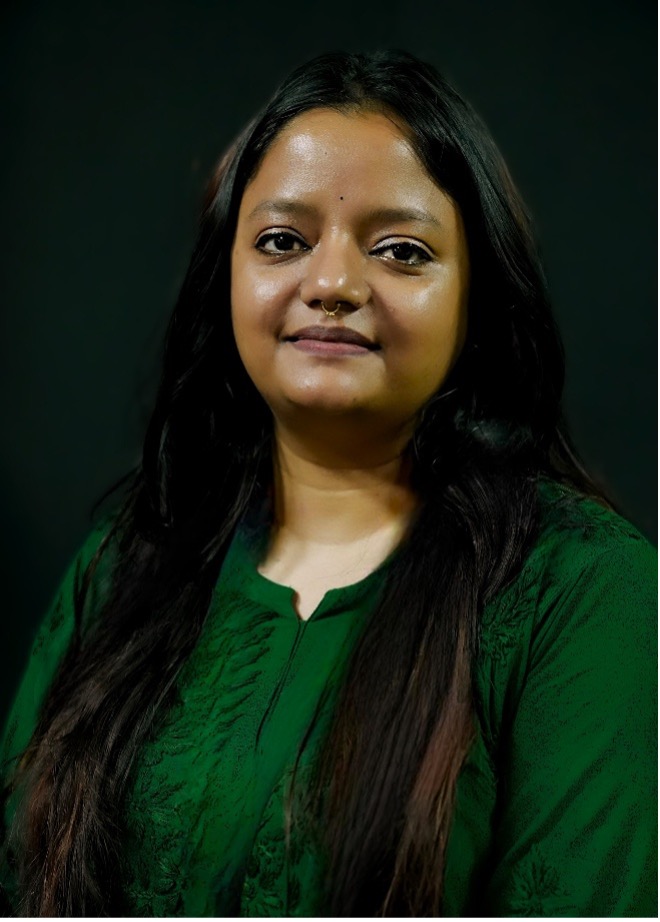

Sonalika Chaturvedi is Assistant Professor of English at Galgotias University, India. Her work engages profoundly with questions of ecological loss, cultural memory, and the evolving relationships between humans and the more-than-human world. With a particular interest in ecological disaster narratives and posthuman thought, she brings an interdisciplinary perspective to both her research and teaching. She has presented her work at academic forums across India and internationally, and her research has appeared in several esteemed journals. In the classroom, she fosters thoughtful dialogue, critical reflection, and a heightened awareness of literature’s role in shaping our understanding of the world. She is committed to nurturing an inclusive, inquisitive academic environment—one in which students are encouraged to connect literature with the complexities and urgencies of contemporary life.
 Cha
Cha 