
茶 FIRST IMPRESSIONS
茶 REVIEW OF BOOKS & FILMS
[REVIEW] “Narrative Reclamation: Nguyễn Phan Quế Mai’s The Mountains Sing” by Zalman S. Davis
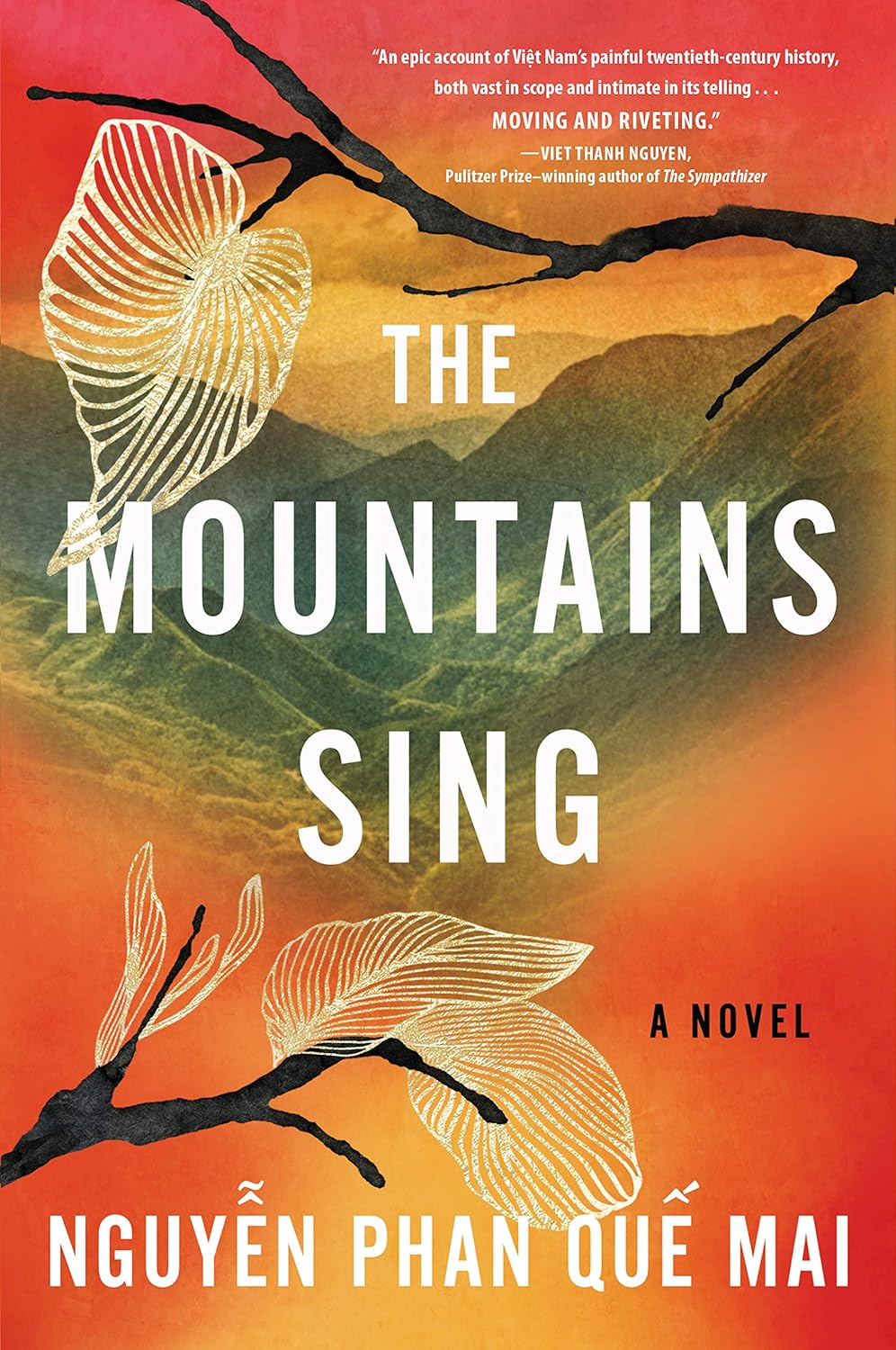
Nguyễn Phan Quế Mai, The Mountains Sing, Algonquin Books, 2021. 368 pgs.
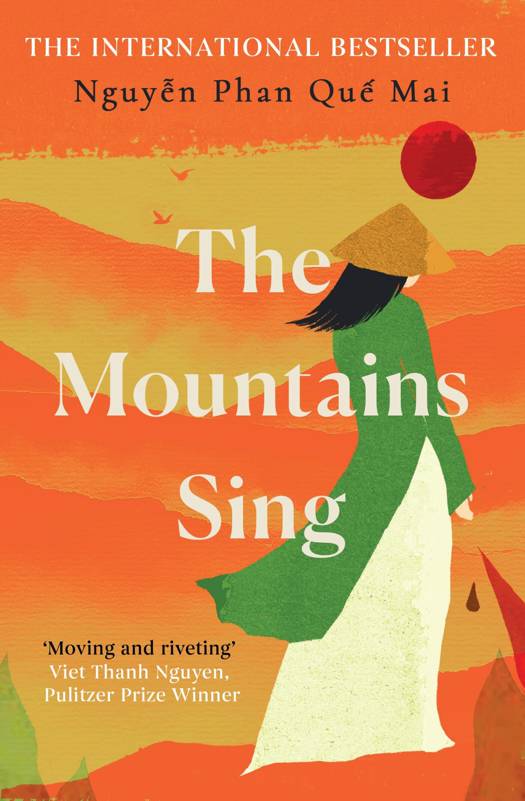
Nguyễn Phan Quế Mai’s The Mountains Sing is a rare accomplishment: a Vietnamese novel written in English, by a Vietnamese author, for a global audience. This alone renders it significant. It does not borrow the outsider’s lens, nor does it use Vietnam merely as a backdrop for foreign trauma. Instead, it insists upon its own narrative space—and for that, it demands attention. Yet literary significance and literary strength are not always synonymous.
The novel spans much of Vietnam’s twentieth-century upheavals through two narrators: Trần Diệu Lan, a grandmother who endures land reform, war, and famine; and Hương, her granddaughter, coming of age in postwar Hanoi. Told in alternating timelines, the book aspires to be sweeping in scope and intimate in feeling—an elusive balance. At its best, the novel bears the emotional weight of history with admirable care; at its worst, it explains what it ought to allow the reader to feel.
Diệu Lan’s story forms the novel’s backbone. Her forced exile during the land reform campaigns, the shattering of her family, and her enduring resilience root the book in something both real and urgent. These chapters—particularly those depicting her northward flight with her children—are vivid and absorbing. There is brutality, but never spectacle. Quế Mai excels in conveying the long reverberations of violence without lingering on gore. When she writes with restraint, she is profoundly effective.
Yet the structure of the novel ultimately undermines itself. Hương’s chapters, set decades later, are uneven. As a narrator, she is passive and often indistinct. Her reflections frequently reiterate what the reader already comprehends: that war destroys families, that love endures, that memory is fragile. The novel signals these ideas clearly—then signals them again. And again. The result is a narrative that, particularly in its second half, begins to circle itself emotionally.
Stylistically, Quế Mai maintains a directness of language. There is no dense lyricism here—nor the abstract experimentation characteristic of some contemporary war literature. Her prose remains accessible, grounded, and at times quietly poetic. This is both a strength and a limitation. The simplicity of the language renders the novel widely readable, yet it also flattens moments that might have benefited from greater texture and complexity. Pain is often described rather than evoked; characters tend to speak in declarations. Dialogue, in particular, suffers: it can feel staged, overly careful, more written than spoken. This is not a language barrier—Quế Mai is fluent in English—but a stylistic choice. The result is clarity, certainly, but also an emotional distance.
There are other fissures. The novel’s use of exposition becomes burdensome. Historical context—essential though it is—is often conveyed through long passages of telling rather than showing. The pacing falters; secondary characters blur. While the intention is clearly to bear witness to forgotten histories, the novel too often disrupts its own narrative rhythm in order to explain. It is a common flaw in debut novels striving to do too much—but this is not a debut, and Quế Mai is no inexperienced writer. This is a work shaped by purpose, not by uncertainty. That purpose, however, at times overwhelms the storytelling itself.
And yet, The Mountains Sing achieves something of undeniable value. It reclaims narrative agency. Most English-language fiction concerning Vietnam—especially in the West—is shaped by American trauma, filtered through soldiers’ perspectives, and confined within a moral framework that rarely considers Vietnamese lives as anything beyond symbols or victims. Quế Mai rejects this entirely. Her characters are fully realised individuals: they suffer, resist, adapt. They are neither metaphors for a nation nor vessels for political critique. They are family.
This is where the novel is at its most compelling. Its finest scenes are domestic: the preparation of a meal, the exchange of a proverb, the silence between generations. These are not incidental details—they form the narrative’s emotional core. Diệu Lan’s survival is not heroic in the abstract; it is embodied in the way she teaches her granddaughter to live, in the silences she leaves unfilled, in the truths she chooses not to speak. That kind of silence proves more powerful than any of the novel’s speeches.
There are echoes here of other intergenerational novels of trauma and survival—Min Jin Lee’s Pachinko, Chimamanda Ngozi Adichie’s Half of a Yellow Sun, and Hala Alyan’s Salt Houses. Yet The Mountains Sing attempts something subtly different. It is not solely concerned with surviving history, but with choosing which fragments of it to carry forward. The novel poses a question too few works about war are brave enough to ask: what happens after the pain is catalogued? What kind of memory is useful? What must we relinquish?
In the end, The Mountains Sing is not a flawless novel. It is structurally uneven; it over-explains; it leans on sentiment where greater complexity is required. Yet it remains a necessary book—not solely for what it teaches readers about Vietnam, though it certainly does, but for whom it centres, and how. It opens a door that has long been closed in English-language fiction, and that matters.
What Quế Mai offers here is not merely a story of survival, but an act of narrative reclamation. That alone makes this novel worth reading—and worth remembering.
How to cite: Davis, Zalman S. “Narrative Reclamation: Nguyễn Phan Quế Mai’s The Mountains Sing.” Cha: An Asian Literary Journal, 26 Apri. 2025, chajournal.com/2025/04/26/mountains-sings.


Zalman S. Davis is active in South African literature, working as a publisher, literary curator, editor, and critic. As the founder of Minimal Press, Davis has established a platform that champions diverse voices across genres and languages, with an emphasis on quality storytelling and literary merit. He curates several literary awards, including the Ingrid Jonker: L’Art Poétique Prize for Poetry, the Chris Barnard Prize for Short Stories, and the Diana Ferrus Prize for Poetry in Afrikaans Dialects. These awards have drawing entries from across South Africa and internationally. Beyond his curatorial endeavours, Davis has contributed as an editor, overseeing the publication of various anthologies and literary collections, and ensuring that both emerging and established writers are afforded a platform to share their work. His dedication to literature and language was recognised in 2020, when he received the Koker Toekenning Award for his contributions to Afrikaans and South African letters. Davis’s commitment to the literary arts extends to his role as a critic, where his insights and analyses engage with contemporary South African writing. His work continues to enrich the cultural fabric of the nation—standing as a testament to the enduring power of storytelling across borders and tongues. [All contributions by Zalman S. Davis.]
 Cha
Cha 