

◉ On Becoming a Hong Kongese Writer
◉ Sunset at Lion Rock: An Excerpt

Matthew Wong Foreman, Sunset at Lion Rock, Proverse Press, 2024. 288 pgs.
{Read Jason S Polley’s review.}
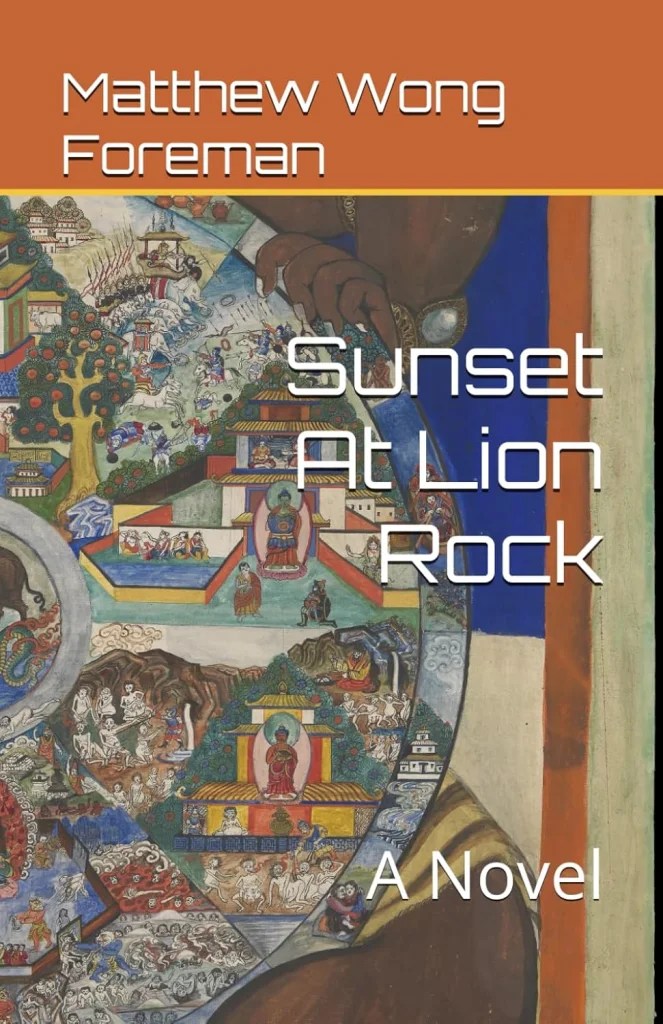
In my Hong Kong, the Hong Kong of our hearts, we greet each other with what Westerners, white or not, love to Orientalise: “Have you eaten yet?” Indeed, I’ve only ever heard this said in “Asian” cultures, by Chinese, Vietnamese, Indians, Japanese. Some say it’s a legacy from poverty and trauma, when food was scarce and people rarely ate until they were full, so it was the main concern on people’s minds whenever they saw one another. They say it is only in the materialist West, where the nuclear family has transplanted cross-generational households, where concern for the individual has replaced the communal, where scarcity—at least culturally—is a thing of the past, that food is no longer central to our everyday interactions.
Yet despite the widespread breakdown of generational households, the rise of a Westernised middle-class across Asia, the forced destruction of centuries-old traditions in favour of hypermodern living, we still greeted each other in this way. Every morning, in the crumbling bistros downstairs, a five-minute journey from my bed to the restaurant table, waitresses waved their hellos, familiar faces who rotated between bistros, laundromats, grocery stores, convenience stores, bakeries, whose sons and daughters have long left home, their whereabouts unknown: “You eaten yet? What do you want to have today?” Every morning on my way to nowhere I passed Ali, the Ali who watched me grow from infant to adult, from yellow to white, the Ali whose hijab-cloaked wife drove Mami to the hospital in their son’s taxi, the Ali who asked me every day if I’ve eaten yet, where I’m going to eat. Sometimes he’d be making his own food, the same delicious-smelling curry that Popo said made Indian people smell, even though Ali was from Pakistan. Sometimes I’d bump into him on my way out, at seven in the morning—he’d be carrying a big bag of groceries filled with peppers, cumin, basmati rice, a variety of sauces and all sorts of vegetables, most I couldn’t recognize. He’d make this food on a portable stove he brought to work every day (our Housing Association wouldn’t let him keep it there overnight). Every afternoon when I came home from school he’d be preparing dinner while watching Bollywood movies on a tiny television that Reverend Saunders, the chairman of the Association, gave him as a Christmas gift. The same Reverend Saunders, a retired missionary who always wore a black suit and a fedora, even in July, who held the lift doors open for us, who had lived in Pine Garden for over sixty years, longer than any of us, the Reverend Saunders fluent in Urdu and Cantonese and Mandarin and Gujarati, the Reverend Saunders loved by everyone, even Ali. The Reverend Saunders who lived with four other white men on the seventh floor with a giant cross above their doorway, who nobody knew when they got here or what they did, who never failed to ask each and every one of us if we’ve eaten yet every time we saw him, until one day we never saw him again.
My Hong Kong, where drugs are evil and addicts the devil, where these devils, shunned by their families, huddle together in tiny cage homes owned by landlords who don’t live in Hong Kong. Like those fifth-floor dope fiends, who, despite their winter-grey skin, needled and veinless, despite our averted eyes or looks of disgust, still ask us, without fail, whether we’ve eaten yet. Even though they eat nothing but poison, living on borrowed time. My Hong Kong, where even triads used to be polite, like first-floor Ming, whose beady, unblinking, sclera-less snake-eyes stare into us whenever we walked past, whose voice, soft and gentle, didn’t match his callous eyes when he said the four words, 食咗飯未?, whose girlfriend, a jaundiced ex-prostitute, used to smile at me and ruffle my hair whenever I passed, who only ever asked whether I was on my way to eat Chinese or Western food, who was now dead, overdosed at twenty-six—the age I am now.
My Hong Kong, where its Chinese culture respects its elders so much that the government hands out HKD 1500 (USD 193), officially called “Old Age Living Allowance,” unofficially called “Fruit Money,” to everyone above 65 without fail, indiscriminately, out of fairness, whether you are a billionaire or a cardboard grannie who makes a living picking cardboard boxes and selling them for 5 cents a pound, every day, three hundred and sixty-five days a year, under scorching heat, wild typhoons, frigid winters.
My Hong Kong, the one every native hates until they leave and every foreigner loves until they die, even though they never learn the language nor ever set foot anywhere that isn’t Hong Kong Island or Sai Kung. My Hong Kong, where being Chinese means something different, where its most famous stars, from Li Ka-shing to Wong Kar-wai to Faye Wong, are never born here. Hong Kong, whose famous personalities come from China or take their careers overseas. Where local art is sneered at and Hollywood worshipped, where patriots send their kids to American boarding schools, where English and Mandarin are languages of the future, and Cantonese the tongue of the past, of Tang poets and the father of China, Sun Yat-sen. My Hong Kong, where revolutions are planned, brewed, and enacted elsewhere and everywhere but never here. Where organic food means food shipped in from China, America, New Zealand, double the cost of non-organic food, also shipped in from China, America, New Zealand. Hong Kong, where “Lion Rock Spirit” is sung to praise the working poor, just like when our financial secretary reminded us in 2009 that we must channel this Spirit, no matter the economic gloom—only to hide his purchase of luxury cars right before announcing tax hikes. My Hong Kong, where drug dens and ethnic enclaves are fenced off and left alone, where only “proven Chinese” qualify for citizenship, where undocumented immigrants exist in the thousands yet are nowhere to be found, hidden or deported, away from the public eye. My Hong Kong, the Pearl of the Orient.
Maybe it’s because the feeling of scarcity, of longing, of desire can’t be eroded easily, not by machines, skyscrapers, or organic food shipped nations away. Or perhaps modernity hasn’t quite entrenched yet, that decades into the future what little ties we have left to our lands, neighbourhoods, families will be bought, repackaged, remade, in the name of progress. An endless march towards collective liberation, where one can buy coffee beans dug from Brazil and bought by France, grounded in Italy and shipped to China, where hordes of new rich ravage exotic products with glee, delighted with their government’s delivery of socialism. Those wealthy enough get to determine the content of “culture” and “identity,” whereas those left behind move on to the next destination, their embers determined by wind.
To ask “have you eaten yet,” then, is to go back to one’s base instincts, ones we all share. It is our way of forgetting our lives just for a moment, to overlook the embellishments increasingly becoming our essence. Because the answer doesn’t matter—it is a reminder of our humanity, one we subconsciously feel being cut from us, bit by bit, day by day.
Maybe that’s why Gonggong and Popo can never tolerate empty plates. Maybe it’s because they’re so desperate to keep hold of our humanity, to sew back together the seams ripped open by life, to remind us that at the end of the day, all we have is each other, no matter where we are, dead or alive.
How to cite: Foreman, Matthew Wong. “Sunset at Lion Rock: An Excerpt.” Cha: An Asian Literary Journal, 11 Api. 2025, chajournal.blog/2025/04/11/lion-rock.

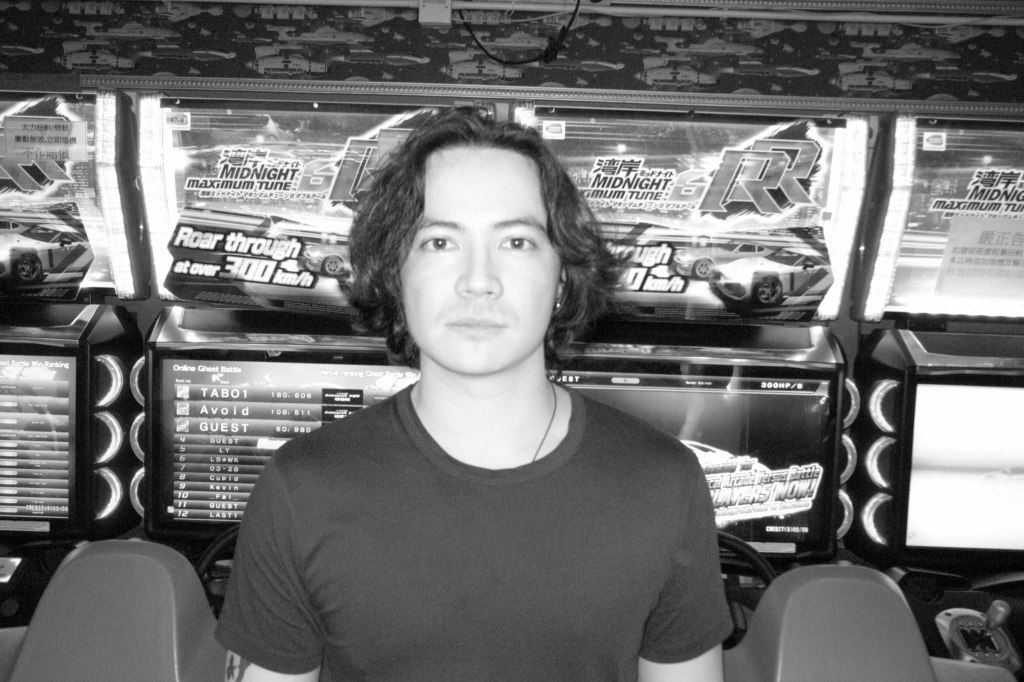
Matthew Wong Foreman is a Hong Kong-born writer. His debut novel, Sunset at Lion Rock, was awarded the 2023 International Proverse Prize and shortlisted for the 2022 Dzanc Books Prize for Fiction. A U.S. edition is forthcoming from 7.13 Books in 2026. His fiction and non-fiction have appeared in publications such as Pacific Historical Review, Asian Ethnicity, and The Oxford Review of Books. A graduate of both the University of Hong Kong and the University of Oxford, he completed a PhD in History at Northwestern University in 2023, where he also taught as an instructor. His work has been featured by RTHK and showcased at the Hong Kong International Literary Festival. Visit his website for more information. [All contributions by Matthew Wong Foreman.]
 Cha
Cha 