
📁 RETURN TO FIRST IMPRESSIONS
📁 RETURN TO CHA REVIEW OF BOOKS AND FILMS
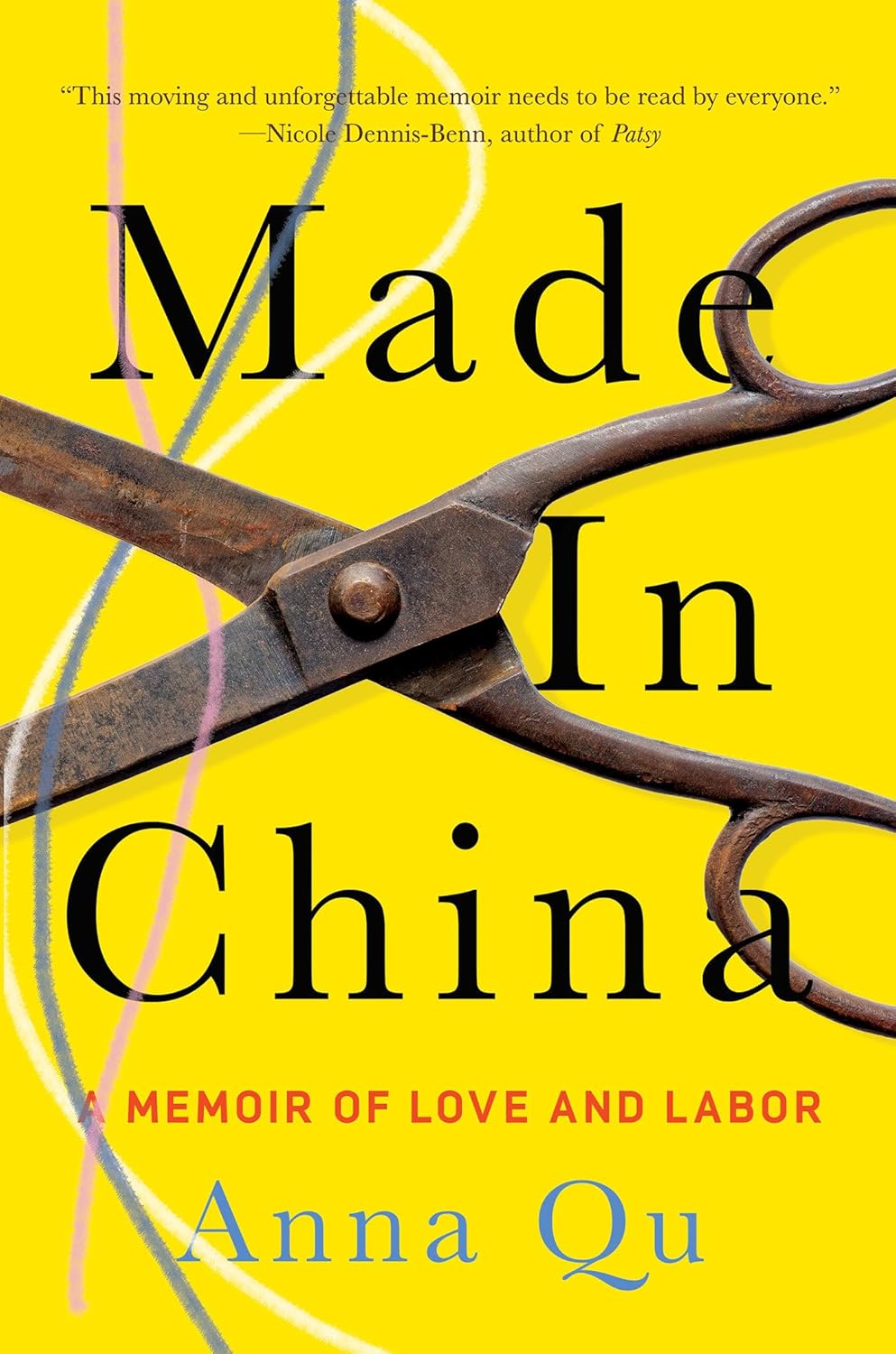
Anna Qu, Made in China: A Memoir of Love and Labor, Catapult, 2021. 224 pgs.
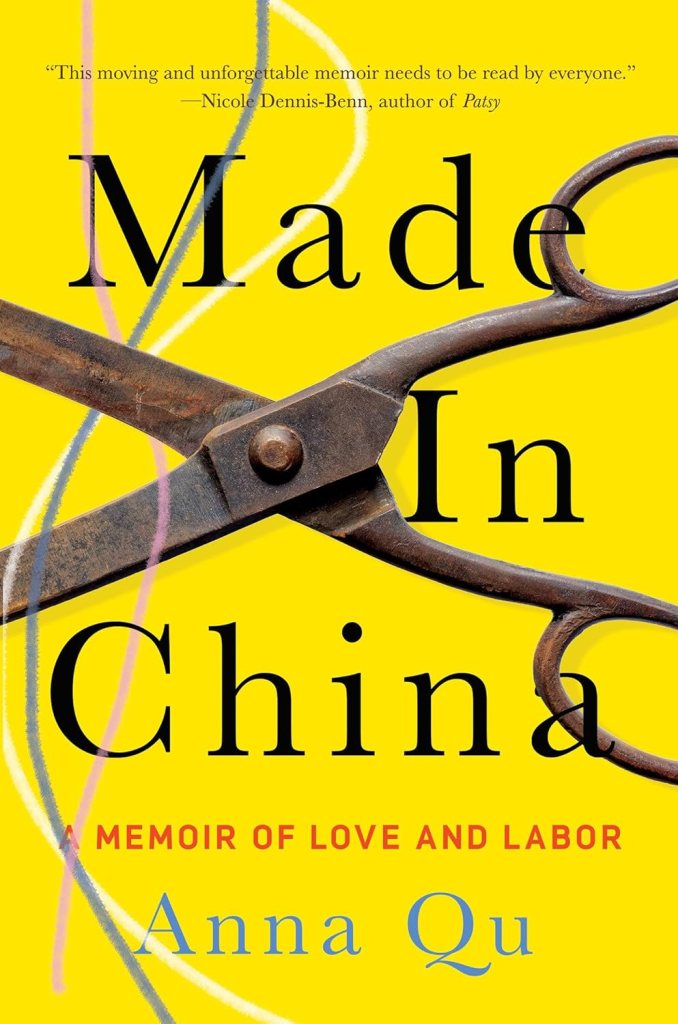
Made in China is a sensitive, thoughtful exploration of the inextricable ties between labour, immigration, and family. Anna Qu’s sharp, perceptive, and emotionally resonant reflections on her relationships—with work, her family, and the life she has forged for herself—are delivered with grace and empathy, despite the abuse and trauma she endured at the hands of those meant to care for and protect her.
Following her father’s death, a two-year-old Qu was left in the care of her grandparents as her mother immigrated to the United States in pursuit of economic opportunity. When her mother returned to retrieve her five years later, the circumstances had shifted: “She had made sacrifices for a greater good, and was now transformed,” Qu writes. Her mother, having remarried into greater wealth, subjected her to abuse and neglect, favouring her new husband and children. Seen as an uncompensated stand-in for a maid, Qu was made to work forty hours a week at her stepfather’s factory, while also cooking, cleaning, and caring for her half-siblings. She would eventually report her parents to the authorities—an act that marked a turning point in their relationship and the beginning of her slow, hard-won independence.
Qu’s life—from childhood to university and beyond—is one shaped by the impositions of those with the authority to define it: her mother, her stepfather, and the OCFS. These are figures who not only sought to control her, but who also denied her experiences and autonomy. Through memoir, she reclaims that life as her own. While the shadows of her family and child services continue to loom large, Qu’s narratorial voice remains clear and assured, documenting the pain and harm inflicted by those closest to her. Yet she approaches it all with remarkable compassion and poise—especially towards her mother. “Intention is a lodestar, a guiding light toward an illusion,” Qu writes of her mother’s efforts to bring her to the United States. “Her intentions were an arrowhead she sharpened day in and day out, aligning reality to her will until I was in front of her again. […] Perhaps she hadn’t thought further than that.”
Qu’s mother began her life in the US as a factory worker, eventually catching the attention of the factory owner who would become her husband. It is only through this method of “rising through the ranks” that she is able to bring Qu—her daughter from a previous marriage—to join her. For Qu’s mother, labour and love are inseparable: labour precedes love, and love provides the pretext for labour. Labour is how she expects her daughter to earn her place, and perhaps some form of affection, within a family that is not her own. It is how they sustain the illusion of middle-class respectability while simultaneously sending a young Qu to work in a sweatshop. Labour is also the currency through which her mother pays for Qu’s care—first with her grandparents, Nie Nie and Azi, and later with the parents of another factory worker. Even in China, Qu’s access to care is mediated by labour. “My value in my family has always been as a worker,” Qu reflects. “Family was business to my mother, and if I wasn’t going to help her, then what use was I?”
Yet there is also love in the way Qu portrays her mother. She writes about the OCFS screening out referrals of child abuse, and how she was “wrong to call them, wrong to think they stood for justice and the safety of children, wrong to be so naïve, wrong to be so idealistic.” Learning that her case was denied and classified as “Not Abuse” leads her to “think differently of the world, of safety, and of what is tolerated”―and of what love and care truly mean. Immediately after, Qu recalls a moment at age nine when, following an attempt to jump out of a window, she is summoned into her mother’s bedroom. Her mother applies Vaseline to the cuts on her back and legs—gently, tenderly—and paints her nails.
The memoir then returns to the rejection of her child abuse case, and to the neglect and mistreatment she endured; how language and knowledge are the only means by which she can access even a semblance of relief from despair. Qu’s delicate pairing of these narratives—being failed by the OCFS, being tended to by an abusive mother—forms a crucial moment of juxtaposition, complicating an otherwise straightforward account of familial abuse and government-sanctioned neglect.
The illusion of the American Dream propels much of Made in China. Qu’s mother immigrates to the United States in pursuit of a vision she shares with both her daughter and her own mother. Eventually, she reaches middle-class status, remodelling her home to include a walk-in closet filled with Gucci and Louis Vuitton. Qu becomes the first in her family to graduate from university—then graduate school. By the memoir’s end, “[t]here is a place for [Nie Nie]’s American dream, too.” Yet all this striving, all this apparent success, is underpinned by factory labour. “Who knew,” Qu reflects, “that the great American dream was an assembly line?”
The title Made in China gestures toward a familiar perception of Chinese factory and sweatshop labour—distant, removed, halfway across the world from the United States, both out of sight and out of mind for most Americans. Yet through the careful detailing of her personal history, Qu redirects our attention to the presence of factory and sweatshop labour within the US itself, and to the exploitation of workers who toil ceaselessly in pursuit of their American dreams. In telling her story, Qu compels us to consider: whose labour sustains our lives? And whose love—and what kind of love—is this labour in service of?
The memoir opens with a dedication to Qu’s Nie Nie and concludes with their reunion in Jackson Heights. It is in this final conversation with her grandmother that Qu discovers solace, relief, and a measure of closure. Here, she writes: “In my grandmother’s aged face, I see my great-grandmother, my aunts, my uncles, my mother, and I see myself. The self-preservation, the rush of ambition, the worn humanity stare back at me. We are all there, waiting, ready to climb through.”
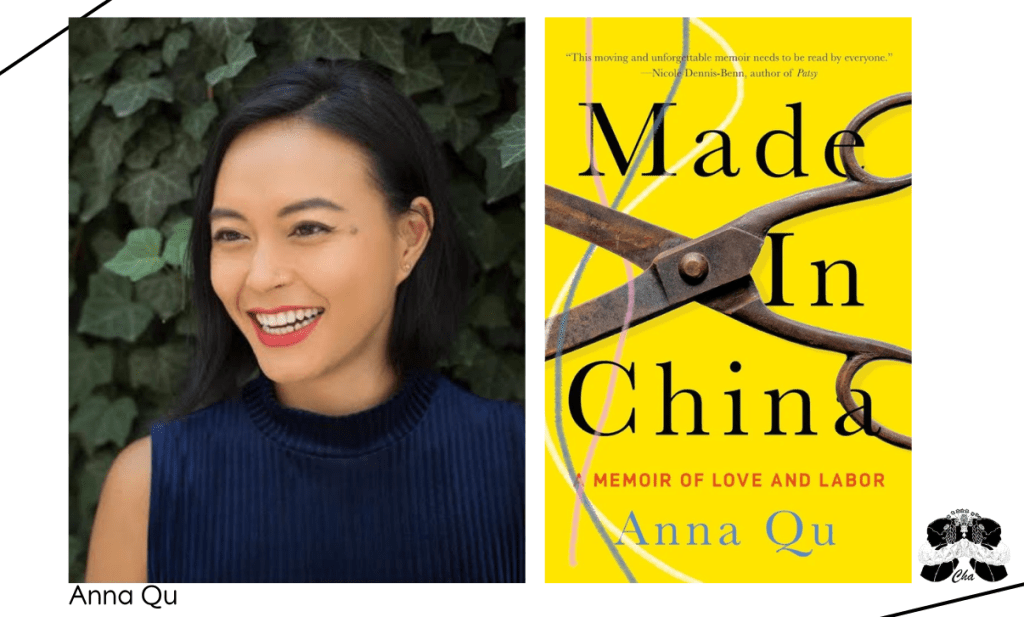
How to cite: Tse, Fion. “Negotiating Love and Labour in Anna Qu’s Made in China.” Cha: An Asian Literary Journal, 9 Apr. 2025, chajournal.blog/2025/04/09/made-in-china.


Fion Tse was born and raised in Hong Kong and works as a translator between English and Chinese (Cantonese and Mandarin). She studied Comparative Literature and East Asian Languages & Civilisations at the University of Chicago, and is currently pursuing an MFA in Literary Translation at the University of Iowa, where she is an Iowa Arts Fellow.
 Cha
Cha 