
📁 RETURN TO FIRST IMPRESSIONS
📁RETURN TO CHA REVIEW OF BOOKS AND FILMS
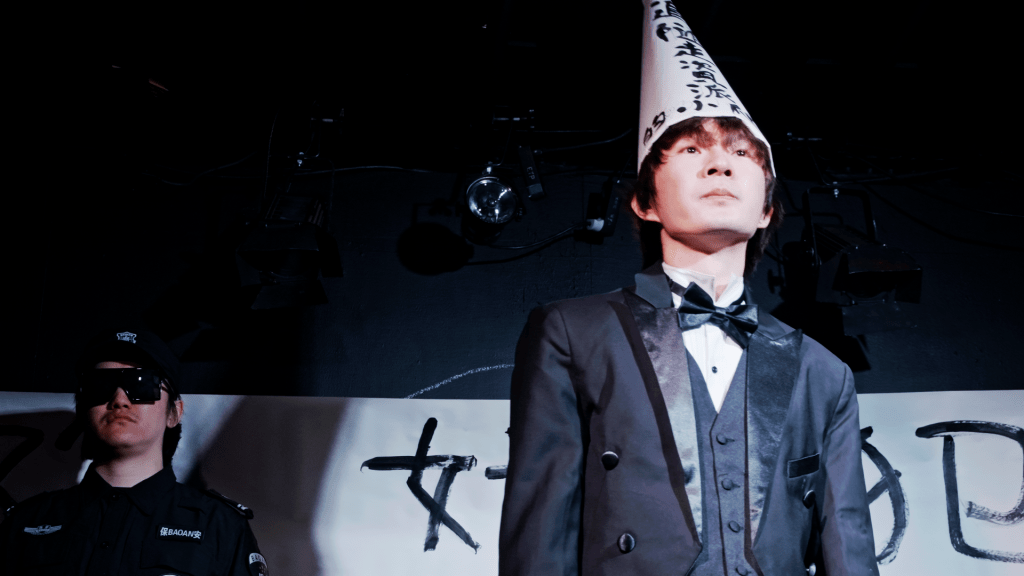
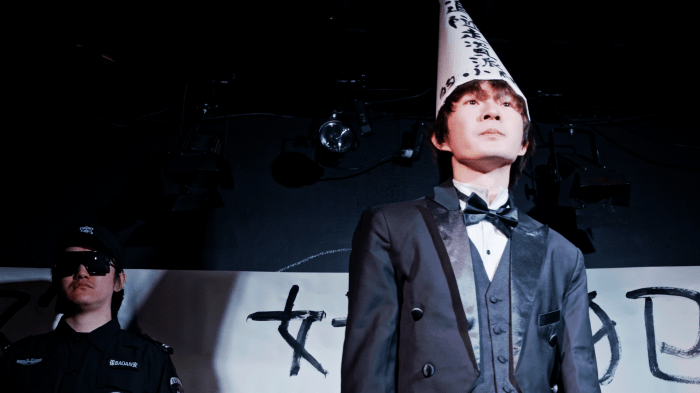
This is a review of the play Min forsvundne onkel (My Missing Uncle 我失蹤的舅舅) produced by Nydanskeren Jimbuts Kulturforening and premiered at Teater FÅR302, Copenhagen, on 2-12 April 2025. Image credit: Jacob Linholdt.
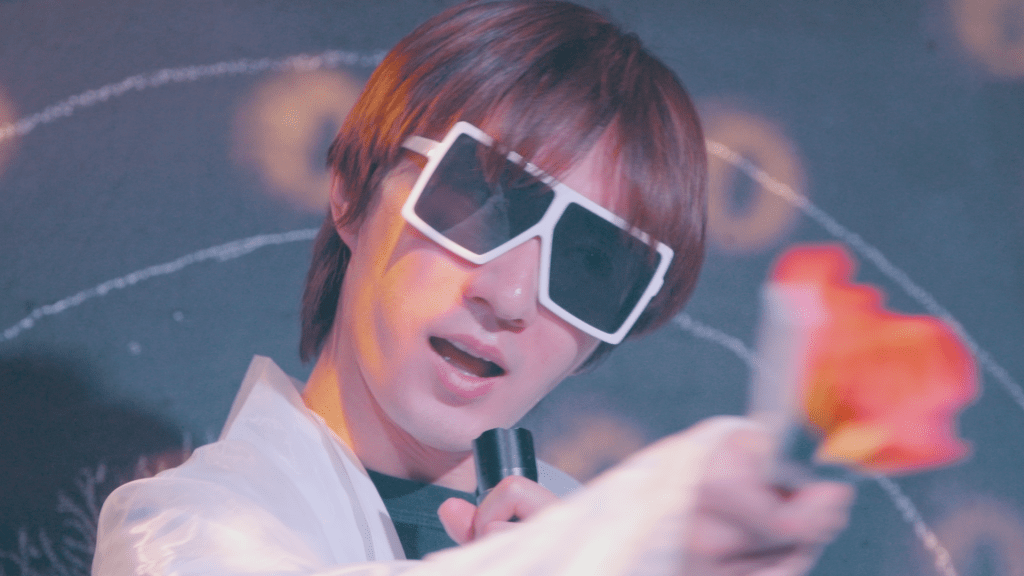
There are not many stage productions that centre on the Chinese queer experience—due in part to the censorship of LGBTQIA+ culture in contemporary China. In this context, Min forsvundne onkel (My Missing Uncle 我失蹤的舅舅), a Danish play about a missing Chinese gay man in the 1980s, offers a rare and poignant theatrical encounter. Written by Danish playwright Gritt Uldall-Jessen and directed by Norwegian theatre maker Tormod Carlsen, this one-hour production premiered in April 2025 at Teater FÅR302—Copenhagen’s smallest theatre, with just 47 seats. It is among the first plays staged outside China to explore Chinese queer history.
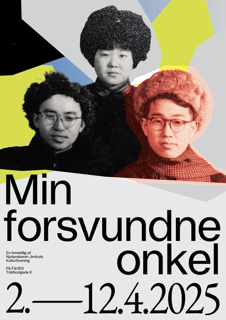
My Missing Uncle is based on the personal story of Danish-Chinese writer Jun Feng. Jun Feng had an uncle named Suiyuan, who enjoyed performing Yue opera but later vanished from society. Within the family, the uncle’s homosexuality was spoken of in disparaging terms; it was suspected that his sexual orientation brought him trouble and ultimately led to his disappearance. Little is known about Suiyuan’s life—and even less about his whereabouts—beyond Jun Feng’s fragmented memories and scattered interviews with family members and relatives. The play stands as Jun Feng’s tribute to his uncle and to the many LGBTQIA+ individuals who have disappeared or been rendered invisible in Chinese history.
The uncle’s story is interwoven with Jun Feng’s own. As a refugee who fled China and eventually settled in Denmark, Jun Feng often finds himself caught between identities—a refugee, a foreigner, a cultural outsider. In a monologue, he reflects: “I am a refugee, and in a way, my uncle can also be seen as a refugee. What kind of world have each of us escaped to?” The play thus becomes a meditation on the refugee experience—being a queer refugee in one’s own country, and a cultural refugee in another.
To explore the theme of the queer refugee and the cultural outsider, the play reenacts the classical Chinese tale Luoshahaishi 羅刹海市. Originally found in Liaozhai Zhiyi 聊齋志異, Luoshahaishi recounts a man’s journey to distant lands where he is perceived as different from the local inhabitants. While some mock his otherness, others embrace it. The tale serves as a fitting metaphor for the experience of being an outsider—it also suggests that another world exists, and that one must simply break away from this one to seek an alternative.
Despite its sombre themes, the play portrays queer love, resilience, and hope. One part of the narrative imagines—rather than recounts—a melodramatic and slightly kitsch love story between Suiyuan and his same-sex lover, Xiao Gezi, set during the Cultural Revolution. Although the two are ultimately separated by historical circumstances, they each hold on to the cherished memory of their love by the play’s end.
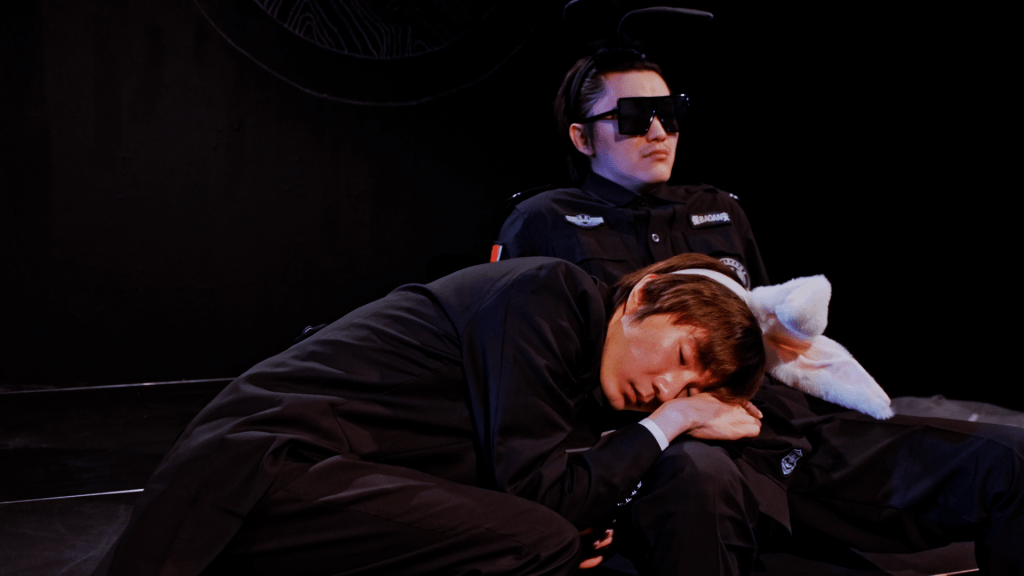
Given its multiple narrative strands, My Missing Uncle presents a complex story—or rather, several interwoven stories united by a shared theme. This complexity is heightened through techniques drawn from documentary theatre: recorded interviews with Jun Feng’s family members, conducted during the play’s research trip, as well as conversations with scholars in Chinese queer studies, are played in the background; intertitles and calligraphy appear on a digital screen, rendering the production a richly multimedia and multisensory experience.
The scenography, designed by Danish artist Malene Nors Tardrup, deserves particular commendation. The theatre space evokes a traditional Chinese residence, with a zigzagging entrance and passageway, a courtyard framed by moon gates, and a scholar’s study. Audience members are seated throughout the space, as if invited into Jun Feng’s home to bear witness to the unfolding narratives. The three actors—Jun Feng, Zenghao Yang, and Wang Xiangyu—perform in the spaces between the audience, occasionally engaging directly with them. The distribution of fans and the offering of water further contribute to an immersive experience, enhancing the emotional resonance and impact of the performance.
One might point to various historical inaccuracies—particularly in the background music and characters’ costumes—but strict accuracy is perhaps not the play’s central concern. Rather, it gestures towards the ambiguity, messiness, and often unknowability of history. What truly happened to the uncle may never be known; what matters is understanding the conditions that enabled such disappearance, and how similar tragedies might be prevented.
The play is performed in Danish, English, and Mandarin. It draws upon a wide range of Chinese and Western cultural references, including Luoshahaishi, the Rabbit God, Yueju Opera, and Jean-Christophe. A full appreciation of the work arguably requires some fluency in all three languages, as well as familiarity with both Chinese and European cultural contexts. Yet even without this background, audiences can still be moved by the play’s poignant love story and the intimate portrayal of one individual’s struggle as a cultural outsider in a hostile world.
My Missing Uncle is a stylish, contemporary international production that boldly reimagines a hidden queer history to speak to intersecting forms of marginalisation and intolerance—be they religious, racial, or sexual. It is a story of resilience, hope, and the pursuit of an authentic self and a more liveable world—one that will undoubtedly resonate with audiences across diverse linguistic and cultural backgrounds.
How to cite: Bao, Hongwei. “Reimagining Chinese Queer History and Looking for an Alternative World: A Review of My Missing Uncle.” Cha: An Asian Literary Journal, 5 Apr. 2025, chajournal.blog/2025/04/05/missing-uncle.


Hongwei Bao is a queer Chinese writer, translator and academic based in Nottingham, UK. He is the author of Queer China: Lesbian and Gay Literature and Visual Culture under Postsocialism (Routledge, 2020) and Queering the Asian Diaspora (Sage, 2025) and co-editor of Queer Literature in the Sinosphere (Bloomsbury, 2024). His poetry books include The Passion of the Rabbit God (Valley Press, 2024) and Dream of the Orchid Pavilion (Big White Shed, 2024). [All contributions by Hongwei Bao.]
 Cha
Cha 