

Kishore Kumar
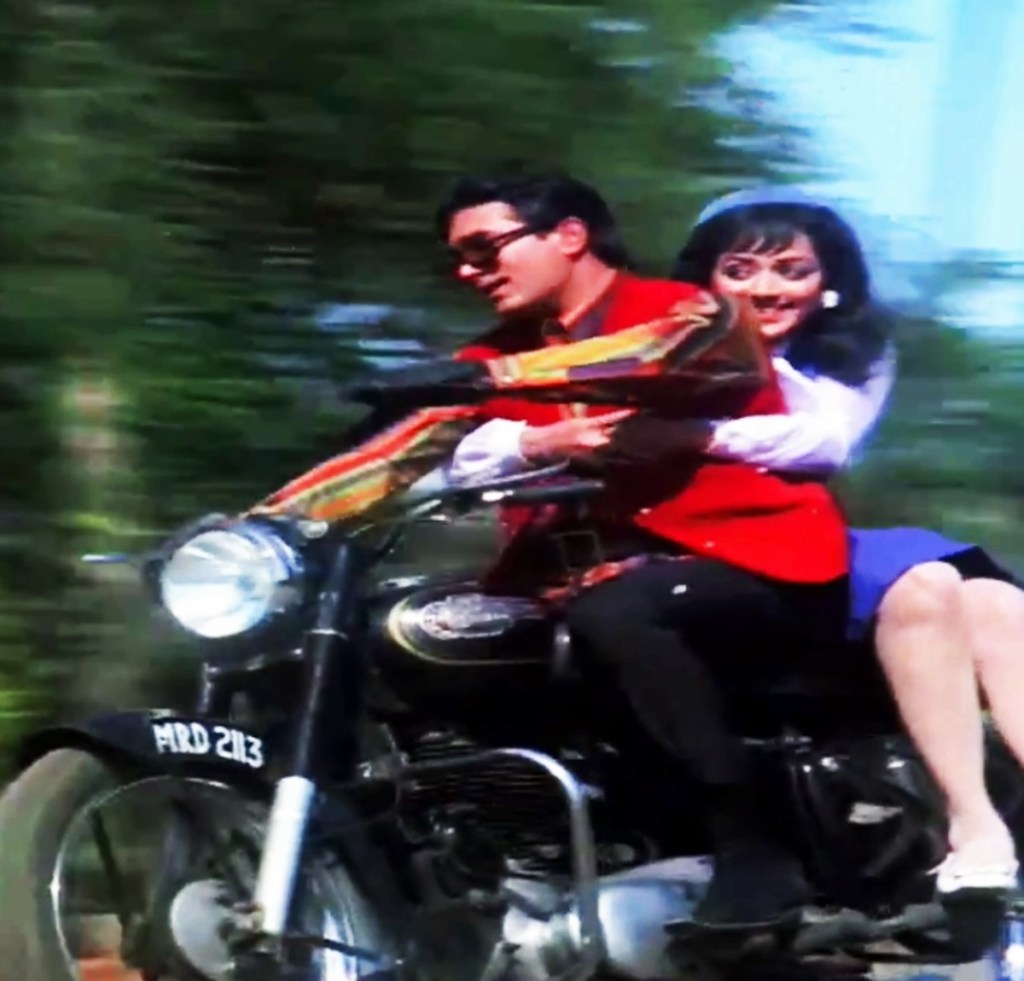
I was just five when I first “saw” Kishore Kumar—his presence flickering to life on the tiny black-and-white television set my grandfather had brought back from one of his work trips to the then-USSR. There he was—handsome, dashing, with a cherubic face—riding a motorcycle, oversized sunglasses perched on his nose, a lady clutching his waist as he cheerfully sang, “Yoodle yoodlooo…”
I have lost count of the times I tried to recreate that scene on my little red tricycle, sporting my cheap red sunglasses from the local fair. “Yoodle Yoodlooo…” I would belt out, pedalling with all my might up and down the passage leading to my parents’ house—feeling, if only for a moment, like a superstar.
It would take me another five years to realise that the man I adored—even before I truly understood what “adoring” meant—did not actually look like that.
It was 1989, and the local TV channel was honouring the second death anniversary of the legendary Kishore Kumar, dedicating every weekend that month to his films and songs. My mother, a devoted fan of classic cinema and timeless melodies, claimed the weekends as her own—and as the dutiful child, I happily followed along, swept up in the magic of his voice and screen presence.
Weekend afternoons meant cozying up beside Ma as she took a break from her household duties to lose herself in a film or her favourite songs. She would spread a mat on the floor, and I would settle beside her as she folded clothes, knitted, ironed, stitched, or chopped vegetables—her hands moving with practised ease, until, little by little, their rhythm slowed and she drifted off into a quiet nap. I would play quietly with my blocks or toys, careful not to disturb her, until, inevitably, sleep would find me too—lulled by the warmth of her presence, the soft hum of a melody still lingering in the air.
Over the next few months, I watched nearly every film Kishore Kumar had acted in and sung for, absorbing his infectious energy and timeless voice. But as I grew older, those memories gradually sank into the recesses of my mind, fading as I drifted away from the world of movies and music. In the years that followed, his name continued to surface in conversations about legendary singers. Many of the most acclaimed voices of our time regarded him as their guru, speaking with reverence about his extraordinary contributions to music, his unmatched versatility, and the magic he left behind.
Then, in my early twenties, I rediscovered Kishore Kumar—in the most unexpected way.

The early 2000s in India ushered in the era of remixes, with Indi-pop labels reviving classics from the ’70s and ’80s—giving them a glossy, modern twist. At the time, I was staying as a PG with a Didi nearly a decade older than me. One weekend, as I played one of these catchy remixes, I remember remarking, “These songs are timeless! They still sound so beautiful.” She looked at me knowingly and replied, “The originals are even better!” And that was it—that single moment became my gateway into the intoxicating world of Kishore Kumar. From that day forward, my playlist was never the same again.

As a book reviewer since 2010, I reached a point in 2022 where the demands of reviewing began to overshadow my personal reading. Books became tasks rather than escapes, and I felt my love for reading slipping away. To reclaim that joy, I decided to approach reading differently. Since then, I have chosen a theme each year, curating titles that resonate with me and allowing myself to read at my own pace—no pressure to review, no looming deadlines, no rigorous analysis. Just pure, unfiltered enjoyment—the way reading was always meant to be.
2024 was the year I chose to learn from the masters. For me, masters are individuals whose work resonates deeply—whether in cinema, music, writing, or any other creative field. My goal was to immerse myself in books that explore their lives, not through didactic or prescriptive texts, but through simple, intimate narratives that reveal the journeys, struggles, and inspirations that shaped them. I wanted to draw my own insights, to seek lessons not spelled out but felt—absorbing the essence of those whose work has profoundly influenced me as a writer and creative individual. And no list of masters who have shaped my creative world would be complete without Kishore Kumar.

So, there I was on a random afternoon in April, waiting with palpable excitement for my copy of Kishore Kumar: The Ultimate Biography by Anirudha Bhattacharjee and Parthiv Dhar. The anticipation was almost unbearable—I had cleared my entire weekend to read it uninterrupted, eager to lose myself in its pages. While I had enjoyed many KK and Me weekends before, this one felt different. There was a certainty in my heart that this experience would be unlike any other, a deep dive into the life and genius of the man whose voice had shaped so many moments of my own.
I finished the book that very weekend. Mind you, it is a hefty volume of 592 pages, yet I devoured it, utterly immersed, and by the end, it left me sobbing. Just as my initial introduction to Kishore Kumar had forever transformed my playlist, this book altered my life in profound ways. My admiration for him deepened—not just as an artist, but as a person—until it felt as though I had come to know him intimately, as if he were a dear friend rather than a distant legend.
The book, like any biography, begins with Kishore Kumar’s birth, leading us through his childhood, adolescence, and eventual foray into music and acting. Despite being a devoted fan for years and having read extensively about him, I was surprised by the many facets of his life that this book unveiled. Anirudha Bhattacharjee and Parthiv Dhar’s writing felt less like a conventional biography and more like an intimate tête-à-tête among three die-hard Kishore Kumar admirers, with me eavesdropping on their spirited conversation, absorbing every revelation, every anecdote, every insight with awe and delight.
His journey—from a child who stammered and struggled to speak clearly until his early teens to a man who could effortlessly hit every note with precision—is nothing short of astounding. He was truly gifted. As a writer who arrived at this craft through an unconventional path, I have often encountered snide remarks implying that only those with formal training in writing are “real” writers, while the rest of us are merely pretenders, producing fluff. Reading about a man who had no formal training in classical music, yet mastered his craft simply by listening to the great maestro K.L. Saigal, only to become one of India’s most beloved singers for over half a century, filled me with immense motivation. His story is a testament to raw talent, perseverance, and the boundless possibilities of passion.
Another reason I felt a profound connection to Kishore Kumar’s journey was his struggle against familial opposition in pursuing his dream of becoming a singer. His elder brother, Ashok Kumar, an iconic actor and a towering figure in Hindi cinema, had already achieved legendary status. Inspired by his brother’s success, Kishore moved to Mumbai (then Bombay) with dreams of making a name for himself—not in acting, but in music. However, Ashok Kumar was not in favour of this ambition. He believed the music industry was already saturated with extraordinary voices, with stalwarts like Mohammed Rafi at the forefront. Kishore, being entirely self-trained with no formal background in music, seemed—at least in Ashok’s eyes—to stand little chance of success. Instead, he encouraged his younger brother to pursue acting, a path he believed would offer greater stability. And so, Kishore stepped onto the silver screen, though his heart remained tethered to song.

The book effortlessly transports us to an era when India’s film industry was still taking shape, evolving into the cinematic powerhouse it would become. Dhar and Bhattacharjee masterfully recount Kishore Kumar’s journey, capturing the struggles and challenges he faced on his path to recognition as an actor. Renowned for his comic timing and on-screen antics, Kishore starred in films that met with varying degrees of success. While he managed to carve a niche for himself, his achievements in acting could never fill the void within him. For all the roles he played and the laughter he inspired, his true passion lay elsewhere—his heart belonged to music, not the silver screen.
It was not until the success of films like Ladki, Char Paise, and Baap Re Baap that Kishore Kumar began to take acting more seriously, paving the way for a string of successful lead roles from 1955 to 1966. However, it was during this very period that he also found his true calling—lending his voice to cinematic icons like Dev Anand and Rajesh Khanna, playing an instrumental role in shaping their on-screen charisma and enduring popularity. Kishore Kumar’s remarkable acting career spanned from 1954 to 1968, but it was as a playback singer that he etched his name into cinematic history. With eight Filmfare Awards for Best Male Playback Singer from a staggering 28 nominations, he set the record for the most wins and nominations in that category—a testament to his unparalleled talent and lasting legacy.
Anyone who admires Kishore Kumar is well aware of his tumultuous personal life—his multiple failed marriages, the swirling rumours of his eccentric behaviour, and his infamous clash with the ruling government during the Emergency in 1975. These episodes have long been woven into the mythology surrounding him. Yet, what many fail to see is the man behind the hearsay—a tender, loving soul who wore his heart on his sleeve. Amidst the narratives of chaos and controversy, one moment in particular moved me deeply: a note shared by his stepdaughter towards the end of the book. Though his multiple marriages painted him in the public eye as heartless and selfish, these pages revealed a man who knew only how to love. She reminisced about summer holidays spent at his home in Bombay, where he would sing to them with warmth and affection, his music filling their world with joy. Through those melodies, he unknowingly instilled in her a passion for music—one that would shape her future and lead her to become a professional singer herself.
Among the many controversies that shaped Kishore Kumar’s life, none was more prominent or enduring than his relationship with actress Madhubala. After her tragic passing, her family went to great lengths to cast him as the villain, shaping a narrative that lingered in public memory. Yet, this biography unveils a softer, more poignant side of the man—a lover who never truly let go. Even after her passing, Kishore Kumar sought to honour her memory, carrying with him the echo of a love that transcended time and loss.
Despite these many challenges, Kishore Kumar never received significant recognition in the form of major awards during his lifetime. Yet, his enduring popularity speaks for itself—a legacy far greater than any accolade could bestow. Decades after his passing, his songs continue to dominate music charts, and year after year, he remains one of the most streamed singers across all platforms. Regardless of age, everyone in India knows his name. He has left behind a musical treasure trove, an irreplaceable legacy with a Kishore Kumar song for every mood, every season, every heartache and joy. That is the magic he wove into his music—a magic that refuses to fade.
Kishore Kumar’s infectious love for life shone through in everything he touched—from the songs he sang and the films he starred in to the stories he directed and the friendships he nurtured. His passion was boundless, radiating through the love he shared with those around him. This profound affection for life, art, and people is beautifully woven into every page of the book, capturing the essence of a man whose spirit refused to be contained by convention or time.
Kishore Kumar was a keen observer of life, bringing a personal touch to everything he did. A renowned actor once recalled how Kishore would invite the stars he was set to sing for to his home—not merely as a formality, but to study their mannerisms, their laughter, their conversations. This intimate understanding allowed him to infuse their essence into his voice, ensuring that each playback performance felt uniquely tailored to the actor on screen. As a result, he became the perfect voice for an array of cinematic legends—from Dev Anand and Rajesh Khanna to Amitabh Bachchan. Everyone wanted Kishore Kumar to sing for them, for his voice did more than accompany a scene—it brought it to life. If he was the singer, the song was destined to be a hit, and with that hit, the film itself soared to success.
Ironically, some of the early films and songs he performed—initially dismissed or overlooked—are now revered as timeless classics, sheer masterpieces in their own right. What was once met with indifference has since been immortalised, standing as a testament to his artistry. Remarkably, despite having no formal training in music, Kishore Kumar never hit a wrong note.
Irony, thy name is Kishore Kumar! Even his passing bore the mark of his playful unpredictability. So accustomed was his family to his mimicry and pranks that when he suffered a fatal heart attack, it took them a moment to realise this was not just another one of his elaborate jokes.
Through this book, I also came to grasp the true essence of creative freedom and the consequences that arise when artists lack it. Art, in all its forms, needs space to thrive and evolve. Yet, the effects of censorship, governing laws, and restrictions on freedom of speech are often underestimated and under-discussed. Kishore Kumar’s life stands as a powerful testament to the profound impact these forces can have—both positively and negatively.
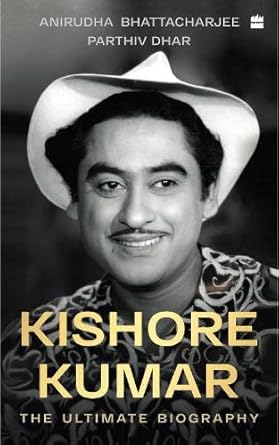
Kishore Kumar: The Ultimate Biography by Anirudha Bhattacharjee and Parthiv Dhar was rightfully honoured with a National Award this year, recognised as one of the best-written works on cinema. The sheer honesty of its narrative and the way it does justice to such a magnificent story make it truly deserving of this accolade. As devoted fans, Dhar and Bhattacharjee could have easily exaggerated or sugar-coated aspects of Kishore Kumar’s life, as is often the case with biographies of legends. Instead, they chose a different path—one that embraces complexity, nuance, and truth. They present his story in all its shades—both light and dark—capturing the essence of a man who lived with unfiltered honesty, wearing his heart on his sleeve.
If there is one lesson I have learned from this master, it is to follow your heart and pursue what you love. Name and fame are mere by-products—never chase them.
How to cite: Namrata. “Kishore Kumar: A Journey of Adoration and Rediscovery.” Cha: An Asian Literary Journal, 20 Feb. 2025, chajournal.blog/2025/02/20/kishore-kumar.



Namrata is the editor of Kitaab, a South Asian literary magazine based in Singapore, and the founder of Keemiya Creatives, a literary consultancy where she works with authors and publishers in various capacities. Namrata also hosts the Bookbot Theory, a podcast on book-marketing which aims to help authors make their books sell. A published author, an independent editor and a book reviewer, she enjoys writing stories and think-pieces on travel, relationships, and gender. She is a UEA-India chapter alumnus and has studied travel writing at the University of Sydney. Her writings can be found on various sites and magazines, including Kitaab, the Asian Review of Books, Contemporary South Asia Journal of King’s College-London, Mad in Asia, The Friday Times, The Scroll, Feminism in India, The Brown Orient Journal, Inkspire Journal, Moonlight Journal, The Same, Chronic Pain India and Cafe Dissensus. Her short stories have been a part of various anthologies and she has also published two short story collections of her own. Namrata is currently working on her debut novel. [All contributions by Namrata.]
 Cha
Cha 