

📁 RETURN TO FIRST IMPRESSIONS
📁 RETURN TO CHA REVIEW OF BOOKS AND FILMS
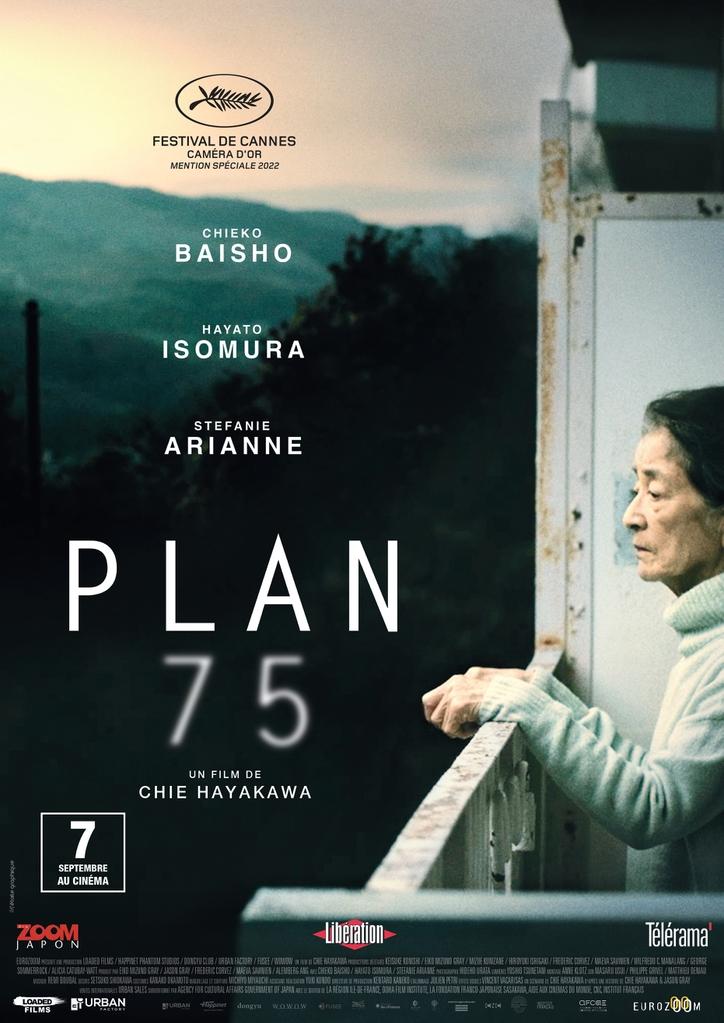
Chie Hayakawa (director), Plan 75, 2022. 112 min.
Perhaps storytelling is an indispensable part of being human? Perhaps we all need to tell ourselves—and each other—certain stories to get by? Perhaps, at the very least, we require these basic narratives and fictions: yes, life is fundamentally meaningful; yes, I have value; yes, she or he truly loves me?
Chie Hayakawa’s film Plan 75 (2022) is a seemingly paradoxical work in that it tells the story of an elderly woman, Mishi Kakutani, who has no more stories to tell. Too old to work, too weak to play an active role in the collective narrative that is society, too insignificant and peripheral to be of much interest to others—her life, her story, has come to an end. She therefore decides to sign up for Plan 75—a government-created programme offering free euthanasia services to all Japanese citizens aged 75 and older as a means of addressing the country’s rapidly ageing population. This fictional programme in Hayakawa’s film serves the narrative purpose of confronting us with the horrors of a life stripped of all fictions and narratives.
Without a single story left to hold on to—without any fictions to fill her lonely hours and days—Kakutani is existentially naked. Not even the possibility of being pitiful—not even the most minimal narrative of being a victim of cruel circumstances—is available to her. To be a victim, after all, one must not only have a story to tell but also people willing to listen. Her life is both too little and too much—too insignificant to matter, yet too burdensome to be ignored. She has fallen through all stories—a free fall through words and sentences that no longer connect, through silences unshared and unshareable.
Plan 75 is at once rich and poor, full and empty. It is a challenging film, in that everything it offers must be found within its very emptiness and narrative poverty. The story itself is so minimal and fragile that it seems in constant need of our help and support. As spectators, we are not so much given a story as asked to salvage one. The film therefore poses the same request to us as its protagonist does to those around her: Give me a story to hold on to! We may either dismiss this plea or attempt to answer it. The film’s richness or poverty depends entirely on our willingness to respond—which is to say, the film is not entirely tragic unless we make it so. Hayakawa leaves the decision to us. Do we offer a story, or not? In Plan 75, this emerges as the most crucial and ethical of all questions: a human without a story might as well be dead.
Most films seem quite content to remain pure fictions, leaving reality untouched. They give the impression that reality and fiction are two easily separable realms, each with nothing to do with the other. Plan 75 not only challenges this notion but insists upon the opposite: to have any reality at all, one must first be part of a story. Reality begins with fiction. Outside storytelling, there is neither truth nor reality—only non-existence. The real does not begin where fictions end but rather with the birth of a new story. Everyday life is the daily renewal of the ancient art of storytelling. And the claim that all grand narratives are dead, as some philosophers suggest, is, of course, only as true as the story it makes for.
How to cite: Kølle, Anders. “The Stories We Live By: Narrative, Meaning, and Existential Emptiness in Chie Hayakawa’s Plan 75.” Cha: An Asian Literary Journal, 15 Feb. 2025, chajournal.blog/2025/02/15/plan75.

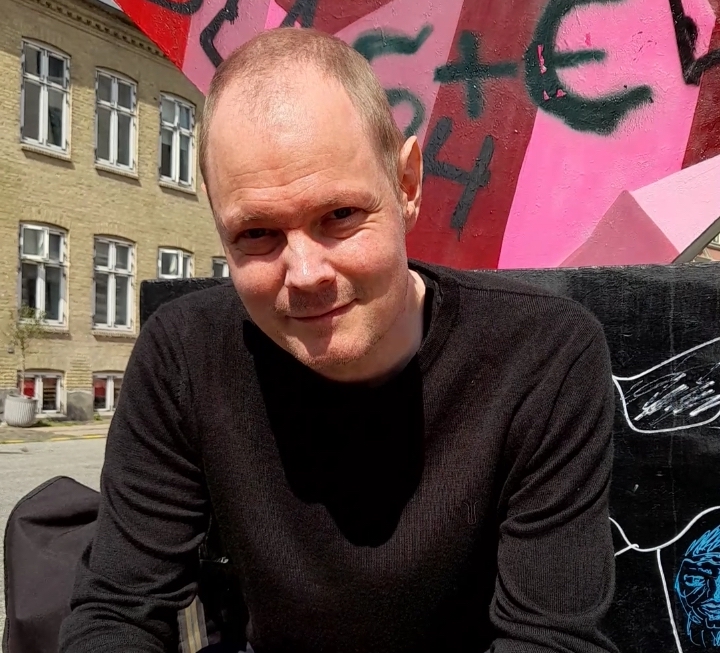
Anders Kølle is lecturer of Communication Arts at Khon Kaen University, Thailand. Holding a PhD in Media and Communications from The European Graduate School, he has taught art and philosophy at several universities, including the University of Copenhagen and Assumption University, Bangkok. His work focuses on contemporary encounters between philosophy and art, and on art’s potential to produce new modes of thinking and create new forms of critique. His publications include On Being Ridiculous (Delere Press, 2024), The Technological Sublime (Delere Press, 2018), and Beyond Reflection (Atropos Press, 2013). [All contributions by Anders Kølle.]
 Cha
Cha 