
📁 RETURN TO FIRST IMPRESSIONS
📁 RETURN TO CHA REVIEW OF BOOKS AND FILMS
Peter Ho Davies, The Art of Revision, Graywolf Press, 2021. 192 pgs.
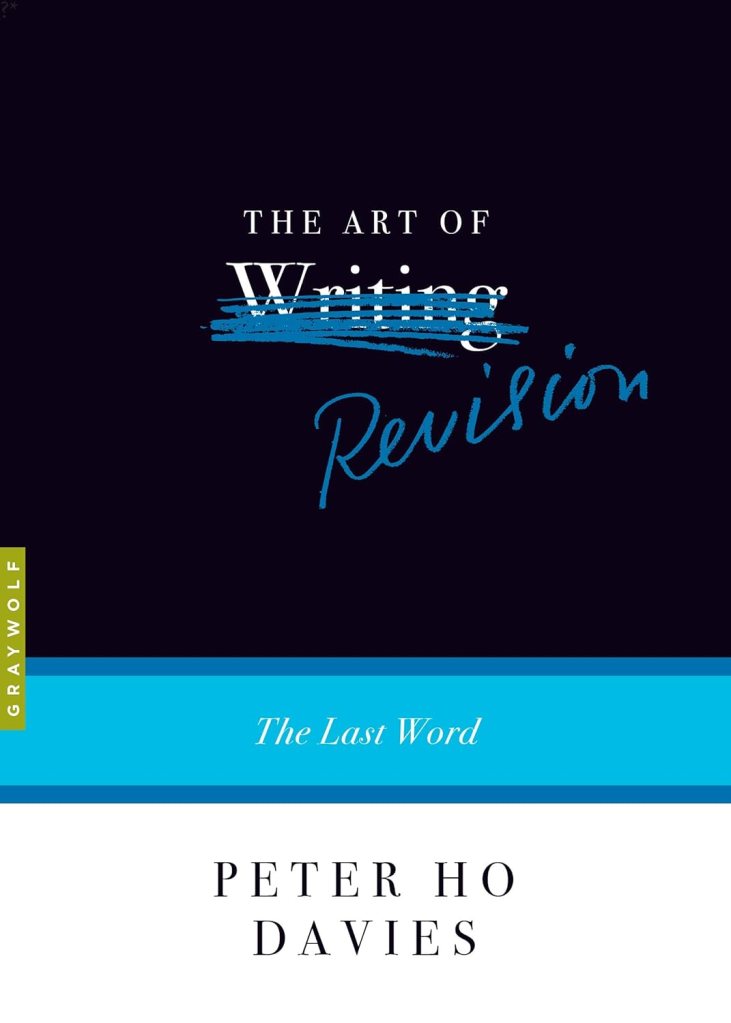
While I wasn’t particularly aware of the Graywolf Press series to which this book belongs—The Art of…, curated by Charles Baxter—I was certainly familiar with Graywolf, and, of course, with Baxter himself, a writer I deeply admired when I first began reading contemporary short stories. He also directed the MFA programme at the University of Michigan for many years. I was aware of the British author Peter Ho Davies, though I confess I had yet to read his work, despite registering the significance of his mixed heritage in his name. In fact, he had been on my reading list for some time. When the opportunity arose to review this book, what could I do? I seized it.
The very notion of the Art of series is inherently appealing to writers like myself. Each compact volume is described as “a brief, witty, and useful exploration of fiction, non-fiction or poetry by a practitioner of contemporary literature, impassioned by a singular craft issue.” But Ho Davies’ The Art of Revision: The Last Word came to me at a particularly opportune moment—one that rendered it utterly irresistible. At present, I am struggling through a novel I first began in 2009 before setting it aside, only to return to it sporadically in 2015, 2017, 2019, and most recently, 2023. I am still at it. This delay has been exacerbated by profound personal loss, the pandemic, and, of course, the usual writerly procrastinations—paying projects, editorial commissions for essays and short stories, and, yes, even reviews such as this. As Joyce Carol Oates has observed, a writer derives undeniable satisfaction from completing things. I have completed other things. But this novel? Until I read this book, I felt I could not finish it.
In 2017, I had the privilege of speaking to two sections of Creative Writing students at SUNY College at Brockport. Almost impulsively, as I now recall, I told them that revision was my absolute favourite aspect of writing—far preferable to the agonising process of drafting, in which one must wrestle with the blank page, filling it with words in a desperate attempt to make something of substance appear. To me, this initial process has always been the most difficult, tortured endeavour.
It has always been my struggle—the act of trapping the idea on the page, capturing it alive, and bringing it to completion. In Tagalog, writers ask one another—Nabuo mo na? Have you completed it? But this English translation is inadequate. The Tagalog word buo (bu-o) is closer in meaning to whole. Have you made it whole? And once a piece of writing achieves this state, only then can one begin revision. Making something whole is writing. That is what I have been doing for years with this novel—getting to know my characters, discovering their desires, and understanding their motivations. But how could I begin revising something that was not yet buo?
Until Ho Davies’ book, I believed revision was a process that took place afterwards. I had thought that the difficult work was bringing the novel into existence—that once it was fully formed, I would be ready to revise.
Ultimately, Ho Davies makes one thing clear—the act of writing is revision. It is the constant push and pull on the page, the repeated re-visioning—that is, seeing again. Writing is revising.
Revision is not merely a matter of grammar and punctuation—though these are certainly part of it—but rather concerns the structure of the narrative, the arcs of every character, and the very choice of protagonist. This makes Ho Davies’ book the ideal companion for novelists, regardless of which draft they are currently grappling with. With clarity and eloquence, he demonstrates how meaningful fiction is forged from life’s truths. To this end, he draws upon a range of contemporary novels—including his own works, The Welsh Girl and The Fortunes—to illustrate that writers do not always know their intent when they begin writing. Rather, it is through the act of writing and revising that they uncover their purpose.
“That’s how you know you’re done…” Ho Davies writes, “…when you understand why you told your story in the first place, what your intent actually was all along. Doneness by these lights is at once our last and first inspiration, the satisfaction it evokes less perfection than wholeness. And the wholeness of revision, more than the sum of all our changes, is revealed to lie in this understanding.”
There is that word again—whole. Buo. This is likely Peter Ho Davies’ final word—the one referenced in the book’s title.
It is a handbook, a bible, a means of breaking free from procrastination and lethargy, a way to return to the work. Graceful, absorbing, and inspiring, Ho Davies redefines revision—not as a separate step in the process but as the process itself. At under 200 pages, The Art of Revision will compel practising writers to return to their work, to see it anew, and, crucially, to write once more.
How to cite: De Jesus, Noelle Q. “The Last Word on Writing: Peter Ho Davies’s The Art of Revision.” Cha: An Asian Literary Journal, 14 Feb. 2025, chajournal.blog/2025/02/14/art-of-revision.

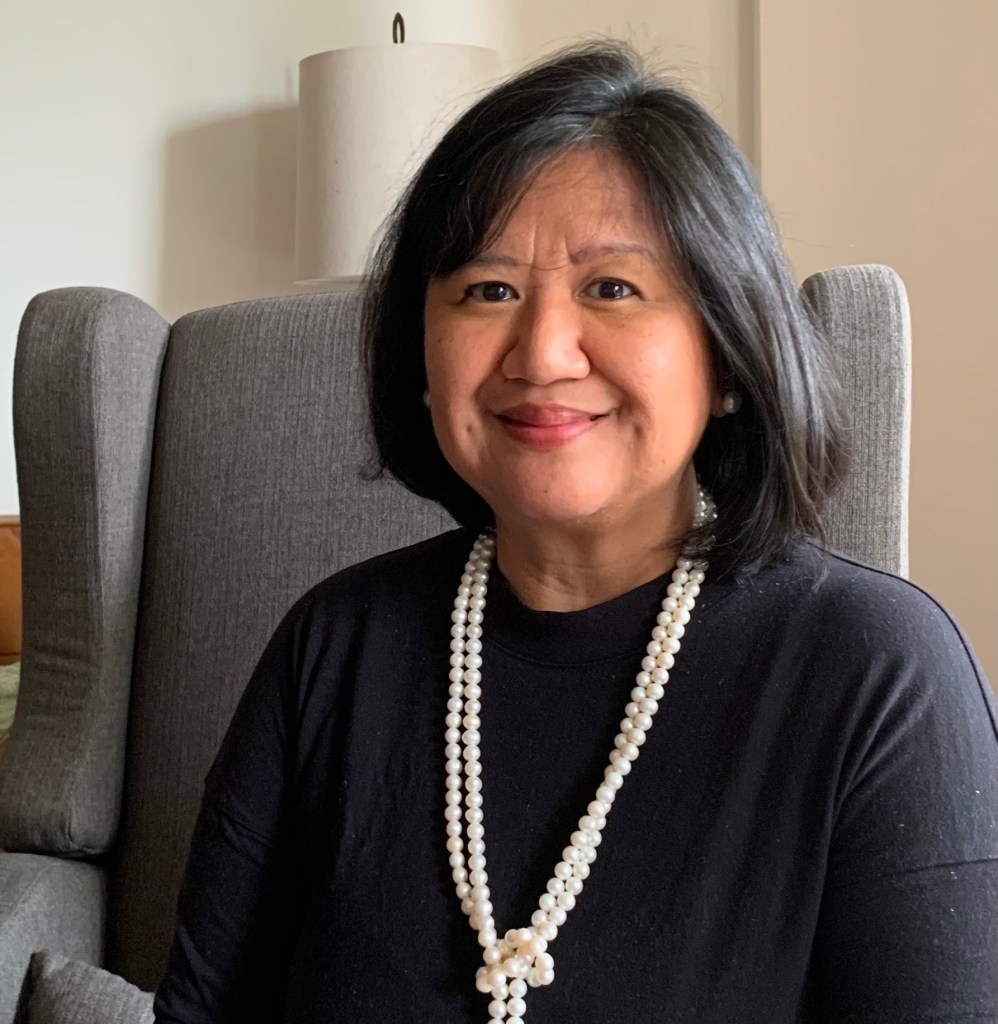
Born in New Haven, Connecticut and grew up in Manila, Noelle Q. de Jesus is currently based in Singapore. She is the author of Cursed and Other Stories (Penguin Random House SEA, 2019) and Blood Collected Stories (Ethos Books, 2015), which won the Next Generation Indie Book Award for the short story and was translated into French under the title Passeport (Editions Do 2020). She also wrote Mrs MisMarriage (Marshall Cavendish International, 2008) under her married name and the children’s book A Summer Day of Nothing but Everything (GK Initiative, 2010). She has edited flash fiction anthologies and her co-edited Missed Connections: Microfiction from Asia is forthcoming from Marshall Cavendish later this year. Apart from fiction and the occasional poem, she translates literature from Filipino to English. Most recently, she translated Filipino screenwriter and National Artist Ricky Lee’s first novel, For B or How Love Devastates Four Out Of Every Five Of Us. Noelle was a fellow at the University of the Philippines’ Writers Workshop and she has won a Palanca Award and helped found Cosmopolitan Philippines. She has read her fiction at the Filipino American Book Festival in San Francisco, the Writers Forum at SUNY Brockport, NY, Yale-NUS Writer’s Center and many times at the Singapore Writers Festival. She considers her son and daughter to be her best work. [All contributions by Noelle Q. de Jesus.]
 Cha
Cha 