

📁 RETURN TO FIRST IMPRESSIONS
📁 RETURN TO CHA REVIEW OF BOOKS AND FILMS
Kang Hwagil (author), Clare Richards (translator), Another Person, Pushkin Press, 2023. 302 pgs.
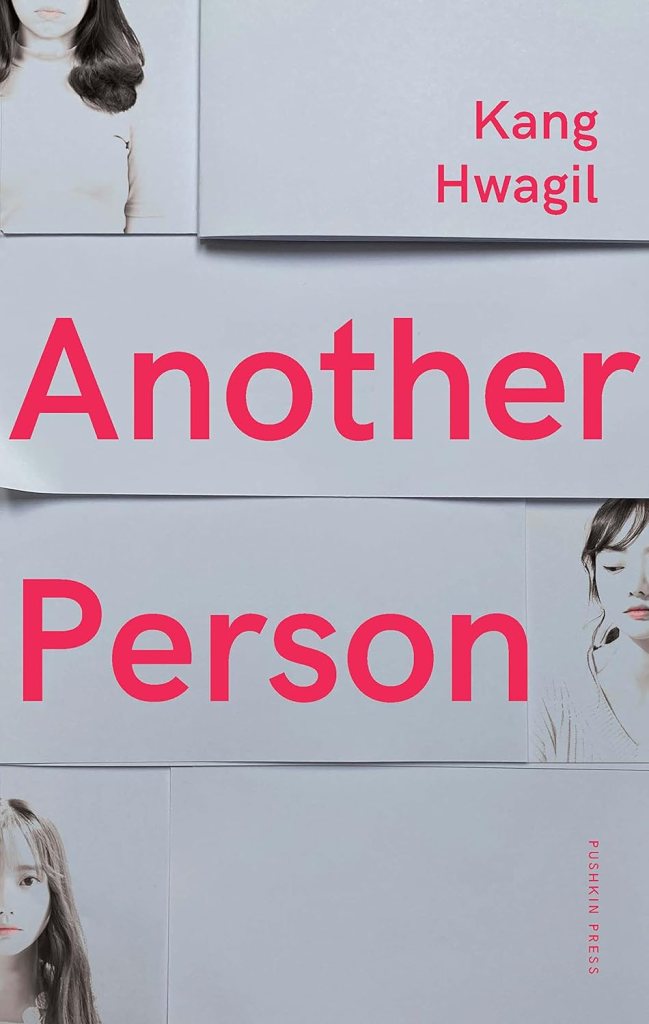
When her boyfriend chokes her for the fifth time since their office romance began, Kim Jina takes decisive action by reporting him and making their relationship public—a defiant act of self-preservation spurred by his menacing threats of revenge. Their so-called “love” story mirrors the dynamic of a wolf hunting a hare. Hiding his predatory nature behind a meticulously groomed appearance, the man projects an image of a caring and considerate bachelor, feeding Jina’s illusion of being important to him. It is only when the hare falls into the trap that she realises the wolf’s deceptive nature. Loving a man, she rationalises, is no easy feat; it comes with doubts and disappointments. This is how Jina justifies their abusive relationship. This is why she excuses his behaviour when he slaps her for her “unacceptable” remarks on reversed gender roles. Her desperate need for his love turns her into a silent accomplice—a lover who tolerates, endures, and forgives the unforgivable.
After the exposure—despite the company’s calculated efforts to gaslight and victim-blame her in a bid to contain the scandal and salvage their reputation—Jina resigns from her job, and spends her days scrolling through social media to gauge public opinion. Checking online comments becomes both a routine and an obsession, making her question her individuality. This compulsion underscores the insidious grip of a culture of shaming that dominates discourse around sexual assault, silencing victims and discouraging them from sharing their truths. Publicly announcing her newly imposed identity as a sexual assault victim feels daunting. Amid the deluge of online reactions, she finds both words of encouragement and a prevailing undercurrent of judgment. Helpless and dispirited by these reactions, compounded by her loss of faith in a legal system that neglects victims’ well-being, Jina feels trapped without resolution. Yet, when one comment piques her curiosity, her speculation about its author leads her back to Anjin University, the place where everything began. There, the pieces of her past begin to surface: the mystery surrounding the untimely death of her classmate, Ha Yuri, and the unexpected reappearance of her long-lost childhood friend, Yang Sujin. What awaits her is not only the truth but the possibility of reclaiming her agency amidst the shadows of the past.
Another Person is unequivocally one of the most compelling Korean feminist narratives I have ever encountered. The myriad gender-related issues and arguments the story tackles—from sexism and favouritism in academia to the complicity of women in sexual violence—make it a nuanced and multi-faceted interpretation of sexual assault. These themes are explored through chapters narrated from the perspectives of victims, perpetrators, and accomplices, with the victims’ voices forming the majority of the narrative. In the aftermath of the assault, the narrative probes the dual burden of external gaslighting and internal self-gaslighting. Beneath the victim’s deeply ingrained feelings of guilt and shame lies a profound fear of losing everything she has painstakingly built—a fear that often traces back to a fraught childhood. Growing up with less than others, she learns early on the cruel dynamics of power: the necessity of currying favour with those who exploit and manipulate the vulnerable. This fear of dispossession feeds into a reluctance to remember or revisit the assault. To cope—for forgetting is an impossible task—she devises and resorts to survival mechanisms such as diary-keeping, letter-writing, reading, or storytelling, using these tools to make sense of her trauma. Her survival hinges on these acts.
Furthermore, the secrecy surrounding the victim’s experiences reflects not only the entrenched culture of shaming but also the societal expectation of female self-regulation, where silence is exalted as the feminine ideal. The narrative also dismantles myths and misconceptions about sexually transmitted diseases (STDs) and their implications for women. STDs such as HPV are often framed as exclusively women’s health concerns, reinforcing the erroneous belief that men are merely bystanders rather than carriers. Fear of losing the man or being coerced into sex compels the victim to continue engaging in sexual acts despite her deteriorating health.
Reading chapters narrated from the perspectives of perpetrators and accomplices is a profoundly infuriating experience. These characters, entrenched in toxic rationalisations, often attempt to justify their reprehensible behaviour and distorted beliefs. The author employs an ingenious narrative technique, leaving these characters’ accounts shrouded in silence and rendering them unreliable narrators. This narrative choice amplifies the critique of a broader toxic culture that undermines the integrity and credibility of academia. Beyond exposing the systemic gender bias and corrupt leadership within academic institutions, the narrative also takes aim at the hollow gestures of performative activism. Male academics pose as feminist allies to gain favour, while their female counterparts adopt a diluted, “not-too-aggressive” feminism. However, when faced with reports of sexual assault, these academics—male and female alike—unanimously turn a blind eye to protect their institutions’ reputations and their own self-interest. In the end, they are unmasked as pseudo-feminists.
Written in a straightforward yet deeply engaging style, Another Person reveals sexual violence as not merely a series of isolated incidents but as an institutional issue rooted in systemic social injustices, including wealth and gender inequality. At its heart, however, this is a story about female friendship and betrayal, as well as the extraordinary courage it takes to voice one’s truth, bear witness to the stories of others, and offer support. The narrative masterfully illuminates these themes, making it a vital and timely contribution to feminist literature.
How to cite: Teoh, John. “Unmasking Toxic Cultures: Kang Hwagil’s Another Person.” Cha: An Asian Literary Journal, 29 Jan. 2025, chajournal.blog/2025/01/29/another-person.



Graduated with a BA and MA in English, John Teoh is a literature lover based in Malaysia. His fields of interest include post-colonialism, anti-colonialism, and gender studies. He owns and runs an Instagram page (@johnisreading) where he publishes his thoughts on what he reads. [All contributions by John Teoh.]
 Cha
Cha 