

茶 FIRST IMPRESSIONS
茶 REVIEW OF BOOKS & FILMS
[EXCLUSIVE] “You Are Not of Human Kind: A Freudian Comparison of Liaozhai and Nosferatu” by Angus Stewart
Robert Eggers (director), Nosferatu, 2024. 132 min.

Over Christmas, I finally lifted my copy of Pu Songling’s Strange Tales from a Chinese Studio off the shelf. It is often referred to in English by its original Chinese name, Liaozhai Zhiyi, or simply Liaozhai.

I read Liaozhai and found—as expected—that it was flush with fox spirits. Then, I discovered that the central murder in the next book I picked up, Midnight in Peking, takes place near a “fox tower,” prompting the author, Paul French, to maintain a fox spirit motif throughout the text. Days later, I opened Instagram and saw that a friend visiting Xi’an had dressed up as a fox spirit (apparently there’s not enough to do there). Only a couple of weeks later, a fox began to follow my dog Hazel and me during our sunrise walks in the local cemetery. A pattern had emerged.
A little after New Year, I went to the cinema and saw Nosferatu. Soon after, I finished Midnight in Peking and decided to keep the thread of sex and death alive by selecting Freud’s Civilisation and Its Discontents as my next read. Now I was threading a pattern myself and wished to continue it by comparing Songling’s scholars and spirits with Robert Eggers’s monster and maiden.
There’s nothing particularly original in pointing out commonalities between fox spirits and vampires. An alluring supernatural creature comes a-calling in secret to the bedchamber and robs one’s essence through an intimate embrace. It would only be a little more perceptive to suggest sleep paralysis and its “night mare” as a sort of biological spawning ground from which all the world’s incubi and succubi—vixens and vampires included—came creeping.
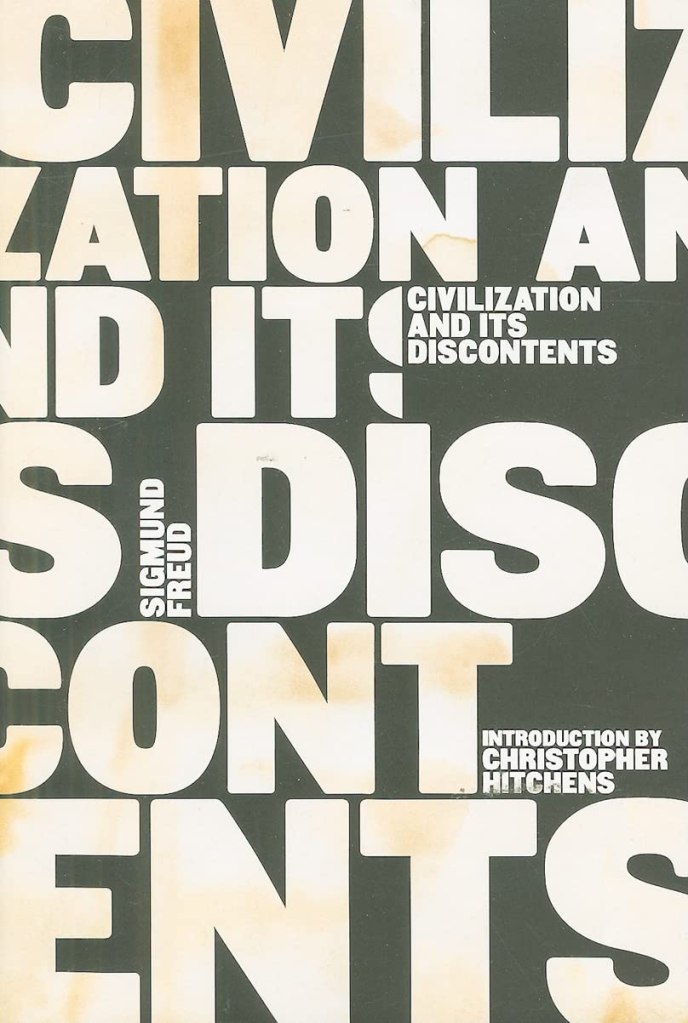
Invoking Freud invites deeper discussion. Civilisation and Its Discontents, one of the Austrian’s later works, feels especially appropriate. Freud posits that we are all governed by competing and counterbalancing drives and pressures, none of which can be completely sated or satisfied without veering into ill health or dissolution. “Civilised” European society at the time expected all sexual activity to occur within heterosexual marriage and to be kept to a minimum—for reproduction only, please. Freud viewed this as a recipe for misery. In Civilisation, he advocates for sex to be considered a human need that individuals should explore and satisfy—but does still consider heterosexual (and genital) norms to be the ideal. I feel the relevance to Nosferatu and Liaozhai resonates strongest when he considers gender alongside lust and its limitations.
In Civilisation, Freud never comes across as a feminist. His habitual focus on male experience, often at the expense of women (hello Confucius), persists. But concerning the norms of his time, he describes and differentiates how young men and women are affected by the social constraints imposed on their sexuality. Women are kept in the dark, not only unsatisfied but also uneducated. Men, by contrast, are permitted an out—a double standard where they may sow their oats before marriage. Freud says that when such a man and such a woman marry, the result is often unhappiness, and no sexual satisfaction within marriage. That said, he also notes that a man who has taken advantage of the double standard achieves an edge over more obedient men in his appeal to potential brides—because in such a union, one party brings some knowledge of the terrain. Some familiarity with the animal nature pulsing beneath the skin.
Civilisation aligns more seamlessly with Nosferatu than with Liaozhai, as its central character is a 19th-century European woman, Ellen, who is miserable right from the start due to her unfulfilled desires. The film opens with a young Ellen weeping and praying for a spirit or angel to comfort her. Something sinister calls back, and we hear Ellen letting out little, rising gasps—seeming to approach orgasm, real or metaphorical, before the vampire, now material, severs the erotic thread by grabbing her throat in an almost relievingly conventional jumpscare.
The narrative then leaps forward several years to Ellen waking to find that her husband is absent from their bed. Her kisses fail to draw him back. And when peril threatens, neither he nor any other man will take her seriously, with the exception of two esoteric elders. Willem Dafoe’s Van Helsing analogue plans with her as an equal and tells her that in another age she would have been a priestess, while the vampire Orlok offers compliments that are both deadly serious and cryptic: “You are not for the living… love is inferior to you… you are not for human kind…”
We learn that Ellen’s early nightmares of vampiric visitation ended upon her marriage. Through the lens of Freud’s Civilisation, we might say that her desires were initially repressed by the demands of society, then perverted inward to become a masturbatory fantasy entangling punishment and the death drive, then redirected and sublimated to some extent via a heteronormative marriage. But before long, good society will not suffice, and the repressed returns as a monster—an unkillable primal force seeking its awful union. Without resorting to black magic, we can agree with the villain that Ellen really is not for this world—and perhaps many or most humans are not, even in our age of relative sexual freedom and relative gender equality. There will always be an allure to climbing out the window or ripping one’s sheets to shreds.
So what of Liaozhai? Well, Pu Songling himself may not have been for this world. His preface feels of a kind with the young Ellen’s despair:
Midnight finds me
Here in this desolate studio
By the dim light
Of my flickering lamp,
Fashioning my tales
At this ice-cold table,
Vainly piecing together my sequel
To The Infernal Regions.
I drink to propel my pen,
But succeed only in venting
My spleen,
My lonely anguish.
Is it not a sad thing,
To find expression thus?
Alas! I am but
A bird
Trembling at the winter frost,
Vainly seeking shelter in the tree;
An insect
Crying at the autumn moon,
Feebly hugging the door for warmth.
Those who know me
Are in the green grove,
hey are
At the dark frontier.
(Translated by John Minford)
One wonders if the prospect of conjuring foxes to his studio brought him any cheer. Pu Songling is himself part of a pattern in Chinese literature—a disappointed scholar, locked out of the civil service by repeated failures in his exams. Those with frustrated worldly ambitions often heed the call of the strange. In Liaozhai, the weird and supernatural are suffused into the everyday, and while sexual encounters are not a part of every story, they do feel like they are always just around the corner. In Civilisation, Freud suggests that in their work, adults have an opportunity to sublimate unspent or stymied libidinal energies, transfiguring what might have become lust, frustration, and even unwanted pregnancies into production, creativity, and some measure of dignity that can survive the cruel demands and disappointments of society—while still allowing the worker (or artist) the compensatory comforts of its shelter.
Many of Liaozhai’s protagonists are, just like their authors, male scholars secluded in studios. In a recurring form of story that we might here cheekily call “vampiric,” there comes a beautiful lady visitor. She will very likely be a fox in human form, but she may also be a ghost—undead, we might dare to say. From here the author wastes no words on flirtation or innuendo. The couple couple, and the core drama unfolds post-coitally. The relationship between man and fox is enticing but never sustainable. Freud’s concept of libidinal economy is akin to the Chinese concept of a man’s yang essence, in the sense of being a limited internal energy that will exhaust the individual if spent faster than it can regenerate. Our enamoured, imperilled scholar will be drained of his essence over time, so he must either waste away, see the fox killed or banished, or tame her to become his wife or concubine.
In Bram Stoker’s Dracula, the victims Lucy and Mina never have an equivalent of that third path to victory, except its inverse: bridal subservience. As for Ellen, and whether she might tame her Nosferatu, I can only say: watch the movie. In any case, the demands of Pu Songling’s society, the early Qing, become visible here. It becomes pertinent—or at least interesting—to turn to gender.
Women who are subject to supernatural visitations in Liaozhai are not so lucky as the men. Violation, rather than languid pleasure, is the tendency. And they are also subject to double standards that, while not identical to those of 19th-century Europe, are comparable. The men of Liaozhai aren’t required to be monogamous. Male chastity is praised but not expected. If a scholar can tame a spirit and bring her into the family home as a concubine, to live alongside his wife, the text considers this a harmonious ending. But a lady must take only one husband, be faithful to him, and save him from his own sexual misadventures—as in the case of The Painted Skin, one of the most retold stories in the collection. I am not sufficiently qualified to judge whether such stories comment on, criticise, endorse, or simply reflect the conventions of the society they arose from.
To round off this frivolous comparison of vixens and vampires, I’ll underscore one glaring difference between Nosferatu’s Orlok and Pu Songling’s foxes: their own capacity for civilisation.
Fox spirits appear to conduct their own society, sometimes overlaid upon the human world, and sometimes running in parallel seclusion. Western analogies might be, respectively, the aliens who live among us in The X-Files and the hidden lands of the fairy folk in Celtic mythology. You meet a nice fellow, share a few cups of wine, and once he trusts you, he lets you see his tail. Or you meander down an unusual path and stumble upon a vulpine villa that you swear wasn’t there yesterday. The fox people seem to run their own affairs quite effectively—if anything, the tinge of the weird lies in how similar those affairs are to those of the Han.
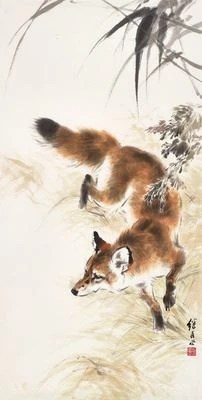
Orlok is quite the opposite: a one-man show. When he receives a guest, there’s a fire going and scant furniture laid out—but come morning, that’s all gone, hinting that any signs of adherence to a social bare minimum were illusion; a performance briefly necessary for dark ends. Like him, the foxes of Liaozhai are no strangers to trickery—but they don’t have to play pretend to convince us that they are more than raw drive and appetite; curious creatures possessing souls, emotions, and sincere reasons for intruding upon the moonlit rooms and restless dreams of refined human civilisation.
How to cite: Stewart, Angus. “You Are Not of Human Kind: A Freudian Comparison of Liaozhai and Nosferatu.” Cha: An Asian Literary Journal, 12 Jan. 2025, chajournal.com/01/12/nosferatu.


Angus Stewart is a Dundonian living in Greater Manchester who writes occasional strange stories and essays. His works have appeared in various small publications including Ab Terra, STAT and Dark Horses. His show, the Translated Chinese Fiction Podcast, is on hiatus. [All contributions by Angus Stewart.]
 Cha
Cha 