
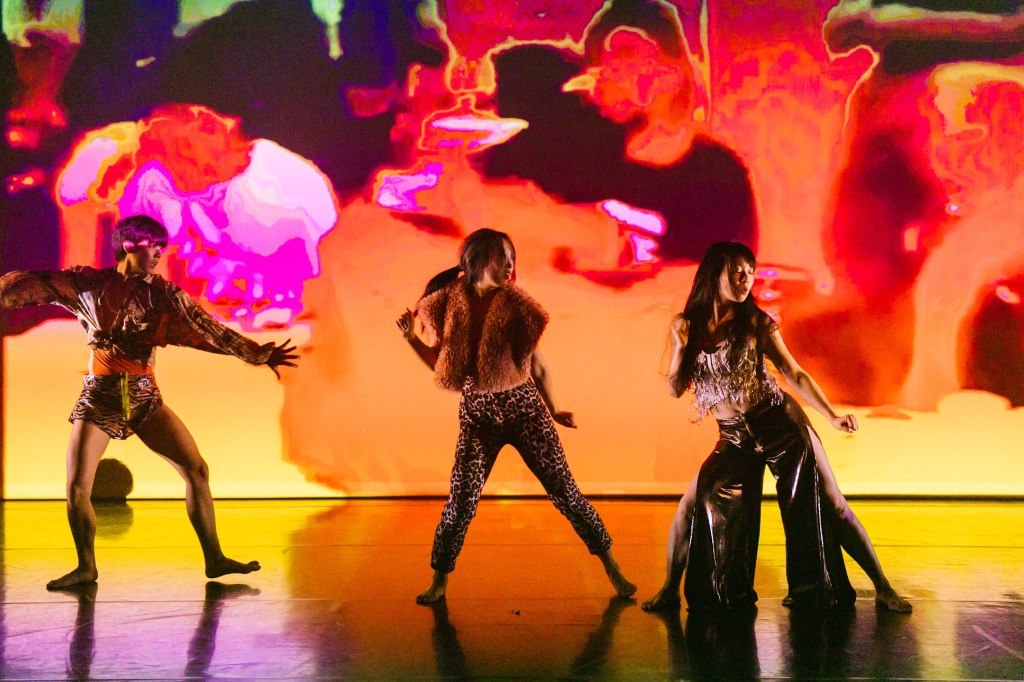
Author’s note: This is a review of the Disco-TECA performance that took place at The Stage, London, as part of Queer East 2024, which may be different from its previous or subsequent versions. A trailer of the show can be viewed here and an interview with the choreographer Ergao here. Information about the show’s research and development processes as well as early productions in China can be accessed on the Ibsen International website. {Photos © Ergao Dance Production Group & Queer East Festival}

📁 RETURN TO FIRST IMPRESSIONS
📁 RETURN TO CHA REVIEW OF BOOKS AND FILMS
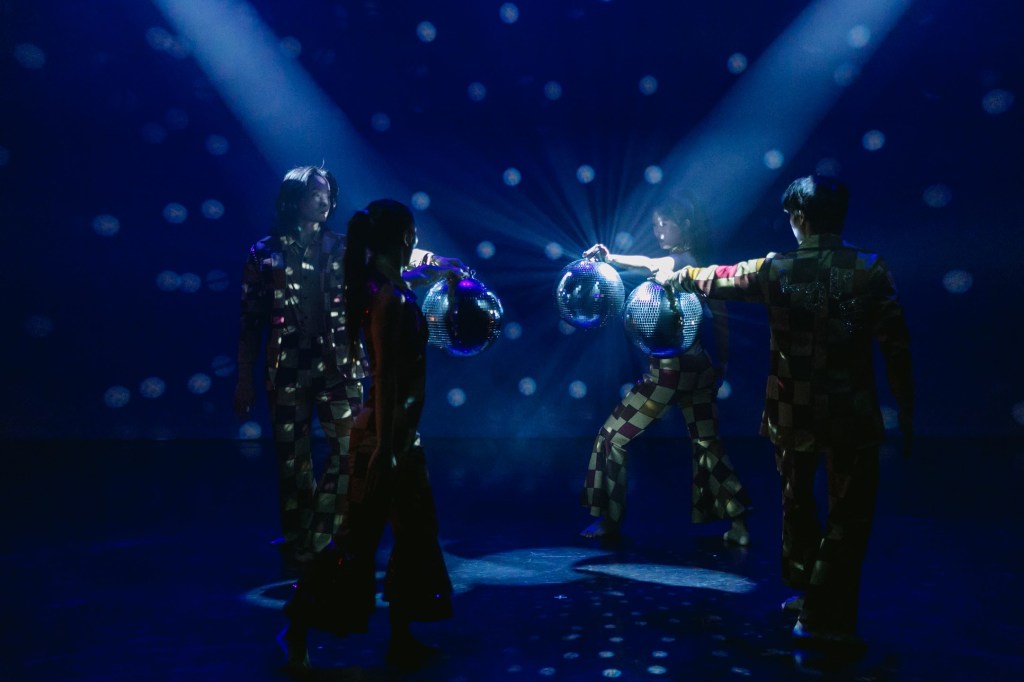
… all unfolding on the disco floor
When Chinese dance is performed in the West, classical and folk-dance forms often take centre stage, perpetuating a timeless, othered, and orientalist portrayal of China. But when Disco-TECA (來來舞廳) graced The Space in London as part of the Queer East Festival 2024, I was delightfully surprised. Performed by five talented young dancers from Ergao Dance Production Group, Disco-TECA is a refreshingly dynamic contemporary dance show that delves into the vibrant 1980s disco culture in China.
Disco-TECA narrates the story of five young individuals navigating friendship, love, betrayal, and reconciliation in the 1980s China—all unfolding on the disco floor. The performance is set during an era when China had begun opening its doors to the West after decades of isolation and Maoist collectivism, fostering space for more personal and creative expressions. The historical backdrop is vividly rendered through projected images and video clips, depicting grey cityscapes, old bicycles, khaki uniforms, and traditional household settings. Disco, however, represented a bold departure from these conservative norms at a time when it was disparaged as “bourgeois liberalism.” Even exposing arms or legs could be deemed “hooliganism.” Under the shimmering lights of a disco ball, young people donned lipstick, sequins, bell bottoms, and batwing sleeves, dancing exuberantly to popular music. On the dance floor and in real life, they explored their identities and pursued personal liberation through the physical expression of their bodies.
Through interviews, community workshops and academic research, Disco-TECA resurrects an overlooked chapter of cultural history. Disco culture emerged in Mainland China in the 1980s, coinciding with the decline of rigid “revolutionary model plays” and traditional folk dances, which had lost their appeal to younger generations. This was also a time when Western and Sinophone popular music began to captivate Chinese youth, epitomised by Teresa Teng’s sentimental ballads, Wham!’s Beijing concert, Elvis Presley’s dance moves, and Mandarin or Cantonese adaptations of German pop band’s Modern Talking’s “Brother Louie.” Chinese youth experimented with hybrid, innovative forms of disco dance routines, blending movements from gymnastics, qigong, martial arts, Chinese opera, and Bollywood films, thus glocalising and claiming this imported cultural form as their own.
In this transformative context, Chinese queer culture also began to emerge. In the West, disco had long been embraced as a queer cultural form, with LGBTQ+ individuals among its earliest adopters. Similarly, in China, disco provided a platform for bodily liberation and self-discovery, particularly in terms of gender and sexuality. It is unsurprising, then, that some of the earliest queer public events in the PRC were hosted in bars and disco clubs, such as the “Men’s World” cultural salon, organised by Wan Yanhai in 1992, and the “Night Woman” Party, organised by Wu Chunsheng in 1995. Disco-TECA highlights the significance of disco for LGBTQ+ individuals and features explicit queer references, such as two women kissing, a pink triangle-shaped opening sequence in the video, and dancers waving rainbow-colored scarves. This inclusion prompts questions about whether the London show was specifically tailored for a UK audience. Considering the recent bans on LGBTQ+ symbols in China, one cannot help but wonder how the mainland Chinese versions of the show might appear.
The exuberance conveyed through vibrant lights, pulsating music, and rhythmic dance routines is infectious. At the performance’s conclusion, audience members were invited onstage to participate in the dance routine and later to sit on the floor and view a slideshow of nostalgic photos submitted by Chinese audiences during previous iterations of the show. By focusing less on representations and more on acts, processes, and experiences, Disco-TECA illuminates the embodied, affective, and communal dimensions of queerness, offering a poignant exploration of alternative expressions of queerness within a specific historical framework.

Disco-TECA serves as a profound exercise in cultural translation. Its inspiration came from the choreographer Ergao’s quest to understand his parents’ upbringing by exploring 1980s disco culture. He was surprised to discover that, for a generation, disco symbolised style, fashion, rebellion, and even resistance against mainstream ideologies and traditional ways of life in post-Mao Chinese society. In collaboration with Ibsen International, the team meticulously developed Disco-TECA through interviews, community workshops and academic research. The show was a success in China, particularly among the older generation, as it revived shared cultural memories. It also allowed younger people, more familiar with clubbing and voguing, to gain a glimpse into their parents’ youth. However, could the show’s essence translate effectively across cultural and linguistic boundaries to a British audience?
The answer is both yes and no. The answer is both affirmative and nuanced. British audiences may have found the show entertaining, with some enthusiastically participating in the final group dance routine. Global cultural references to figures like Elvis Presley and Wham! or to disco itself were instantly recognisable. However, more nuanced cultural markers of 1980s China were likely lost on Western viewers. The final act of viewing old photographs may evoke profound emotional resonance for older Chinese audience members, but not necessarily for a UK audience. Cultural translation inevitably has its limitations and risks. After all, not everything is translatable, and opacity has its own value. No show means the same thing to every member of the audience. As long as each person enjoyed the show and took something meaningful from it, that is enough.
By merging musical and dance traditions from diverse cultures and eras, while integrating digital media, live performance, and physical exhibitions, Disco-TECA is a transnational, transcultural, and transmedial production. It is both participatory and celebratory. The participatory aspect of the show should not be underestimated, as it highlights the strength of dance as a cultural form with the potential to transcend cultural borders.
Through its revival and reinterpretation of 1980s disco culture, Disco-TECA reveals a less well-known facet of the era, when young people explored queerness on the dance floor. Their clothes and dance routine may not look fashionable or glamorous today when techno and house music accompany more individualised dance movements in dance clubs. It is important to recognise that every generation, culture and historical period has its own unique ways of expressing queerness and seeking liberation. Despite the various forms, the older generation’s pursuit of individual freedom against all odds may not seem that different from what the younger generation do today. Ultimately, as a work that connects generations, peoples, and communities, “Disco-TECA” reminds us of the significance of our physical, embodied, and affective existence. It is an absolute joy to watch—and to dance along with.
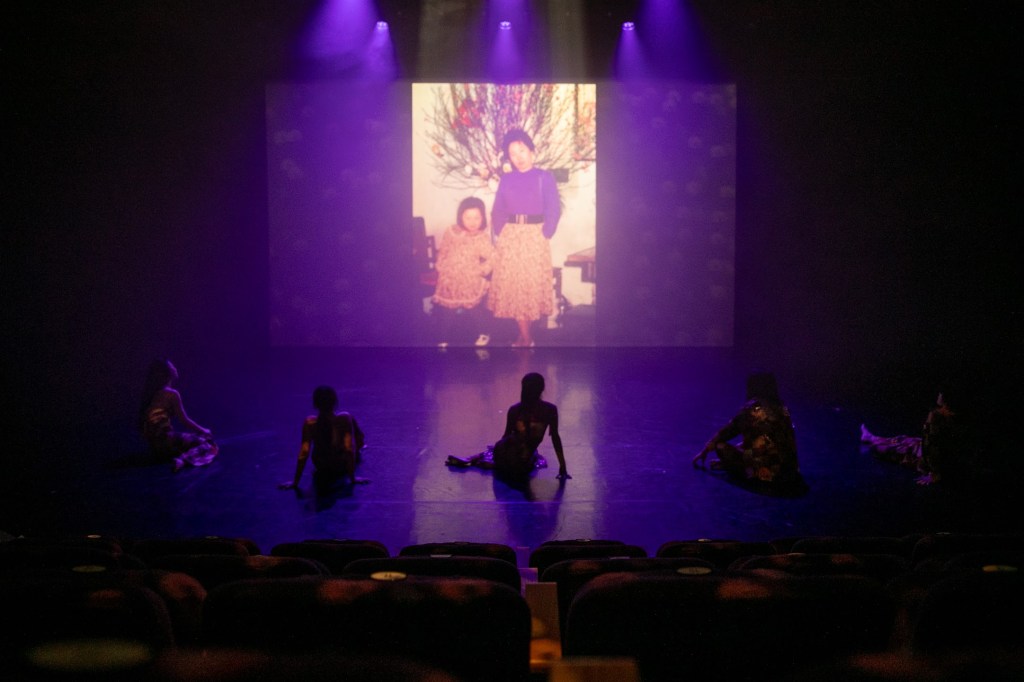
A slideshow of nostalgic photos submitted by Chinese audiences during previous iterations of the show
How to cite: Bao, Hongwei. “Disco-TECA: Disco Culture as Queer Culture.” Cha: An Asian Literary Journal, 13 Jan. 2025, chajournal.blog/2025/01/13/disco-teca.


Hongwei Bao is a queer Chinese writer, translator and academic based in Nottingham, UK. He is the author of Queer China: Lesbian and Gay Literature and Visual Culture under Postsocialism (Routledge, 2020) and Queering the Asian Diaspora (Sage, 2025) and co-editor of Queer Literature in the Sinosphere (Bloomsbury, 2024). His poetry books include The Passion of the Rabbit God (Valley Press, 2024) and Dream of the Orchid Pavilion (Big White Shed, 2024). [All contributions by Hongwei Bao.]
 Cha
Cha 