

📁RETURN TO FIRST IMPRESSIONS
📁RETURN TO CHA REVIEW OF BOOKS AND FILMS
Lauren Walden, Surrealism from Paris to Shanghai, Hong Kong University Press, 2024. 152 pgs.

In Surrealism from Paris to Shanghai, Lauren Walden has done modern Chinese art history a magnificent service. We now (hopefully) understand Modernist literature to be a global, rather than simply a western, phenomenon with the likes of Lao She, Ba Jin, Mao Dun and Lu Xun acknowledged among the ranks of the great Modernist writers (traditionally the Europeans and Americans—Joyce, Woolf, Eliot, Pound, O’Neill, Beckett, Kafka, Akhmatova, Faulkner—take your pick). Now we can more clearly see the role and importance of Chinese artists, especially those based in Shanghai, within the plethora of early 20th century international artistic movements. Among these is Surrealism.
The Shanghai Academy of Art, founded in 1912 and presided over by the artist/educator Liu Haisu on Frenchtown’s Rue Bard (now Shunchang Lu), was just as much a cauldron of ideas and artistic styles as Paris’s l’Ecole Supérieure Nationale des Beaux-Arts or the Slade in London. As Walden shows, many Chinese artists spent time in both Paris and Shanghai over the first half of the twentieth century including those who would later embrace Surrealism, including Lei Guiyuan, Pang Xunqin, Zhang Xian, and others. In this way Shanghai’s Surrealists embody the hai-pai, east-west fusion that defines interwar Shanghai (or more precisely in domestic terms perhaps the inter-revolutionary Shanghai between—Xinhai and Jiefang).
Surrealism was a French invention—the term first used by the poet Guillaume Apollinaire to characterise the 1917 ballet Parade—scenario by Jean Cocteau, choreography by Leonide Massine, music by Eric Satie. Surrealism fomented in Parisian artistic circles until, in 1924, André Breton published his Surrealist Manifesto. And so Surrealism (to paraphrase—artistic works allowing the unconscious mind to express itself, often through illogical or dreamlike images) spread into art, literature, sculpture, dance, drama and film. It also went international, out of the cafés and bars of Paris and across Europe. In Berlin there was Max Ernst, and in Spain Salvador Dali, Man Ray took it across the Atlantic. Self-identifying Surrealist groups appeared in England, and a number of South America cities.
Thence to Asia, initially via Japanese artists. For every young Chinese art student who made their way to Paris many more went to Japan, especially Tokyo’s Fine Arts School, or Geidai (now the Tokyo University of the Arts). Surrealism worked its way across the East China Sea and up the Huangpu River to Rue Bard in the French Concession. And, if there’s one thing young early twentieth century artists had in common worldwide it was a love of issuing manifestos. Shanghai was no different and students at the Art Academy returned from Europe (full of ideas and often inspired by the May 4th Movement too) eager to translate manifestos embracing Futurism, Dadaism, Vorticism, … and Surrealism, while experimenting with how their own work might complement these movements.
It‘s fair to note that Surrealism was always a minor movement in Shanghai, and doesn’t seem to have penetrated the art establishments of Beijing or Guangzhou for instance. Less obviously experimental Modernist artists such as Pan Yuliang attracted far more notice for their blending of European and Chinese styles. Liu Haisu’s founding belief was that traditional Chinese art was in stasis and that rejuvenating the country’s fine arts required engaging with and assimilating foreign trends. This was always controversial in the staid traditional Chinese art world (hence Liu’s decision to be based within the foreign concessions that offered a degree of liberalism). Venturing outside Shanghai Liu was arrested several times, and faced government calls for the school to be closed more than once. He was denounced in the Chinese press as a “cultural bankrupt” and an “artistic traitor”. In 1920 there had been a scandal over his introduction of nude models for life classes. Pan Yuliang faced censure for her female nudes, combining Chinese Guohua (calligraphic traditional painting) and European figure drawing.
Manifestos…. Movements…. “schools”… are what make the art world go round. Shanghai formed the Juelanshe (Storm Society), which Walden rightly focuses on in her book. Created by the Shanghai Academy artists Pang Xunqin and Ni Yide who credited “the desires of the Surrealists” in their founding manifesto of 1932. Pang had returned from Paris with works that “were almost Surrealist”, Ni was a more conventional Modernist (Walden provides an appendix of concise artist biographies in the book which are very helpful). The Storm Society embraced artists working and experimenting with all forms of modern art and all forms of modern art seemed to attract the ire of the wider Chinese art establishment—Fauvists (a rather earlier movement in Europe which remained fashionable in Japan and China for longer), Futurists, Dadists bandied together with Surrealists to resist establishment castigating. Qiu Ti (Pang Xunqin’s wife and an acclaimed artist in her own right) painted in what has been described as the “Japanese-Fauvist” style, which emphasised heightened colours over naturalism. While lauded by the Storm Society in Shanghai, many in China outside the foreign concessions found her non-realistic use of colour hard to accept and attacked her—her paintings now hang in the National Art Museum in Beijing.
Additionally the French authorities may not have been overly bothered about naked models on the Rue Bard but they were aware, from the example of Paris, that Surrealism and Surrealists often found inspiration in communism and anarchism and those were big no-nos. Still direct repression of Surrealism, or any modern, western-influenced art did not come until after 1949. By the 1950s, artists’ experiments with style, with what academies could teach, or who could exhibit and where, became increasingly problematic. It was a time when anything foreign (Soviet excepted) was politically unpopular.
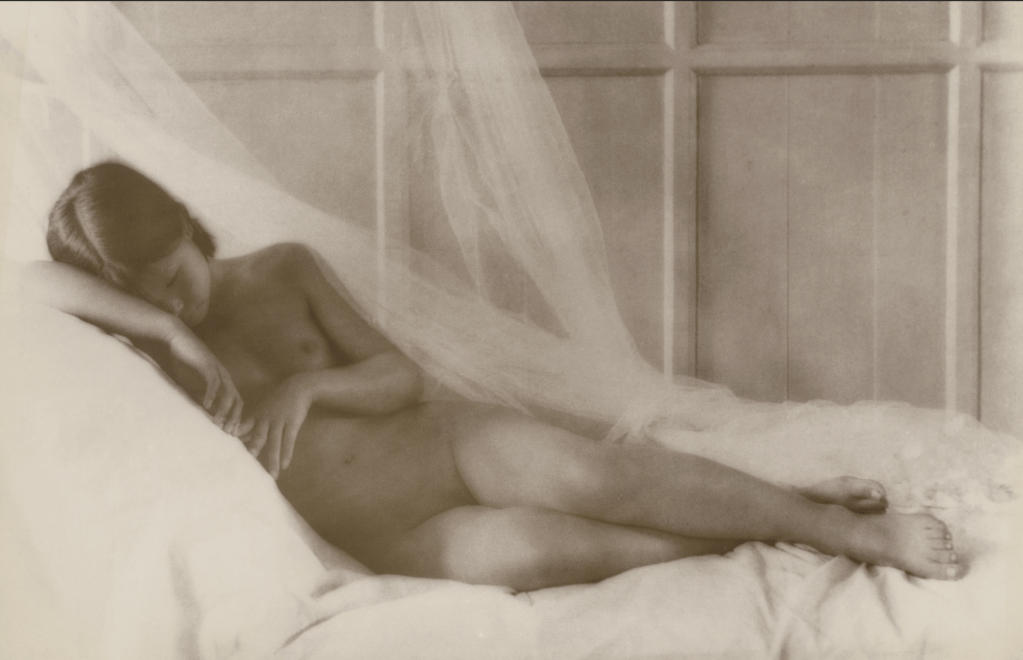
As Walden shows, between the wars Surrealism was a distinct vogue in Chinese art worthy of more attention than it has so far been given. It also reached a mainstream Chinese audience via its adoption by graphic artists and photographers. Walden profiles the highly influential photographer Lang Jishen who pioneered studies of nudes, and the Surrealistic art of composite photography (merging different negatives together often creating fantasy scenes). He would later (after he left for Taiwan) befriend both Man Ray and Duchamp in America.
The vibrant and ultra-competitive Shanghai magazine sector loved to discuss Surrealism and reproduce foreign works (for example, Dali regularly appeared). Their graphic design ethos was most significantly influenced by German Expressionism, but also at times by Surrealism. The work of Pang Xunqin (many of which are included in the book), as well as Liang Baibo, Zhou Duo, and others influenced by Surrealism, were easily transferable to magazine design formats. Many of Pang Xunqin’s works appeared on the covers of popular magazines such as Duli Manhua (Oriental Puck), Shidai Huabao (Modern Miscellany) or Shanghai Manhua (Shanghai Sketch) in the 1930s. These magazines, journals and periodicals instantly represent hai-pai Modernist interwar Shanghai. Walden includes one of Pang’s artwork (“Untitled”) that was featured as a cover of Duli Manhua in 1935. It was destroyed in 1966 at the start of the Cultural Revolution when Surrealism and Surrealists were simply not to be tolerated. Pang himself was banned from teaching and forced to retire in 1972, though survived. Others who had experimented with Surrealism earlier in their careers would not—Fu Lei (who had studied in Paris) and his wife both took their own lives in 1966 rather than face the philistine Red Guards.
In the later 1930s some artists shifted to Surrealism driven by what they viewed as the increasingly “surreal” times in China as war approached. Shanghai Academy graduate Huang Xinbo was a woodcut artist, left-wing and later a Communist guerilla. He is best known for the striking woodcut of the author Lu Xun on his deathbed in 1936. It was after Japan launched a full-scale invasion of China that Huang shifted to Surrealism producing 30 works that he saw as patriotic art. Sadly all we have of them are grainy old photographs as all the canvases were lost in the war.
So finally what sets Shanghai Surrealism apart from French or Spanish or Chilean variants of the movement? Well, many things, among which we could include the incorporation of traditional Guohua and calligraphy, the influences of Japanese modern art (and traditions). But perhaps more specifically the political circumstances of working within, first, the semi-colonial environment of Shanghai and, second, the conditions of total war after the summer of 1937, as well as the ongoing conflicts between groups like the Storm Society and the conservative mainstream Chinese art world. As Walden’s book shows brilliantly, a definable Surrealist movement emerged in China. Its works of fine art, graphic art, photography and montage were striking and appreciated in galleries among aficionados as well by more mainstream audiences who voraciously read the magazines of short stories, of movie gossip, as well as of politics and world affairs.
What crucially didn’t happen was that Shanghai Surrealism never made it out of China, indeed not really out of Shanghai. Chinese Surrealists were not included in the London International Surrealist Exhibition in 1936 or the 1938 International Exhibition of Surrealism at the Beaux Arts Gallery in Paris or the 1940 International Surrealist Exhibition in Mexico City that included works by Rivera and Karlo.
Lauren Walden’s book finally brings Shanghai Surrealism out of the shadows and places it within the wider global Surrealist movement where it belongs. Shanghai was in the late nineteenth and first half of the twentieth century a cradle of modernism alongside London, Paris and New York. Surrealism from Paris to Shanghai is a major piece of that Chinese Modernist puzzle that forms the broader picture of the country’s involvement in the most overarching and defining movement of the global age.

How to cite: French, Paul. “Recovering Shanghai’s Lost Surrealist Tradition: Lauren Walden’s Surrealism from Paris to Shanghai.” Cha: An Asian Literary Journal, 8 Jan. 2025, chajournal.blog/2025/01/08/surrealism.


Paul French lived and worked in Shanghai for many years. His book Midnight in Peking was a New York Times Bestseller while City of Devils: A Shanghai Noir received much praise with The Economist writing, “… in Mr French the city has its champion storyteller.” His most recent book is Her Lotus Year: China, the Roaring Twenties and the Making of Wallis Simpson. [All contributions by Paul French.]
 Cha
Cha 