
TIFF 2024
▞ Introduction
▞ 8. Band of Outsiders: On Neo Sora’s Happyend
▞ 7. The Soul of an Artist: On Hong Sang-soo’s By The Stream
▞ 6. The Two Maidens: On Trương Minh Quý’s Viet and Nam
▞ 5. The Master and Her Muse: On Jia Zhang-ke’s Caught by the Tides
▞ 4. Self-Studies: On Sook-Yin Lee’s Paying for It
▞ 3. The Inheritance: On All Shall Be Well and The Paradise of Thorns
▞ 2. A World of Pain: On Kiyoshi Kurosawa’s Cloud
▞ 1. Mise en abyme: On Lou Ye’s An Unfinished Film

Hong Sang-soo (director), By The Stream, 2024. 111 min.

While watching By The Stream, I began to wonder if the character of Jeonim, played by Kim Min Hee—who won Best Actress at the Locarno Film Festival for her performance—is the same woman we’ve been watching for a decade. Could she be the student painter from Right Now, Wrong Then (2015), who left the movie theatre and walked away as it snowed? Or perhaps the woman who revealed her defensive side in On the Beach At Night Alone when she put her ex-lover in his place? Maybe she is the retired actress tending to her cat and plants in In Our Day—a film this one shares a clear DNA with—as she advises a family friend considering a new career.
They all become the same woman: this woman of many faces.
There she is, sitting by the stream, finishing a sketch in her notebook, the cover of which features a painting by Cézanne—the sort of thing you’d pick up while exiting through a gift shop. She checks the time on her watch: it’s about time. She gets up, gathers her things, and leaves—this woman with a few rituals and routines that steady her soul and help her feel at peace.
She’s the kind of person who will pause to pick up a huge leaf off the ground and wave it to and fro for a brief, shining moment, before resuming her course: making room for a moment of grace during a brief influx of psychic chaos.
At dinner one night, she tells a story about a mystical experience she once had, where she bled from her eyes for three days. On the third night, she saw a sky with the purest shade of blue, and the next day, she dropped out of engineering school and changed her life. Her anecdote reminded me of what the poet Fanny Howe wrote about bewilderment being “an enchantment that follows a complete collapse of reference and reconcilability. It cracks open the dialectic and sees myriads all at once.” In the wake of this consciousness, she became an artist—a former actress who is now also a teacher. When necessary, she brings in people with expertise in specific fields, such as directing a skit for an annual student festival.
The former director, played by Ha Seong-guk, ended up dating three women from her class, all of whom quit as a result of their heartbreak and sense of betrayal; so she has asked her uncle, Chu Si-eon (played by Kwon Hae-hyo), to step in and turn things around. Her uncle, whom she hasn’t seen in years due to his frayed ties with her alcoholic, volatile mother, gradually reveals that he was once successful but is now disgraced and outcast. He not only steps into her professional life but also embeds himself in her personal life when he starts dating Professor Jeong, her beloved colleague and close friend, played by the delightful Jo Yun-hee.
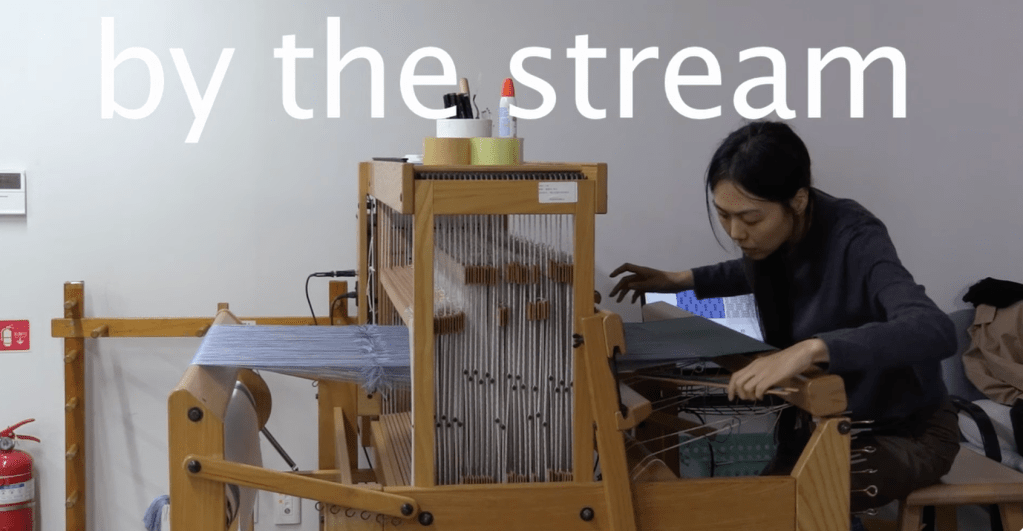
This doesn’t cause her jealousy per se—love has become a tertiary concern for her—since her vocation is to teach and to create textiles inspired by various bodies of water along the Han River. This work occupies her time and requires her to consistently exert herself in order, in her own words, to complete the entire structure on her own. Her work allows her to spend more time alone, which doesn’t necessarily mean being isolated or alienated; rather, she finds her truest self in a state of solitude, surrendering completely to the present moment. She explains that this is integral to her being, and, by extension, to the creative process of her creator, the director Hong Sang-soo.

The actress Kim Min Hee won Best Actress at the Locarno Film Festival.
“Any experience that gives you certainty is good,” he says to her: “It’s precious.”
Later on, she gains certainty about what is happening with the three girls and the man who wronged them. One night, on the school grounds, they search for a missing girl and find her under a tree with the man, who, as we all learn, has just proposed to her.
The two girls don’t get it, try to knock some sense into her, but she sees things in another way: “Liking someone isn’t a sin, right?”
Rather than posing a question or offering an interpretation, it’s as if she is confirming it for herself.
There are certain lengths, emotional and psychological, you have to go on order to love.
Before the scene ends, we get another glimpse of the moon, which, throughout the film, appears day after day. From the outset, we are told that the story will unfold over 10 days, and we follow the moon as it waxes and approaches fullness.
Eventually the cycle will end: it must.

Real-life couple Kwon Hae-hyo and Jo Yun-hee once again fall in love on screen.
From time to time, Jeonim leaves the narrative entirely—either she exists or, like in a rehearsal, she simply slips out of the frame, discreetly, never obtrusive and always full of grace. During these periods of absence, we are left—since Hong’s camera is not interested in making a film devoid of human presence—in the company of the uncle. He is still recovering from the fallout of his career, always under the influence of nostalgia and soju, but he enjoys the experience of being a director, working with young people and their fresh perspectives.
After the skit, for instance—which, while indirectly but explicitly addressing the War, proved controversial with the university president—as they celebrate a successful performance, the girls take turns answering the question: What kind of person do you want to be?
“A person who is not like me at all,” one of them says.
“Who loves truly,” another says.
Another: “I’ll light the smallest lamp in the corner and protect it till I die.”
“I’m a freak,” says the last.
And as they go around explaining why they feel this way, each of the girls has tears falling from their eyes—maybe it’s the alcohol, maybe it’s the repressed emotions, maybe it’s the sense that this is a safe, open space, or perhaps it’s all three combined. Soon, their director is crying too. It’s a moment where one senses that each of the performers has stopped acting, allowing their true selves to rise to the surface—in the presence of a man, no less. This is what you call an education: encouraging the student to articulate what was previously inarticulable using the set of skills they already possessed when they matriculated. It’s growth via experimental breakthrough; it’s about, as he said earlier, gestures, tones, and voices.
And what becomes of Jeonim’s fate?
She’ll endure.
She’ll sleep on the roof of the café because the owners know and trust her (Fanny Howe again, emphasis mine: ‘Weakness, fluidity, concealment, and solitude find their usual place in the dream world, where the sleeping witness finally feels safe enough to lie down in mystery. These qualities are not the stuff of stories of initiation and success.’).
She’ll have ramen before going to a lunch featuring grilled octopus, where she’ll drink beer too, even though she’s not supposed to, as she’ll be driving them all to Kangwon Province.
By The Stream, cyclical but not cynical in nature, ends by a new stream: a new host of possibilities, a new page in the artist’s notebook. For a moment, we think Jeonim has disappeared into the landscape—how dazzling that would have been—but, as in the ending of Yourself and Yours, which teases with its is-it-a-dream-or-is-it-not-a-dream sensibility, our suspension is short-lived. She reappears, elated, from behind a cliff. The film freezes on a shot of her face: blurred yet radiating with her preternatural, crystal-clear grace.
How to cite: Nagendrarajah, Nirris. “The Soul of an Artist: On Hong Sang-soo’s By The Stream.” by Nirris Nagendrarajah.” Cha: An Asian Literary Journal, 4 Dec. 2024, chajournal.blog/2024/12/04/the-stream.



Nirris Nagendrarajah (he/him) is a Toronto-based writer whose work has appeared in paloma, Polyester, Fête Chinoise, In the Mood Magazine, Tamil Culture, in addition to Substack. He is currently at work on a novel about waiting. [All contributions by Nirris Nagendrarajah.]
 Cha
Cha 