
📁 RETURN TO FIRST IMPRESSIONS
📁 RETURN TO CHA REVIEW OF BOOKS AND FILMS
Click HERE to read all entries in Cha on Tapestry of the Mind.
Aneeta Sundararaj, Tapestry of the Mind and Other Stories, Penguin Random House SEA, 2024. 272 pgs.

Aneeta Sundararaj’s Tapestry of the Mind and Other Stories is a collection of short stories that eloquently explore the human psyche, woven with threads of cultural, social, and emotional complexity. Set against the backdrop of Malaysia, specifically the evocative landscapes of Alor Setar in northern Peninsular Malaysia, Sundararaj’s work delves deep into the recesses of the mind, unravelling the intricate layers of identity, trauma, love, and resilience that define the human experience.
From the very beginning, the collection asserts itself as a literary endeavour grounded in the exploration of mental landscapes. The title itself, Tapestry of the Mind, suggests a deliberate interweaving of thoughts, emotions, and experiences into a rich and textured whole. Each of the seventeen stories contributes a unique thread to this tapestry, creating a mosaic that is at once beautiful and unsettling, familiar and foreign, tender and brutal.
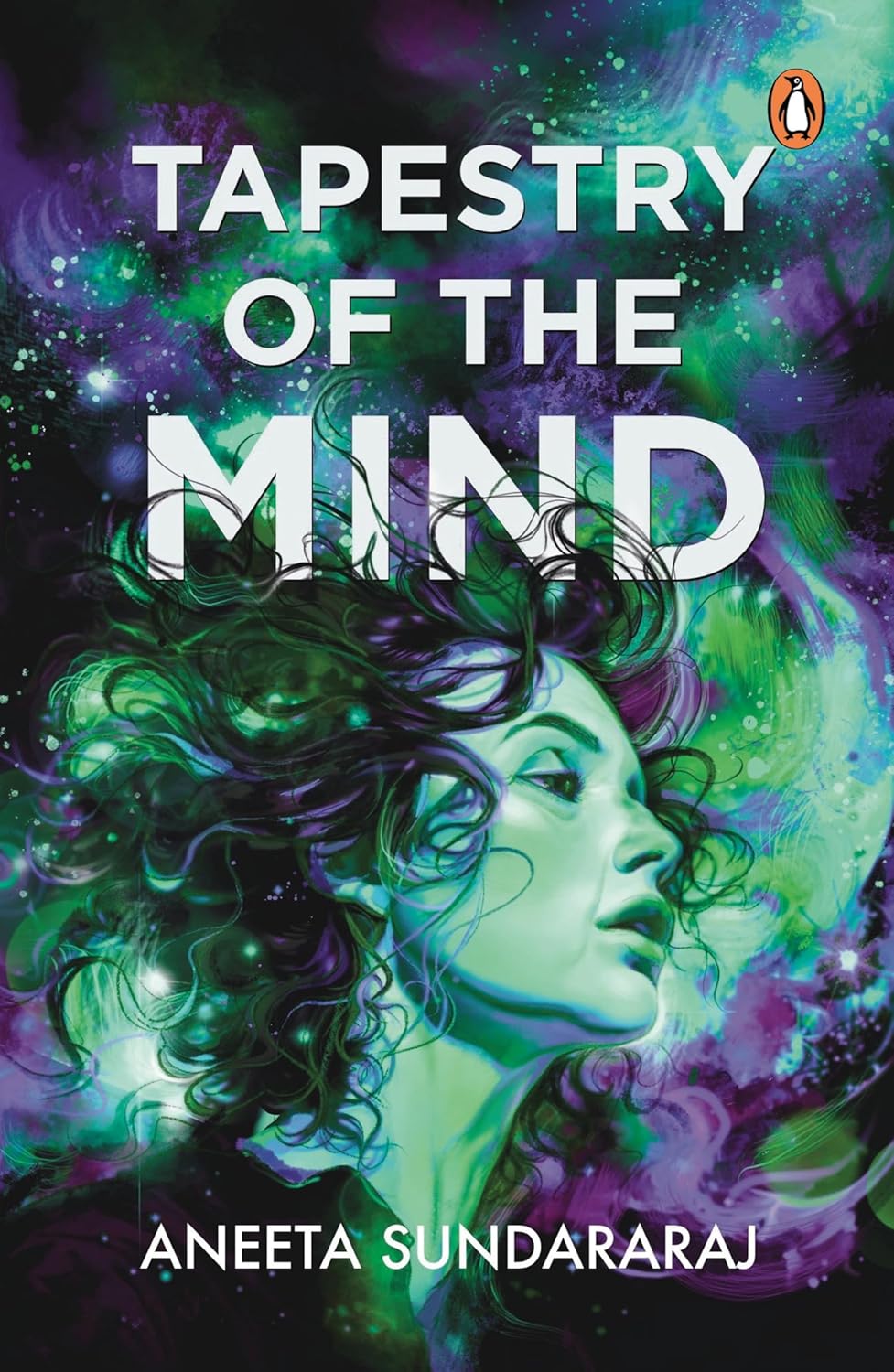
The cover of the book is a visual symphony in shades of purple, green, and black, evoking the ethereal beauty of the aurora. The profile of a girl emerges, her silhouette intertwined with the cosmic hues, suggesting a mind in deep contemplation. This artwork perfectly mirrors the book’s exploration of the human psyche—a delicate haunting tapestry of thoughts and emotions illuminated by the soft glow of introspection. The cover captures the essence of the stories within, blending mystery, elegance, and the profound depths of the human experience.
The Landscape of the Mind
◯
The Malaysian setting is not merely a backdrop but a character in itself, deeply influencing the protagonists and the narratives they inhabit. Sundararaj’s hometown of Alor Setar becomes a microcosm of the broader human condition, where cultural, ethnic, and religious differences shape the lives of the characters and give rise to moments of betrayal, heartache, and, at times, humour. The author’s intimate knowledge of this setting allows her to paint vivid pictures of the region’s landscapes, traditions, and social dynamics, grounding the stories in a sense of place that is both specific and universal.
The collection opens with a story that sets the tone for the entire book, introducing the reader to a world where the boundaries between the real and the surreal are often blurred. In this story, a toddler’s engagement with spirits serves as a metaphor for the innocence and openness of the child’s mind, which has not yet been constrained by the rigid boundaries of adult logic and reason. This theme of the porousness of reality recurs throughout the collection, as characters navigate the often-conflicting demands of tradition and modernity, spirituality and rationality, individuality and community.
The Protagonist:
Diverse and Deeply Human
◯
Sundararaj’s protagonists are as diverse as the stories they inhabit. From classical Indian dancers to divorcees, from men grappling with lost love to mothers mourning the loss of their children due to inequitable laws, each character is rendered with a depth and nuance that makes them feel fully realised, their struggles and triumphs deeply felt. The author’s ability to inhabit such a wide range of perspectives is one of the collection’s greatest strengths, allowing her to explore the complexities of the human experience from multiple angles.
One of the most poignant stories in the collection is about a mother who loses her child due to inequitable laws. Sundararaj handles this story with a delicate balance of tenderness and rage, capturing the profound grief of a mother while also laying bare the systemic injustices that led to her loss. The story is prefaced by a quote from a mental health expert, a feature of each story in the collection that adds an additional layer of gravitas to the narratives. These quotes serve as a reminder that the struggles faced by the characters are not just personal but also societal, rooted in broader issues of inequality, discrimination, and stigma.
Another standout story in the collection deals with the probable stigma of homosexuality. In a society where traditional values often clash with contemporary understandings of gender and sexuality, Sundararaj’s exploration of this theme is both timely and courageous. The protagonist’s internal struggle with their identity is rendered with a sensitivity and empathy that underscores the deep psychological toll of living in a society that refuses to accept them for who they are.
Themes of Love, Loss,
& Resilience
◯
At the heart of Tapestry of the Mind is the theme of love in its many forms—romantic love, familial love, love for one’s culture and heritage, and love for oneself. But love in Sundararaj’s stories is often accompanied by loss, betrayal, and heartache. The men in her stories, in particular, are often grappling with feelings of regret and self-worth, their love lost or unrequited. Yet, even in the face of such loss, there is a resilience that runs through the collection, a sense that the characters, while deeply wounded, are not entirely defeated.
In one story, a man reflects on the love he lost due to his own insecurities and fears. The story is a meditation on the destructive power of self-doubt, but it is also a testament to the enduring nature of love, even when it is unfulfilled. The man’s regret is palpable, but so is his determination to learn from his mistakes and move forward. This theme of resilience is echoed in other stories, where characters face adversity with a quiet strength that speaks to the human capacity for survival and growth.
The Influence of
Technology & Modernity
◯
Sundararaj also tackles the impact of technology and modernity on the human psyche, particularly in stories that explore the manipulation of the metaverse and the consequences of environmental disasters. In one story, a character becomes obsessed with the metaverse, a virtual reality that offers an escape from the harsh realities of the physical world. But this escape comes at a cost, as the character becomes increasingly disconnected from their own emotions and the people around them. The story is a chilling reminder of the dangers of becoming too immersed in technology, of losing touch with the real world in the pursuit of an idealised virtual existence.
Similarly, the story about environmental disasters highlights the consequences of human actions on the natural world and the psychological toll of living in a world where the environment is increasingly under threat. The characters in this story are faced with the stark reality of their own complicity in the destruction of the planet, and their struggle to come to terms with this knowledge is both heartbreaking and thought-provoking.
A Literary Love Affair
◯
At its core, Tapestry of the Mind is a literary love affair with the human psyche. Sundararaj’s writing is infused with a deep empathy for her characters, an understanding of the complexities of the human mind that allows her to explore even the darkest corners of the psyche with compassion and insight. Her prose is both lyrical and precise, capturing the beauty and pain of the human experience in a way that is both deeply affecting and intellectually stimulating.
The collection is also marked by a brutal honesty that refuses to shy away from the difficult truths of life. Whether she is writing about spiritual abuse, clandestine adoptions, or sibling rivalry, Sundararaj approaches her subjects with a fearlessness that is both refreshing and necessary. She does not offer easy answers or neatly tied-up conclusions; instead, she leaves the reader with a sense of the complexity and ambiguity of life, of the ways in which the mind can both illuminate and obscure the truth.
A Tapestry of
Brutal Honest
◯
With this book, Aneeta Sundararaj has crafted a collection that is both deeply rooted in the specific cultural, ethnic, and religious context of Malaysia and universally resonant in its exploration of the human psyche. The stories are marked by a brutal honesty that refuses to shy away from the difficult truths of life, and by a deep empathy for the characters who inhabit them.
Each story in the collection is prefaced by a quote from a mental health expert, a feature that adds an additional layer of gravitas to the narratives and underscores the seriousness of the issues being explored. But despite the weighty themes and the often-dark subject matter, there is also a sense of hope and resilience that runs through the collection, a belief in the enduring strength of the human spirit even in the face of adversity.
Tapestry of the Mind is a powerful and stimulating collection that will resonate with readers long after they have turned the final page. It is a testament to Aneeta Sundararaj’s skill as a writer and her deep understanding of the complexities of the human mind, and it is a book that deserves to be read, discussed, and cherished.
How to cite: Namrata. “A Powerful and Stimulating Collection: Aneeta Sundararaj’s Tapestry of the Mind.” Cha: An Asian Literary Journal, 13 Sept. 2024, chajournal.blog/2024/09/13/tapestry-mind.



Namrata is the editor of Kitaab, a South Asian literary magazine based in Singapore, and the founder of Keemiya Creatives, a literary consultancy where she works with authors and publishers in various capacities. Namrata also hosts the Bookbot Theory, a podcast on book-marketing which aims to help authors make their books sell. A published author, an independent editor and a book reviewer, she enjoys writing stories and think-pieces on travel, relationships, and gender. She is a UEA-India chapter alumnus and has studied travel writing at the University of Sydney. Her writings can be found on various sites and magazines, including Kitaab, the Asian Review of Books, Contemporary South Asia Journal of King’s College-London, Mad in Asia, The Friday Times, The Scroll, Feminism in India, The Brown Orient Journal, Inkspire Journal, Moonlight Journal, The Same, Chronic Pain India and Cafe Dissensus. Her short stories have been a part of various anthologies and she has also published two short story collections of her own. Namrata is currently working on her debut novel. [All contributions by Namrata.]
 Cha
Cha 