
📁 RETURN TO FIRST IMPRESSIONS
📁 RETURN TO CHA REVIEW OF BOOKS AND FILMS
Hiro Arikawa (author), Philip Gabriel (translator), The Travelling Cat Chronicles, Berkley, 2018. 277 pgs.

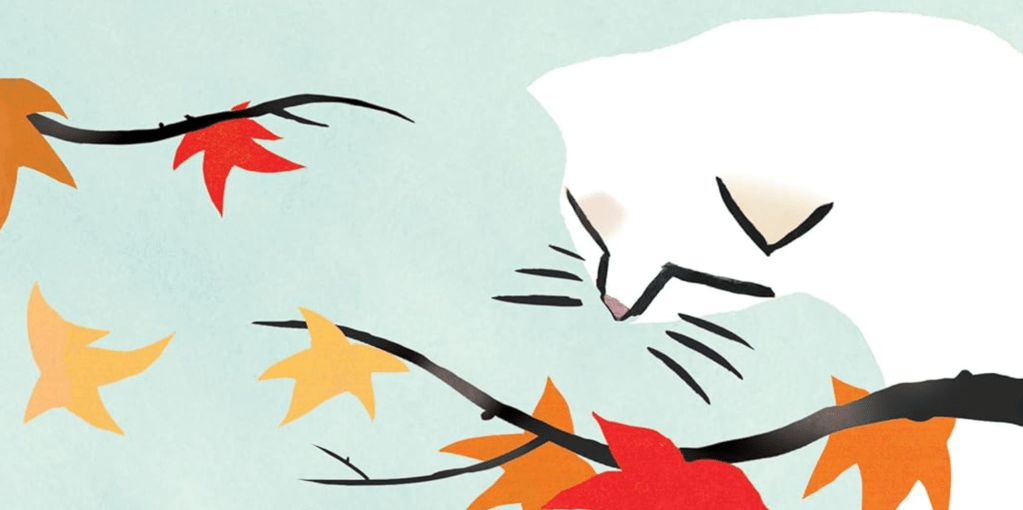
Hiro Arikawa’s The Travelling Cat Chronicles, translated by Philip Gabriel, is a heart-warming book that illustrates relationships with friends and family. Each chapter unearths past wounds and shows how the characters make peace with themselves or others as adults. It’s about forgiving, healing, and cherishing relationships. All of these are helped by a cat named Nana in the story. Nana is an essential character who weaves all the stories in this book together.
The story begins with a stray cat who sleeps on the bonnet of a silver van in a car park. The owner of the van, Satoru Miyawaki, a cat lover, and also the main character, notices this and starts leaving crunchies next to the van for the cat. One day, unfortunately, the cat gets hit by a car and cries for help. Satoru, as kind as ever, hears the cat’s cry and comes to the rescue. This marks the beginning of their life together, which lasts until the end of the book.
It turns out that this cat resembles very much a cat that Satoru had when he was a child. The cat was called Hachi because two spots on its forehead looked like the kanji character for “hachi”, meaning eight. Because of this, Satoru then names this cat Nana, meaning seven, because this cat’s spots on its forehead look like seven from above. They then start living together for five years until one day Satoru apologetically tells Nana that they have to go somewhere without clear explanation. Throughout the prologue, it is narrated from the cat’s perspective to show the bond and interactions between Nana and Satoru. It shows that the relationship is important for both of them.
Their first journey is to visit Satoru’s old friend from elementary school, Kosuke Sawada, who owns a photography studio. There are “unavoidable circumstances” that require someone to take Nana, Satoru has written in an email to Kosuke. When they meet, they reminisce about their childhood. As the story unfolds, we learn that Kosuke has had a challenging relationship with his father ever since he was a child. Even now, Kosuke’s father is also the reason that Kosuke’s wife left him. As for Satoru, on one of the school trips, Satoru had to leave early because his parents passed away in a car accident. Satoru then had to move away to live with his aunt. At the end of Satoru’s visit, he suggests that perhaps Kosuke should get a new cat with his wife and transform the photography studio into a pet photo studio, regardless of his father’s opinions.
After the first journey, Satoru and Nana come to reconnect with Satoru’s junior high school friend, Daigo Yoshimine, on a farm. Satoru sends a similar email to Yoshimine to ask if he can bring Nana. When Satoru arrives at Yoshimine’s farm, they reminisce about their past, such as running a gardening club together and when they ran away on a school trip. This chapter also explains Yoshimine’s background: his parents divorced when he was in junior high school, and he moved to live with his grandmother on a farm. As a farmer, Yoshimine cares more if cats can catch mice for him rather than keep them as pets. At the moment, Yoshimine has a kitten named Chatran, and Nana clearly doesn’t get along with him. Although Yoshimine doesn’t think this is an issue because he thinks that they are just animals, Satoru thinks differently and wants to go to another friend of his to try his luck.
The third chapter then comes to Satoru’s high school friends, Shusuke Sugi and his wife Chikako who run a B&B near Mount Fuji that allows pets. Satoru, Sugi, and Chikako recount their high-school memories, about Chikako’s family orchard, about a dog that Satoru and Sugi saved, and especially Satoru’s regret at not telling Chikao his feelings for her in high school. Satoru’s visit is again to see if they can take Nana, due to the unavoidable circumstances mentioned earlier. While they are retelling their stories from the past, Nana doesn’t get along with Sugi and Chikako’s pets, a Kai Ken dog named Toramaru and a twelve-year-old female brown tabby cat named Momo. Although Nana does love Sugi and Chikako’s old boxy TV, Satoru doesn’t think it is a good idea if Nana doesn’t get along with their pets and say goodbye to his dear friends.
After visiting several of his friends from his past, Satoru next goes to visit his parents’ graves in Hokkaido. This is another short chapter only about Satoru and Nana, and it is clear that their bond is strong. After this, Satoru comes to his final stop at his aunt’s place in Chapter Four. This chapter reveals Satoru’s reason for visiting his friends from before, his parents’ graves, and his aunt Noriko. It turns out that Satoru has a malignant tumour, and his situation is more likely to get worse than better. It also reveals that Satoru was abandoned by his birth parents and adopted by Noriko’s sister and brother-in-law. Noriko took the responsibility to be Satoru’s guardian after his parents passed away in the car accident, but Noriko who is bad at words feels that she could have done more for Satoru.
Now, at the end of Satoru’s life, Noriko decides to quit her job as a judge and become a lawyer in a local firm to better take care of Satoru. Nana, on the other hand, has his own plans. Nana notices that Satoru has to stay in the hospital because he stops coming home, so Nana orchestrates an escape when Noriko takes him to see Satoru in the garden in the hospital. Nana’s plan is to be with Satoru until the end, so he waits patiently near the hospital until Satoru comes out for his walks. When Satoru sees Nana, he is surprised but understands Nana’s escape plan immediately. Noriko tries to get Nana back home but fails. On the last day of Satoru’s life, Noriko ignores the hospital’s regulations and brings Nana into the hospital to let Nana be with Satoru until the end.
Nana recounts all the wonderful memories he has with Satoru and ensures that everything will be taken care of after Nana himself is gone later in the epilogue. He says, “My story will be over soon. But it’s not something to be sad about. As we count up the memories from one journey, we head off on another. Remembering those who went ahead. Remembering those who will follow after. And someday, we will meet all those people again, out beyond the horizon.” (173).
How to cite: Lu, Hui-Hua. “Out Beyond the Horizon: Hiro Arikawa’s The Travelling Cat Chronicles.” Cha: An Asian Literary Journal, 29 Aug. 2024, chajournal.blog/2024/08/29/travelling-cat-chronicles/.



Hui-Hua Lu is an early career researcher in translation studies. She received her PhD from the University of Exeter and MA from Newcastle University. She is also a professional translator and language teacher of English and Mandarin. Her research interests include translation, literature from Taiwan, gender studies and media studies. She is currently working on a project about Taiwan literature in translation. [All contributions by Hui-Hua Lu.]
 Cha
Cha 