
📁 RETURN TO FIRST IMPRESSIONS
📁 RETURN TO CHA REVIEW OF BOOKS AND FILMS
Click HERE to read all entries in Cha on Tapestry of the Mind.
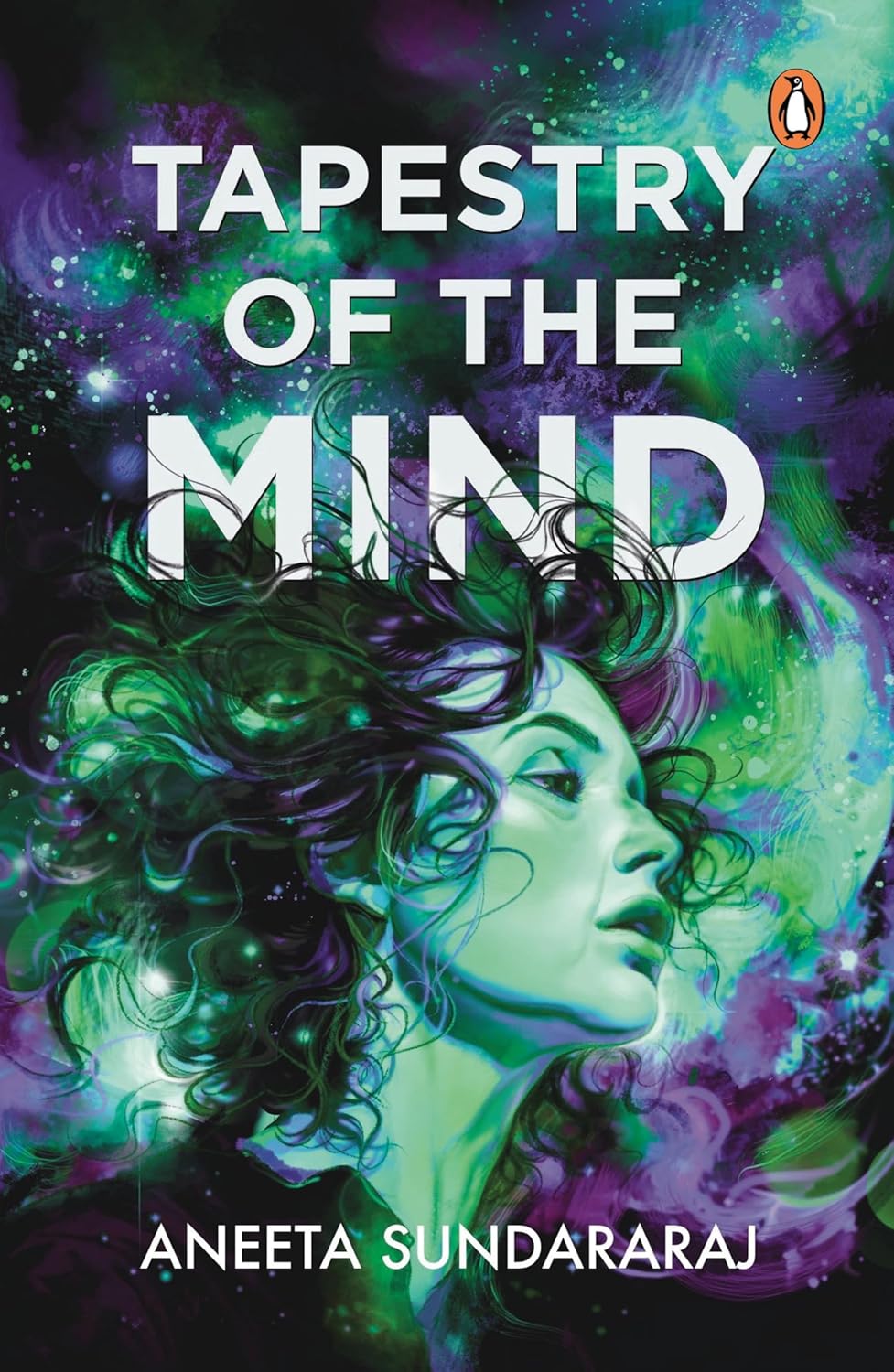
Aneeta Sundararaj, Tapestry of the Mind and Other Stories, Penguin Random House SEA, 2024. 272 pgs.

Aneeta Sundararaj’s Tapestry of the Mind and Other Stories is saturated in Malaysia’s unique sociopolitical environment and coloured by its rich cultural and ethnic diversity. Each story in the collection was apparently inspired by the accompanying quotes from Sundararaj’s psychiatrist friend, which gave birth to stories that range from topics of grief and suicide to discussions of an artificial universe. Unfortunately, despite the noble intentions motivating this collection, the limited intended audience hinders the work’s capacity to holistically discuss mental health in depth.
Growing up in the American education system, I knew less than nothing about Malaysia, other than the fact that my best friend’s mom grew up there. I had just recently read Yangze Choo’s The Night Tiger (also set in Malaysia) and I was naturally interested in learning more about this incredibly diverse country. Tapestry of the Mind promised a different look at Malaysia through the lens of mental health, and with East Asia’s historic attitude towards mental health, I was intrigued to see how it was approached in other parts of Asia.
One of the stories that struck me the most was “Metopia”, as it introduced Islamic conversion as well as the conflict between Sharia law and Civil law—a topic raised in other stories as well. “Metopia” follows a mother’s battle with her ex-husband for the right to see their daughter after he forcibly converts the daughter to Islam. The complicated interplay of religion, law, and mental health as a woman uses the internet as a platform to challenge Sharia law was intriguing and something I knew nothing about. As a translator who is constantly navigating how to bring together readers and authors who don’t share the same language or culture, I always appreciate when a book makes me curious enough to turn to the internet. This was one of those moments. I love how deeply and unapologetically Sundararaj steeps her writing in the culture and political landscape of Malaysia—I think this is where her true strength lies as a storyteller.
It’s unfortunate, then, that the collection draws our focus away from the extremely specific setting and towards mental health—a sensitive and universal subject that warrants in depth discussion. As a majority of these stories are relatively short, we are not really afforded much time to focus on, let alone discuss, the intricacies of “mental health”. In the case of “Metopia”, we get to see the Malaysia-specific relationship between religion and health, but the title instead draws our focus towards a utopian metaverse that the ex-husband is developing. Perhaps the story would have struck a stronger chord if the mother’s online battle (via Twitter, now X) was the artificial platform for life rather than the ex-husband’s rarely mentioned “metopia”.
A majority of the stories in the collection fall into a similar state of confusion, where readers don’t know where to focus their attention. “Kumbavishaygam”, an excerpt from her novel, The Age of Smiling Secrets, is another great example of indecipherable intention on the part of the author. Despite being an excerpt, the story could stand on its own if it were included in a short story collection. But Nagakanna’s sudden sentence-length cameo confuses the tone of the story, inelegantly smudging the line between fairy tale and realistic fiction and making the story feel incomplete. Then there is the quote at the beginning of the story that discusses power intoxication and how it can lead to narcissistic and abusive behaviour. I can only assume this is describing Nandini’s stepfather—a mostly absent side character who brutally beats her birth father. So then why do we read more about Nandini’s father and his love for her mother?
Sundararaj’s intentions are laudable but they feel misguided. A wider discussion of mental health is incredibly important, but I don’t think it should be done in such an ambiguous way that we don’t know what the author is trying to accomplish. It would have been more beneficial for this collection to focus on Malaysia, and perhaps have only a couple of stories focus on mental health (from a Malaysian voice) with more suitable quotes. This would not only widen the prospective audience, but also frame the collection more accurately.
How to cite: Najmulski, Grace. “Perhaps Misguided: Aneeta Sundararaj’s Tapestry of the Mind.” Cha: An Asian Literary Journal, 30 Jul. 2024, chajournal.blog/2024/07/30/tapestry.


Grace Najmulski is a second year at the University of Iowa’s MFA in Literary Translation who translates from Chinese (simplified and traditional characters) and Japanese. They learned both languages in their undergraduate studies at Middlebury College after a YOLO moment made them decide to major in both. Inspired by the words of Gayatri Spivak, they hope to challenge English language norms by introducing the beauty of other languages in their translations. Very anti-colonialist spirit. Hobbies include: reading, bookstagram, badminton, eating, napping, rewatching the same shows on Netflix, and worshipping their cat (what a cutie patootie). [All contributions by Grace Najmulski.]
 Cha
Cha 