
📁 RETURN TO FIRST IMPRESSIONS
📁 RETURN TO CHA REVIEW OF BOOKS AND FILMS
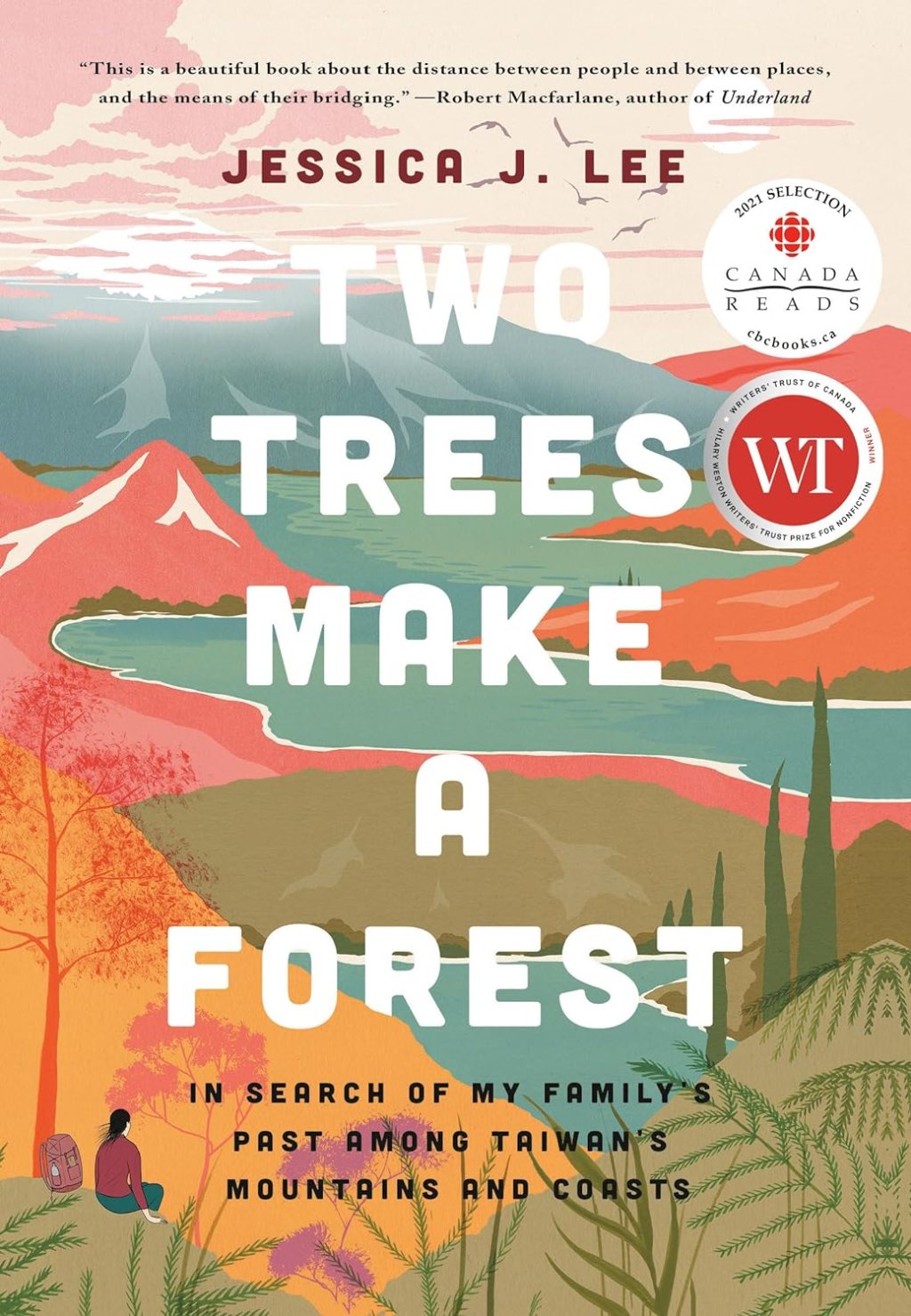
Jessica J. Lee, Two Trees Make a Forest, Catapult, 2020, 282 pgs.
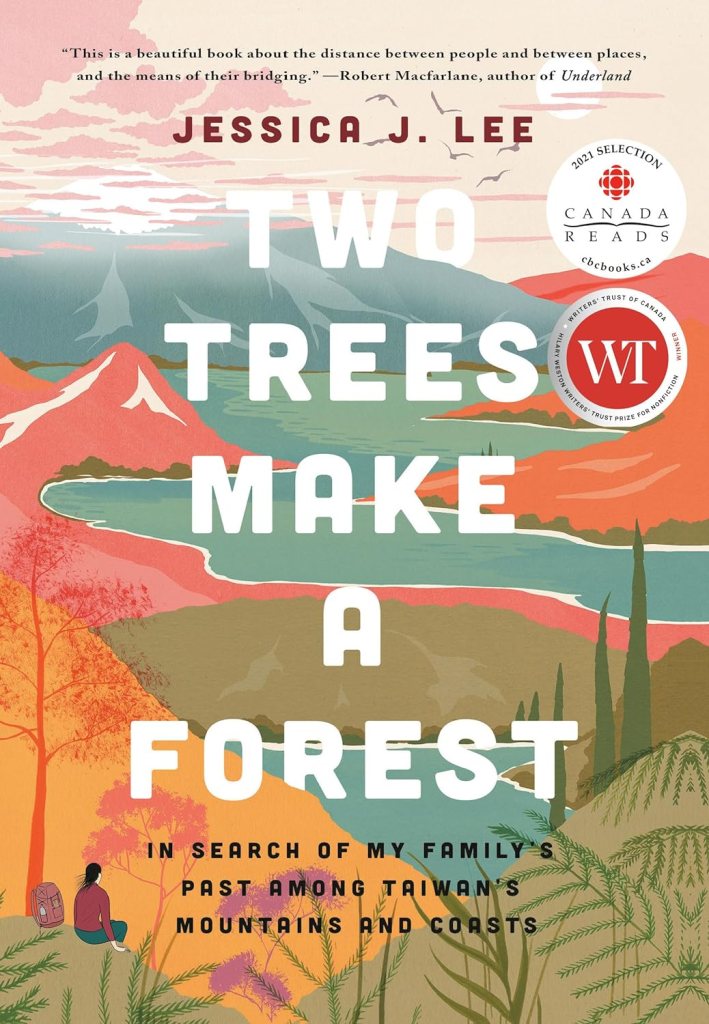
The first day in the cloud forest softened me to fog… Behind me, if I held out my hand, was my mother.
It’s an image of cloudy fog and mist that Jessica J. Lee draws in her prologue, where the higher she and her mother climb on a hiking trail in Taiwan, the less they’re able to see. This state of unknowing provides the beginning to Lee’s writing, which traces her travels through the island while mapping her family’s history from China to Taiwan, to Canada and back to Taiwan. Prompted by the death of her grandfather, who had returned to Kaohsiung from Niagara Falls in his final years, it is also a journey of grief. Grief for a family member, a history and a past they represent and the memories they carried. What results is a beautiful uncovering of personal family history and identity, and a resonant insertion in the canon of diaspora and Taiwanese diaspora writing.
When I read the opening of Lee’s Two Trees Make a Forest, the first thing I thought of was a meal I had with my own mother. We had just returned home to Melbourne after a trip we took together to Taiwan this January. The restaurant was called 彩雲南 or colourful Yunnan. The restaurant served their noodles in big, deep bowls, and when you drank enough of the soup the characters would appear below the rim. When I saw them, I asked my mum how to pronounce them. She answered me. A few moments later she added, “That’s also my mum’s name.” 彩雲, for “colourful cloud”. It’s one of the few things I know about my grandmother. During our trip we had attended her funeral. I carried Lee’s book with me during our eleven-day trip but only had the strength to open it when I returned to Melbourne.
Lee’s meditation on memory, migration and Taiwan could be billed as multiple things: travel writing, travel memoir, nature writing, biography. The structure feels at once fluid and ordered with its separation into four sections: 島 (dǎo, island), 山 (shān, mountain), 水 (shuǐ, water), and 林 (lín, forest). The fluidity comes from the way each section bleeds into the next, perhaps fittingly in the way that nature often does (something Lee doesn’t fail to point out in her observations of the roots of pines knitting into and fortifying the earth after a landslide). The smoothness of the narrative is helped too by the brief chapters marked as distinct from the rest with a 木 (mù, tree; wood) radical at their beginning instead of a number. The significance of these brief interludes to the main narrative is subtle and, at first, hard to discern. They are usually used by Lee to delve into a specific part of her Gong and Po’s early lives in China before and during the Chinese Civil War and then later in Taiwan in the decades of martial law under Chiang Kai-shek. Even later still, are glimpses of the years in Niagara Falls after the family emigrated to Canada. Many of these chapters include anecdotes from a letter Lee’s grandfather wrote toward the end of his life while suffering from Alzheimer’s, and that Lee and her mother only found in her grandmother’s apartment once she too had passed away a decade after her husband.
Their existence broke my heart doubly, for I could not read them. His handwritten scrawl was far beyond my abilities… When could he have written them? And why—why—had the letter been kept from us?
When Lee recounts how it feels to hold the pages of his letter, I can’t help the ache that pings in my own chest. So much of the experience of living as part of a diaspora is grappling with the reality of not knowing. Of not knowing your family’s past, your descendants before them, the country, culture, and language of your origins. Lee remarks at the dissonance between the memories she has of her grandfather during her childhood and the memories he writes of in his letter during his time as a pilot in the Republic of China Air Force.
It is near the end of Lee’s book, after tracing Taiwan’s history as an island on political and literal fault lines and traversing its many mountains and waterways, that I feel the effect of these 木 come together in the book’s final section, 林.
Sadness has lightened, grown lean on my bones. I find in the cedar forest a place where the old trees can span all our stories, where three human generations seem small.
It’s this smallness that Lee lets us take comfort in; the gap between what we know and what we don’t know can feel so large, but it’s dwarfed by the size of nature and its ability to rebound and endure. With this endurance comes a place to return to, a place we can go in search of ourselves and the answers to questions running deep in our histories.
The idea that our time on earth is only ever brief, and yet entire generations can go through irreversible change during this time is something Lee sees reflected in Taiwan’s changing landscape. Nature endures but its fragility is not glossed over. Perhaps most poignantly do we see this in Lee’s desperation to see a rare black-faced spoonbill while cycling in Taijiang National Park. The species had suffered from industrial encroachment on their habitats and as recently as the 1990s, were listed as critically endangered. After decades of campaigning from environmental activist groups, the establishment of the national park in 2009 prompted the spoonbill population to rebound. When Lee finally sights one of the seabirds, her and the reader’s relief is palpable. The relief is not just in the sighting but what the sighting is proof of: that the human effect on the land we inhabit is also something we can mitigate and reverse.
In time though, my shoulders grew broad, my cheeks red, my eyes light. I took the height of my Welsh relatives and now stand many inches taller than my mother. But beaming in that mountain pool, I shared her happiness, and I saw in her face something of my own.
Another feature of Lee’s writing is her experiences in Taiwan as a person of mixed race. A taxi driver expresses surprise at her skill in Mandarin as a foreigner, only to turn around and reproach her for her now (in his view) poor Mandarin when she says her mother is from Taiwan. While swimming in the pools of the Qikong waterfall in Pingtung, she notes the resemblance she can see between her mother and herself. This scene is particularly beautiful for its suggestion that what brings out their resemblance is them being so at peace together amid Taiwan’s nature.
Our histories house so much loss but they house so much love too. This book is a pure encapsulation of that, and I could not have read it at a better time in my life. It helped me put words to the way I felt while I mourned my grandmother and the things about her and Taiwan that I never had the opportunity to know. How wonderful to know this book exists and can be returned to.
How to cite: Hwang, Tracy. “Our Histories House So Much Loss But They House So Much Love Too: Jessica J. Lee’s Two Trees Make a Forest.” Cha: An Asian Literary Journal, 5 Apr. 2024, chajournal.blog/2024/04/05/forest.

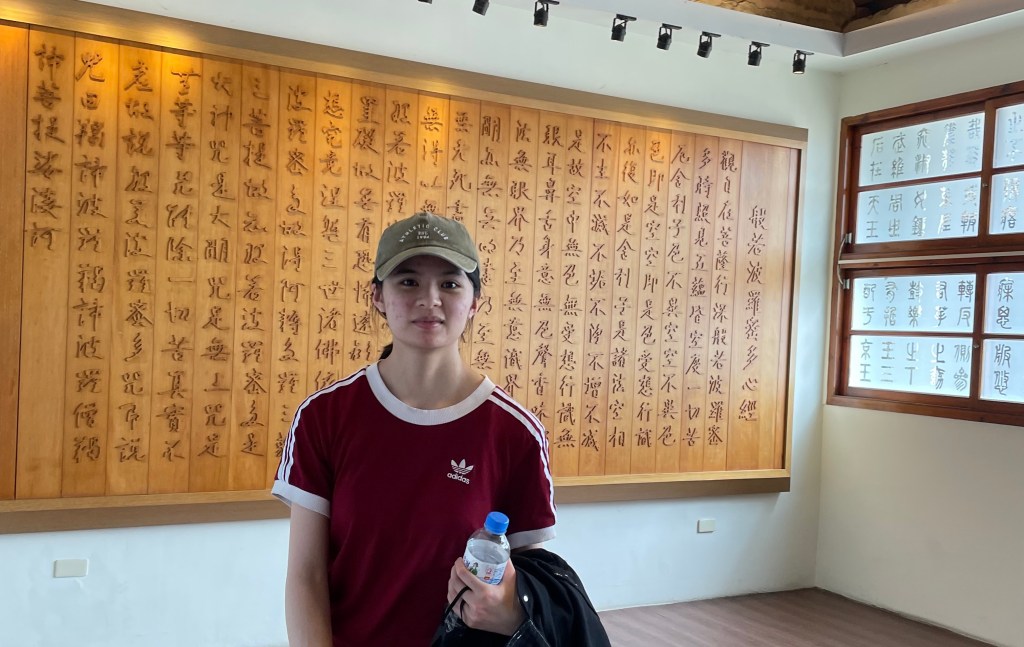
Tracy Hwang is a Taiwanese-Australian bookseller based in Naarm/Melbourne. She can be found @tracyisreading.
 Cha
Cha 