

茶 FIRST IMPRESSIONS
茶 REVIEW OF BOOKS & FILMS
[REVIEW] “The Losers of China’s Sexual Revolution: Tsering Yangkyi’s The Flowers of Lhasa” by Kevin McGeary
Click HERE to read all entries in Cha
on The Flowers of Lhasa.
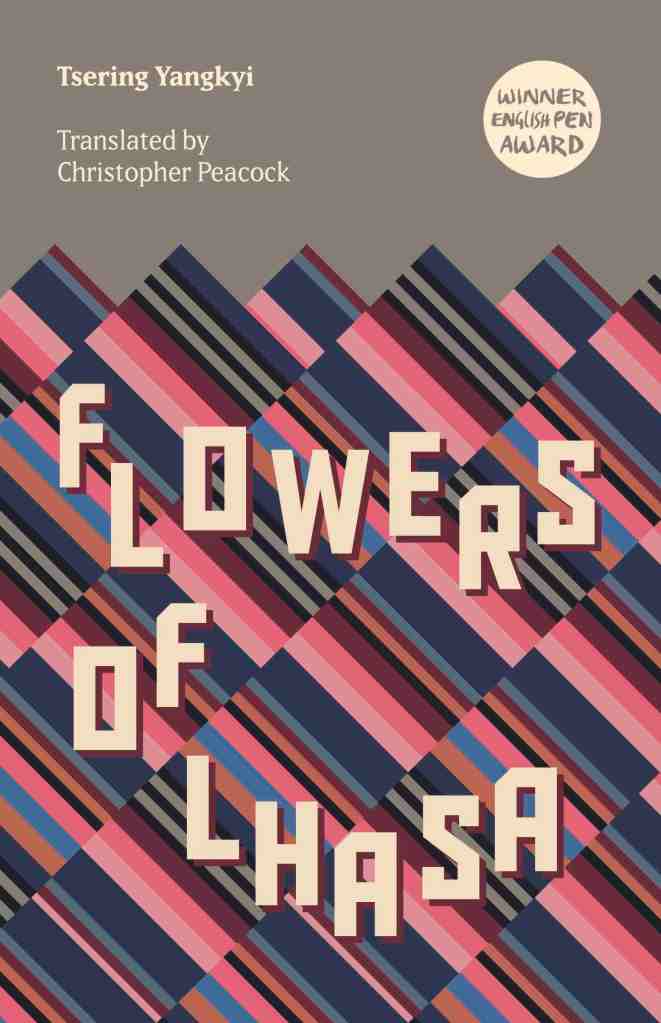
Tsering Yangkyi (author), Christopher Peacock (translator), The Flowers of Lhasa, Balestier Press, 2022. 205 pgs.
In recent decades China has been undergoing a high-speed sexual revolution. According to surveys by sociologist Li Yinhe, in 1989 only 15.5 percent of Chinese people said they’d had sex before marriage. Within a quarter of a century that figure went up to 71 percent.
One offshoot of this is that pornography and prostitution, although still illegal, are punished far less severely than they were in the late 20th century. Author and campaigner Louise Perry has argued that the sexual revolution, with its permissive attitudes to these phenomena, has had more victims than beneficiaries, with low-status women and girls particularly likely to suffer.
Since different countries have highly divergent legal models, and there is so much disagreement about the legal and ethical implications of the sex industry, fiction is a fertile medium from which to explore the nuances from every angle. Literary masterpieces that have addressed the issue include Frank O’Connor’s “A Story by Maupassant”, in which the protagonist’s trajectory is to go from being a promising young scholar to a world-weary buyer of sex.
In The Flowers of Lhasa by Tsering Yangkyi, all four female protagonists migrate to Lhasa, capital of Tibet, and endure a fate that is sadly familiar in Chinese life and literature. Drölkar, Yangdzom, Dzomkyi, and Xiaoli seek well-paid work to support their rural families and end up working together at a “hostess bar” (a thinly disguised brothel) called The Rose.
It is the only job that enables them to make enough money to send home and do their filial duty. Drölkar, who is raped in the first chapter, takes the job thinking that her role is merely to entertain guests. When the boss teaches her how to smoke, how to walk in high heels, and “even how to shake their asses”, she finally catches on. Later in the novel, she is diagnosed with a sexually transmitted illness. She says to herself: “My body is my gold, my loins are my silver—how can I survive without them? Who’ll pay for Dad’s medicine? Who’ll support my brother?”
Yangdzom, who at the beginning is even more innocent, is left nauseated when she sees nude images of “blonde-haired foreigners” on a wall. After seeing the posters regularly, she soon gets used to them and the “wall winked and beckoned her seductively”.
Nothing prepares her for her first night working in The Rose. She has her first ever taste of alcohol, and “the sharp, bitter liquid revolted her. The three men, taking it in turns, kept pouring”.
The scene in which she loses her virginity to a john is one of the most harrowing in the entire novel: “When he saw the blood on the sheets, he laughed with satisfaction and she cried in despair. He kissed (Yangdzom) once on the forehead, tossed five hundred yuan onto the pillow, then left, giving her a parting pat on the ass.” In the aftermath, Yangdzom’s biggest concern is getting in trouble with the hotel owner due to the stains on the sheets.
The women make anguished rationalisations to tolerate the job, enjoying the nice clothes, the good food, and better pay than they could get anywhere else. They are psychologically and spiritually destroyed by the experience.
Despite the intriguing premise, The Flowers of Lhasa does not have anything terribly new to say about the experiences of migrant women at the bottom of society. In the non-fiction book Factory Girls, by Leslie Chang, the author observes that women from the countryside are less important to their families than their male counterparts. And in that regard, are strangely free. The increased sexual freedom comes at a price.
On one of the rare occasions when a man treats one of the women well, he still stops short of getting into a committed relationship. In reaction, “she determined that this job was the best she could hope for, and she resolved to carry on, even clearer now in her mind that this was what her karma had allotted to her”.
Towards the end, Xiaoli makes the rather trite observation: “People change over time. People’s lives, and loves, are ever shifting, never permanent. But everyone has one goal that never changes: the pursuit of that word ‘happiness’.”
The prose is largely functional, with the first page alone containing the clichéd phrases “racking her brains”, and “two pennies to rub together”. There is the occasional exception. After a police raid in which both the prostitutes and their johns are rounded up and arrested “the clients lost their usual domineering swagger and became completely cowed, like a puppy who’s fallen into a pot of stew”.
The novel looks at the mysterious and culturally fascinating city of Lhasa from a fresh angle, and offers a strong social critique, observing that the most lucrative job available to poor women is to serve “vile” men. But neither its prose style nor its plot is as fresh or exciting as they would like to be. One could almost call it poverty porn.
How to cite: McGeary, Kevin. “The Losers of China’s Sexual Revolution: Tsering Yangkyi’s The Flowers of Lhasa.” Cha: An Asian Literary Journal, 28 Feb. 2024, chajournal.com/2024/02/28/flowers-of-lhasa.


Kevin McGeary is a translator, Mandarin tutor and author. His short story collection The Naked Wedding was published in 2021. He is also a singer-songwriter who has written two albums of Chinese-language songs. [All contributions by Kevin McGeary.]
 Cha
Cha 