
📁 RETURN TO FIRST IMPRESSIONS
📁 RETURN TO CHA REVIEW OF BOOKS AND FILMS
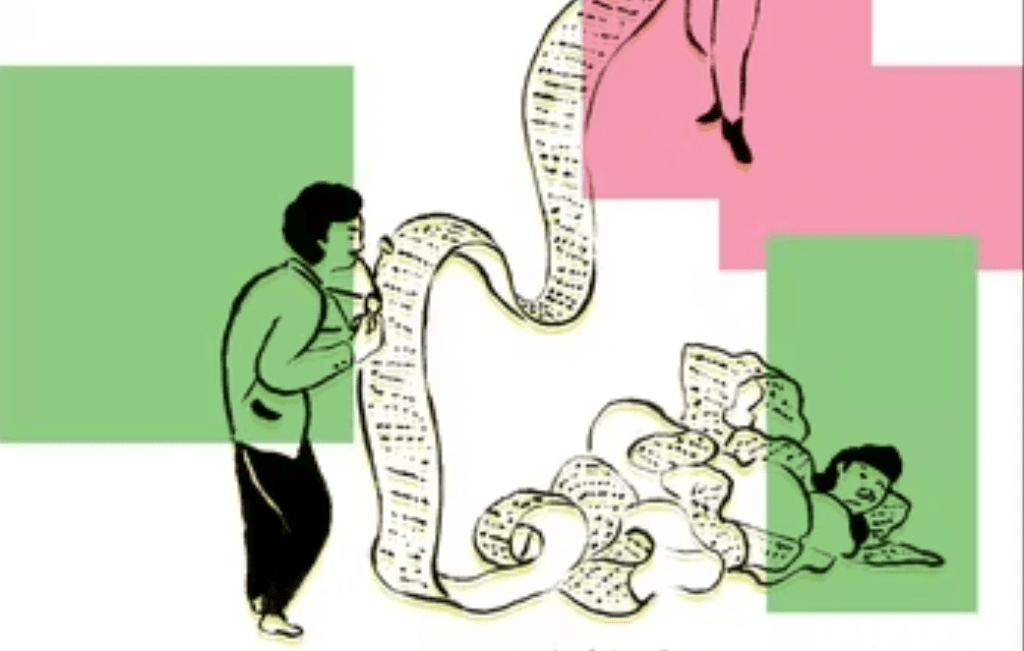
Dung Kai-cheung (author), Bonnie S. McDougall and Anders Hansson (translators), A Catalog of Such Stuff as Dreams Are Made On, Columbia University Press, 2022. 218 pgs.
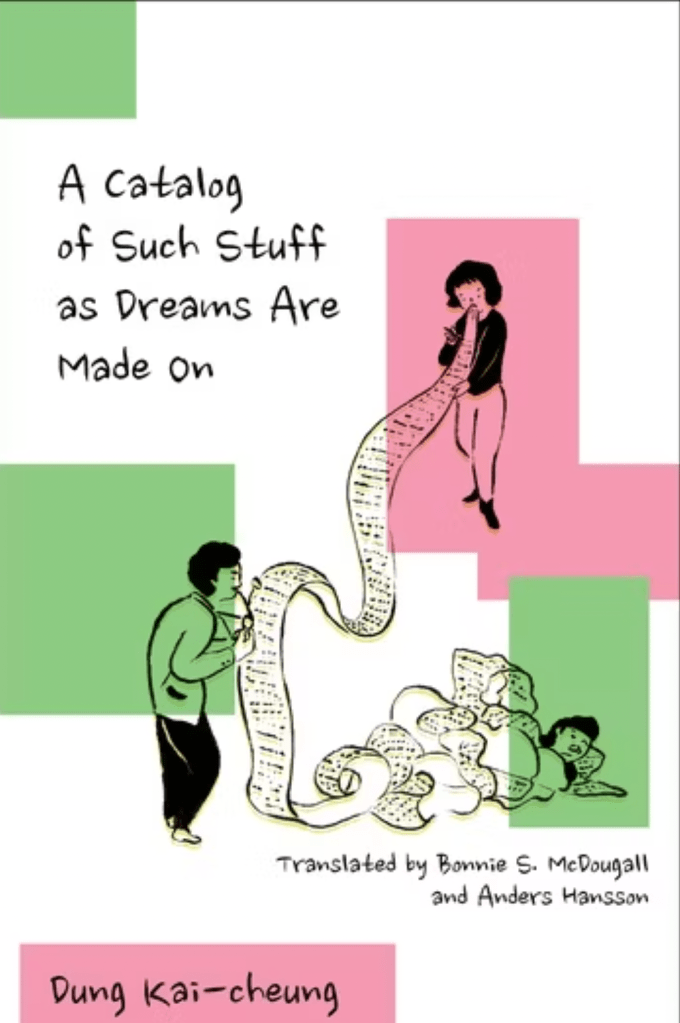
First published in 1999, this “catalog” comprises ninety-nine vignettes of life, or rather “objects in vogue”, in the two years after the former British colony to returned to China. These riffs on consumer products or pop culture phenomena in a time of significant political change may seem odd, but they say much about a society undergoing larger transformational change. Dung Kai-cheung here talks of making an “aesthetics of obsolescence”, giving value to ephemera, or preventing the common, every day present from “becoming obsolete”. We need the micro- as well as the macro-history.
These “sketches” (Dung’s term for these vignettes) include objects like Hello Kitty, Final Fantasy VIII, a Windows 98 disk, a clamshell mobile phone, Air Jordans, and cargo shorts, just to name a few. As is clear from many of the items, Japanese pop culture loomed large over the Hong Kong of the day.
The protagonist of each sketch is usually a young woman—does this imply that it is young women that become obsessed with the latest trends, the latest fashions? Maybe! Each of these young women seems obsessed with the object of their particular desire and its effect on their relationships to the point of surreality. The following two sketches were among my favourites.
In “Bucket Hats” (Sketch no. 38), the protagonist Yau Yau wears a different coloured bucket hat, every day; her friends speculate about why she always wears these hats, the many different hypotheses perhaps hiding one ultimate reason. One day, her red bucket hat is pulled off her head, and the person of Yau Yau was no more: “Yau Yau disappeared, and all that could be seen was a red Japanese horned beetle flying out of the hat”. The person becomes irrelevant; the hat was everything.
“Depsea Water” (Sketch no. 64); the main character Dipsi (obviously a pun), has dry and chapped skin, and becomes obsessed with a product purporting to be a combination of “deep sea water” and perfumed oils. Dipsi thinks that without using Depsea’s fragrant concoction, her skin will “…crumble at a touch, like a dry leaf”. Her lover, Dr Lam, who later betrays her, says that the product was simply “just cold water”. Ultimately, Dipsi’s anger over her lover’s betrayal becomes “dryness” again when she empties a bottle over him and the rest of her bottles over herself. She sneezes and mucus rolls down her face. You could perhaps see this story as a successful marketing strategy, till reality shows you have been sold a lie about what the product might do for you.
The one trend that I myself remember clearly is the Snoopy phenomenon in 1998, not long after it arrived in the city. “Snoopy” (Sketch no. 30), dressed in 28 national costumes, one being released each day at McDonalds fast food restaurants. Collecting these little plastic toys became an addiction, people grabbing the toy and throwing away the happy meal. I learned about the local love of queuing and getting your hands on collectable items. Popularity breeds popularity. In the sketch, the plastic Snoopys ultimately get melted and destroyed. The surreal ending of most of these sketches shows that trends always pass, however ubiquitous and popular they might initially be. There is always the next big thing.
This catalog of vanished consumer products shows us how people use objects to define and even invent themselves. Although given ethereal and exaggerated touches, there is enough familiarity with the mundane aspects of Hong Kong life, like cha chaan tengs, the MTR, and the education system, that will resonate with Hongkongers and long-term residents.
Dung’s sketches pose questions about consumerism and its relationship to nostalgia and identity. I wonder what items will represent Hong Kong in the first two decades of the current millennium?
How to cite: Eagleton, Jennifer. “Aesthetics of Obsolescence: Dung Kai-cheung’s A Catalog of Such Stuff as Dreams Are Made On.” Cha: An Asian Literary Journal, 2 Dec. 2023, chajournal.blog/2023/12/02/catalog.

Jennifer Eagleton, a Hong Kong resident since October 1997, is a close observer of Hong Kong society and politics. Jennifer has written for Hong Kong Free Press, Mekong Review, and Education about Asia. Her first book is Discursive Change in Hong Kong (Rowman & Littlefield, 2022) and she is currently writing another book on Hong Kong political discourse for Palgrave MacMillan. Her poetry has appeared in Voice & Verse Poetry Magazine, People, Pandemic & ####### (Verve Poetry Press, 2020), and Making Space: A Collection of Writing and Art (Cart Noodles Press, 2023). A past president of the Hong Kong Women in Publishing Society, Jennifer teaches and researches part-time at a number of universities in Hong Kong. [All contributions by Jennifer Eagleton.]
 Cha
Cha 