
[Diary of the Absurd Life in 1997:
All Entries]
TH: Diary of the Absurd Life in 1997, in 28 sections, was written originally in Chinese by Mary Wong and serialised in Ming Pao 明報 in 1997. The pieces, translated into English by Chris Song, are serialised in Cha beginning from Monday 25 September 2023.

.
The Women
Who Had a Basin Meal
28/28
.

Ming turned his camera towards us, creating a tension that left Kwong tongue-tied and uncomfortable. “May I get a few words? I’m shooting a documentary.” Ming’s use of the camera might have been a shield for his own unease, but it seemed somehow unfair. “What’s there to say?” Lily interjected. My silence was my protest. “Why don’t we break the ice by sharing a basin meal?” Kwong suggested, to everyone’s relief. Ming switched off his camera but remained standing. “The basin meal is about to be served. Grab a good spot.” Kwong pointed to an empty stool next to a known food critic. “I want to capture the dish being served; I won’t sit,” Ming replied. The event host, standing at the centre of the hall, announced that the basin meal banquet was about to begin, lending the air a fresh tension. “Would you narrate for me, offering a brief introduction of this grand event?” Ming hid behind his camera again as he asked.
Caught off guard by the request, Kwong looked around as if to find a language that could fit within this traditional setting. She saw the first basin meal making its way out. The basin was modern, made of aluminium, definitely not used for washing feet—the host assured us. “I’ve come all this way; I’d like to simply enjoy the meal. Moreover, I’m not familiar with the intricacies of the basin meal. It’s not for me to narrate,” Kwong said. Seeing the dishes arrive one after another, Ming hastily picked up his camera and left.
What traditional basin meals looked like, how many layers it had, and what each layer contained, we did not know. We shuffled through the basin on our table, aiming for a bite of vegetables. The food critic offered us an explanation, commenting on how strange it was for us to look for something else in a dish we knew would be meat-heavy. “Fine, let’s try a piece of fatty meat,” Kwong picked up a piece of meat and a mouthful of vegetables for me and an even fattier piece for Lily. We both made faces as we ate, realising we still preferred vegetables. Lily asked Kwong, “So, you’re not going to be the lead in his film?” Kwong replied, “I don’t want to be. But since we’re this far out, we could give him a lift if he needs one.”
How to cite: Song, Chris and Mary Wong. “The Women Who Had a Basin Meal.” Cha: An Asian Literary Journal, 22 Oct. 2023, chajournal.blog/2023/10/22/meal.


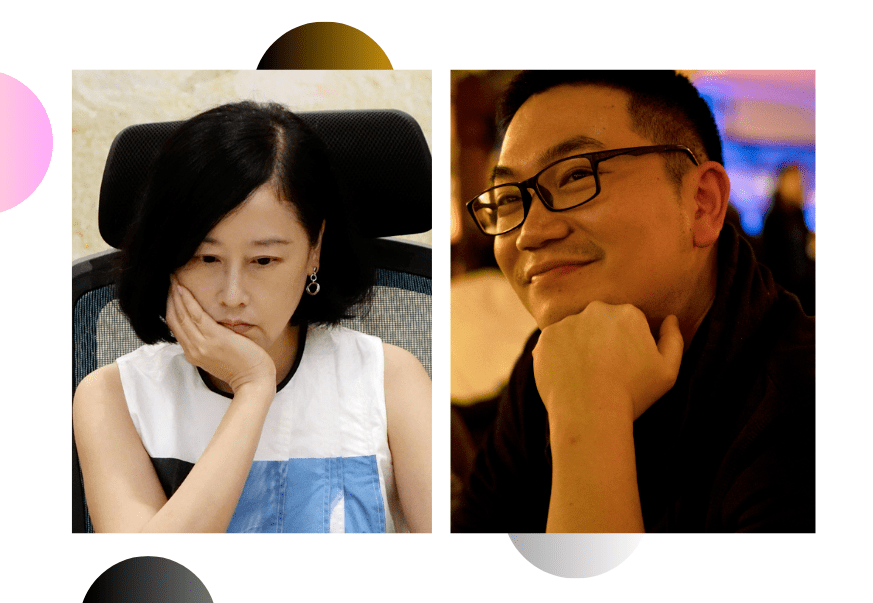
Mary Shuk-Han Wong 黃淑嫻 (author) is a Hong Kong writer. Her short story collection Surviving Central (中環人; 2013) received the “25th Secondary School Students’ Best Ten Books Award.” Her essay collections include How to Live the Sad Days (悲傷的日子如何過; 2021), Against the Grain (亂世破讀; 2017), and From Kafka (理性的遊藝:從卡夫卡談起; 2015). She has also published an online poetry collection, Cave Whispers (絕地抒情; 2022), in collaboration with Hong Kong composer and photographer. She was the co-producer and literary advisor of two literary documentaries: 1918: Liu Yichang (1918:劉以鬯紀錄片; 2015) and Boundary: Leung Ping Kwan (東西:也斯紀錄片; 2015).


Chris Song (translator) is a poet, editor, and translator from Hong Kong, and is an assistant professor in English and Chinese translation at the University of Toronto Scarborough. He won the “Extraordinary Mention” of the 2013 Nosside International Poetry Prize in Italy and the Award for Young Artist (Literary Arts) of the 2017 Hong Kong Arts Development Awards. In 2019, he won the 5th Haizi Poetry Award. He is a founding councilor of the Hong Kong Poetry Festival Foundation, executive director of the International Poetry Nights in Hong Kong, and editor-in-chief of Voice & Verse Poetry Magazine. He also serves as an advisor to various literary organisations.
 Cha
Cha 