
[Diary of the Absurd Life in 1997:
All Entries]
TH: Diary of the Absurd Life in 1997, in 28 sections, was written originally in Chinese by Mary Wong and serialised in Ming Pao 明報 in 1997. The pieces, translated into English by Chris Song, are serialised in Cha beginning from Monday 25 September 2023.

.
Overhearing
21/28
.
Even the computer was acting up. If fate wanted to duel, who was I to refuse? I decided to shut down the contraption and turned to a book. Books were dependable, at least. But as I thumbed the pages, my ears remained pricked for any sound beyond my door. Finally, it came.
“Guess my trip here was in vain, now that the toilet is unblocked,” Ming lamented. “Whatever,” Kwong murmured, almost inaudible.
“His attire was pretty up-to-date, and those brand-name shoes!” Ming said. “You also own a pair of Prada. What’s so special? Last time, when Lily took me to the bookstore upstairs, even the nerdy owner wore Prada while moving books,” Kwong retorted. I could almost hear Ming seething. Silence reigned again, broken only when someone flicked on the TV.
“Don’t waste another thought on these fickle women, Son. You have your whole life ahead of you,” a mother’s voice came through the screen, a lethal blow in its own right. Neither Kwong nor Ming bothered to turn off the TV, as if respecting some elderly wisdom. “How about we go have some dessert?” Kwong suggested, lightening her tone. No answer from Ming.
“You’re slaving away for this household while she’s frolicking with some young gigolo. The first time I saw her, I knew she was no good, no virtuous wife and mother. She’s so thin, yet you insisted on marrying her,” the mother in the TV drama droned on. Lucky for “her” that she was skinny; perhaps Ming would feel some distance there.
“I’m not in the mood. Call your dapper friend if you want to go,” Ming finally said. Clearly, he didn’t major in cultural studies during his film school days, failing to differentiate between reality and TV drama. He might be lumping skinny and chubby women together as equally fickle. I decided to wait until he left before risking the bathroom. Why invite trouble?
The phone rang. Kwong was overly agreeable, saying “good, good, good” before hanging up. “Alright, I’ll go have dessert then. You stay and watch TV,” she said, her voice trailing off as the door closed behind her. “Mom, she’s emptied out my bank account. What would I do?” The door closed again. In the end, all that remained in the apartment was the unyielding voice of the mother from the television.
How to cite: Song, Chris and Mary Wong. “Overhearing.” Cha: An Asian Literary Journal, 15 Oct. 2023, chajournal.blog/2023/10/15/overhearing.


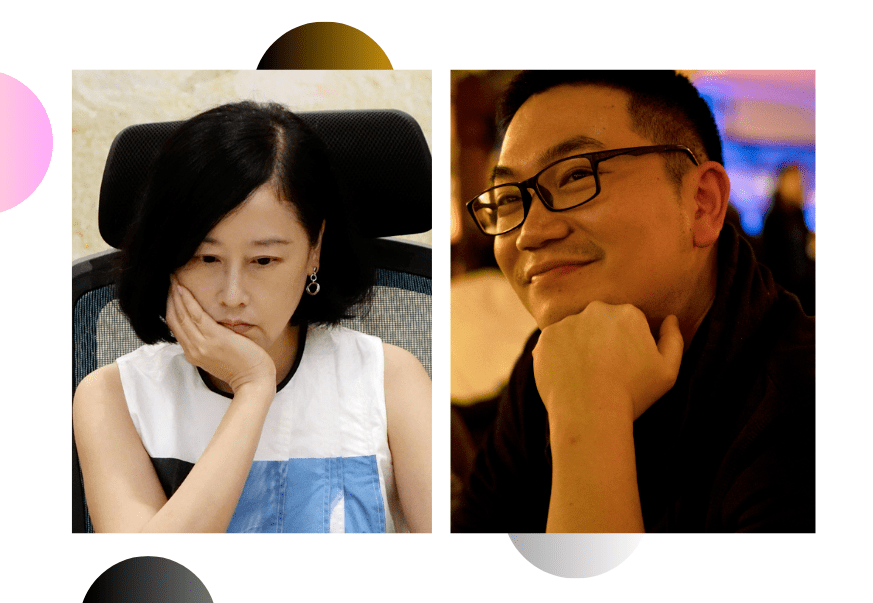
Mary Shuk-Han Wong 黃淑嫻 (author) is a Hong Kong writer. Her short story collection Surviving Central (中環人; 2013) received the “25th Secondary School Students’ Best Ten Books Award.” Her essay collections include How to Live the Sad Days (悲傷的日子如何過; 2021), Against the Grain (亂世破讀; 2017), and From Kafka (理性的遊藝:從卡夫卡談起; 2015). She has also published an online poetry collection, Cave Whispers (絕地抒情; 2022), in collaboration with Hong Kong composer and photographer. She was the co-producer and literary advisor of two literary documentaries: 1918: Liu Yichang (1918:劉以鬯紀錄片; 2015) and Boundary: Leung Ping Kwan (東西:也斯紀錄片; 2015).


Chris Song (translator) is a poet, editor, and translator from Hong Kong, and is an assistant professor in English and Chinese translation at the University of Toronto Scarborough. He won the “Extraordinary Mention” of the 2013 Nosside International Poetry Prize in Italy and the Award for Young Artist (Literary Arts) of the 2017 Hong Kong Arts Development Awards. In 2019, he won the 5th Haizi Poetry Award. He is a founding councilor of the Hong Kong Poetry Festival Foundation, executive director of the International Poetry Nights in Hong Kong, and editor-in-chief of Voice & Verse Poetry Magazine. He also serves as an advisor to various literary organisations.
 Cha
Cha 