
[Diary of the Absurd Life in 1997:
All Entries]
TH: Diary of the Absurd Life in 1997, in 28 sections, was written originally in Chinese by Mary Wong and serialised in Ming Pao 明報 in 1997. The pieces, translated into English by Chris Song, are serialised in Cha beginning from Monday 25 September 2023.

.
The Toilet Was Clogged
19/28
.

In a world where everyone had their fragile moments, who would have thought the breaking point for a capitalist tycoon would be while watching a Pasolini film? But these lapses were but momentary. By the next day, as he returned to his office, sinking into an executive leather chair vast enough to swallow him whole, overlooking the intricate tapestry of Hong Kong Harbour while contemplating his transnational ambitions, he subdued all vulnerabilities. Like a pedigree dog well-versed in self-protection, savouring the caresses along the grain of its fur, yet agile enough to transform an errant stroke against the grain into an alternative form of pleasure. In any case, after that dramatic night, he dropped the subject of making films. We continued to watch Pasolini.
Amid the unfolding drama, the mundane events of daily life percolated. Returning home from work, Kwong discovered that the toilet was clogged. These pipes seemed to have whims of their own, jamming up from time to time as if nudging us to give them due attention. Despite our attempts, the problem remained unresolved. I knew that Kwong must be thinking of Bigfeet. And why wouldn’t I be? Bigfeet was not just a top-tier real estate agent but also meticulous about details. He would ensure everything in the house was in impeccable order—at least superficially—before handing it over to tenants. Thus, he was also a first-class plumber. But they’d broken up, and now Kwong was with Ming. There’s no reason to call Bigfeet for a plumbing issue, especially when she didn’t subscribe to the belief that unclogging a toilet was just that, devoid of emotional entanglements.
The phone rang. “Hello, it’s… good, long time no see. How have you been? …That’s great…She’s fine, she’s right here beside me…Sure, we should catch up sometime…Your tennis racket? Hold on…Yes, it’s here…Sure, you can have it now…It’s convenient…See you in fifteen minutes.”
Bigfeet visits us for the first time in a home devoid of any historical entanglement with him. This neutrality seems to make Kwong more comfortable in his presence. Yet, amid the household paraphernalia, an item or two stir memories. After a fleeting moment of nostalgia, she firmly says, “If you want to take back the tennis racket, you’ll have to unclog our toilet first.” In that sentence, I thought I heard a fresh start.
How to cite: Song, Chris and Mary Wong. “The Toilet Was Clogged.” Cha: An Asian Literary Journal, 13 Oct. 2023, chajournal.blog/2023/10/13/toilet.


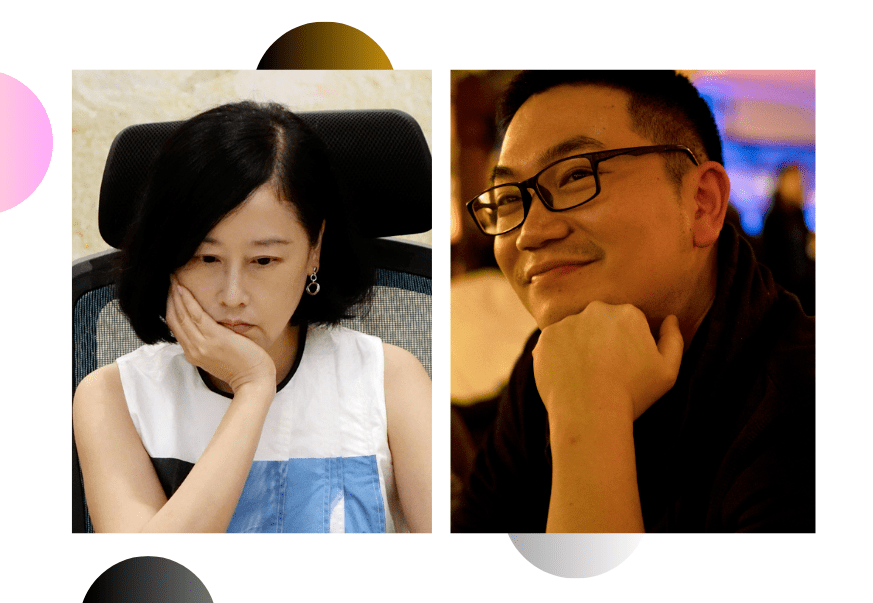
Mary Shuk-Han Wong 黃淑嫻 (author) is a Hong Kong writer. Her short story collection Surviving Central (中環人; 2013) received the “25th Secondary School Students’ Best Ten Books Award.” Her essay collections include How to Live the Sad Days (悲傷的日子如何過; 2021), Against the Grain (亂世破讀; 2017), and From Kafka (理性的遊藝:從卡夫卡談起; 2015). She has also published an online poetry collection, Cave Whispers (絕地抒情; 2022), in collaboration with Hong Kong composer and photographer. She was the co-producer and literary advisor of two literary documentaries: 1918: Liu Yichang (1918:劉以鬯紀錄片; 2015) and Boundary: Leung Ping Kwan (東西:也斯紀錄片; 2015).


Chris Song (translator) is a poet, editor, and translator from Hong Kong, and is an assistant professor in English and Chinese translation at the University of Toronto Scarborough. He won the “Extraordinary Mention” of the 2013 Nosside International Poetry Prize in Italy and the Award for Young Artist (Literary Arts) of the 2017 Hong Kong Arts Development Awards. In 2019, he won the 5th Haizi Poetry Award. He is a founding councilor of the Hong Kong Poetry Festival Foundation, executive director of the International Poetry Nights in Hong Kong, and editor-in-chief of Voice & Verse Poetry Magazine. He also serves as an advisor to various literary organisations.
 Cha
Cha 