
[Diary of the Absurd Life in 1997:
All Entries]
TH: Diary of the Absurd Life in 1997, in 28 sections, was written originally in Chinese by Mary Wong and serialised in Ming Pao 明報 in 1997. The pieces, translated into English by Chris Song, are serialised in Cha beginning from Monday 25 September 2023.

.
We Chanced Upon Pigsty
18/28
.

The ancient part of the film featured characters devouring human flesh in a barren volcanic landscape, offering a disturbing tableau of primal brutality. Then we’re transported to a sprawling chateau in modern times, where a dictatorial politician plucked a harp in quiet sophistication, where a mother and a son’s fiancée sparred over the son’s true nature. How could I convey to them the film’s ironic critique of bourgeois values or its questioning of what we termed “invasion”? The film made me want to turn each image into a decipherable symbol. I had to decode the metaphors. Otherwise, what would I say later? How would I convince Kwong that this was a film worth seeing?
My desire for rational analysis sanitised even the most grotesque scenes. I still had an appetite for dinner, in a restaurant on the sixth floor. After the film, Kwong was momentarily at a loss for words. She glanced at me, awaiting my critique. But the owner mumbled something about the film’s impact on the deviant son. Setting aside whether “deviant” is an accurate description, the owner was genuinely reflective—something I didn’t expect. Does extreme shock cleanse the soul? Does excess make us yearn for the commonplace?
Kwong sensed the situation and asked gently, “Do you also have a son studying abroad?” “I haven’t been in contact for some time.” “He seems subdued in the latter half. As if repressed,” Ming observed, musing about character arcs for his next film. “So you two never communicate?” Kwong asked while waiting for her soft-shell crab. I continued my conversation about the movie with Ming, while the boss intermittently shared reluctant snippets of a past he’d rather have forgotten. In the end, Kwong proposed, “Since you have such strong feelings about father-son relationships, why don’t we collaborate on a short film? You write the script, my cousin directs, Miss Sheung Kwun can cross-dress as the son, and you can invest.” “And what will you do then?” everyone asked in unison. “I’ll, of course, revert to my role as the secretary!” Laughter filled the room. Who would have thought that Pigsty could lead to such a conclusion?
How to cite: Song, Chris and Mary Wong. “We Chanced Upon Pigsty.” Cha: An Asian Literary Journal, 12 Oct. 2023, chajournal.blog/2023/10/12/pigsty.


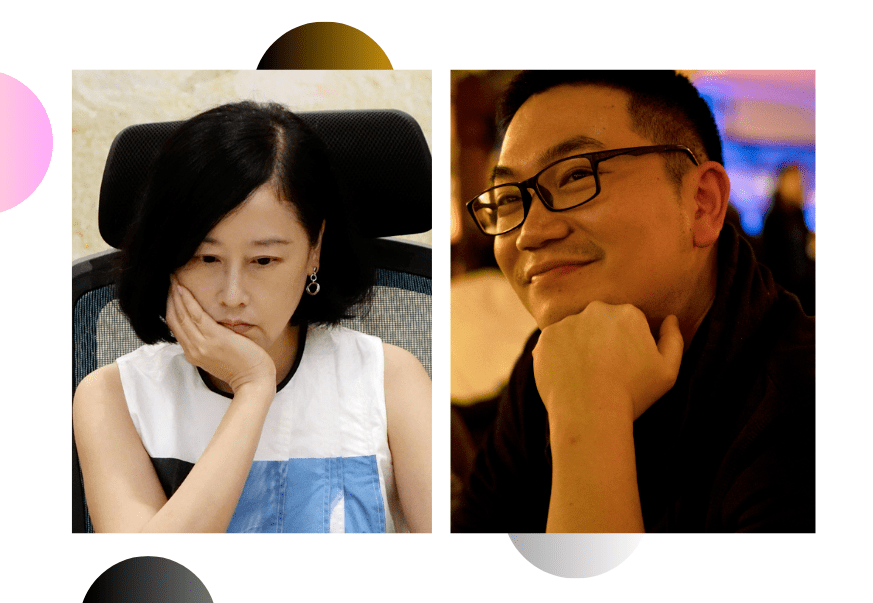
Mary Shuk-Han Wong 黃淑嫻 (author) is a Hong Kong writer. Her short story collection Surviving Central (中環人; 2013) received the “25th Secondary School Students’ Best Ten Books Award.” Her essay collections include How to Live the Sad Days (悲傷的日子如何過; 2021), Against the Grain (亂世破讀; 2017), and From Kafka (理性的遊藝:從卡夫卡談起; 2015). She has also published an online poetry collection, Cave Whispers (絕地抒情; 2022), in collaboration with Hong Kong composer and photographer. She was the co-producer and literary advisor of two literary documentaries: 1918: Liu Yichang (1918:劉以鬯紀錄片; 2015) and Boundary: Leung Ping Kwan (東西:也斯紀錄片; 2015).


Chris Song (translator) is a poet, editor, and translator from Hong Kong, and is an assistant professor in English and Chinese translation at the University of Toronto Scarborough. He won the “Extraordinary Mention” of the 2013 Nosside International Poetry Prize in Italy and the Award for Young Artist (Literary Arts) of the 2017 Hong Kong Arts Development Awards. In 2019, he won the 5th Haizi Poetry Award. He is a founding councilor of the Hong Kong Poetry Festival Foundation, executive director of the International Poetry Nights in Hong Kong, and editor-in-chief of Voice & Verse Poetry Magazine. He also serves as an advisor to various literary organisations.
 Cha
Cha 