
[Diary of the Absurd Life in 1997:
All Entries]
TH: Diary of the Absurd Life in 1997, in 28 sections, was written originally in Chinese by Mary Wong and serialised in Ming Pao 明報 in 1997. The pieces, translated into English by Chris Song, are serialised in Cha beginning from Monday 25 September 2023.

.
When Pak Kwong Saw Pasolini’s Films
17/28
.
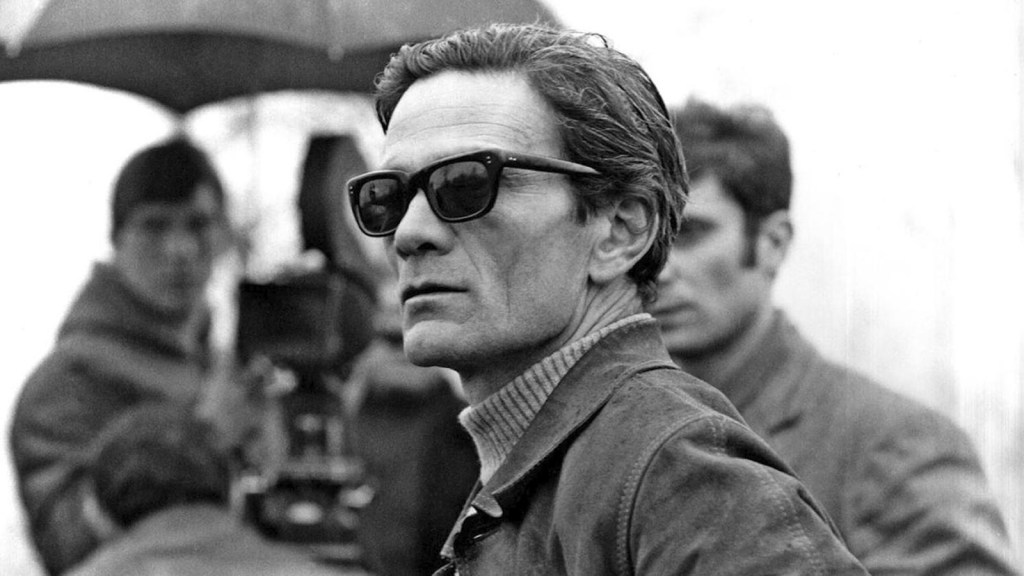
“How can I articulate that Pasolini’s films might not be the best reference for them, especially when I’m surrounded on all sides?” I wondered. I’d need paragraphs just to explain who Pasolini was to them, let alone delve into his work. I’d only seen Oedipus Rex once and couldn’t claim any expertise. Yet that VHS tape Lily had introduced to me left an indescribable impression. No time for memories now, though, with a half-dozen eyes fixing on me. “I’ll handle the reservations,” I finally conceded.
I promptly dialled my saviour, Lily. “What’s screening at the Arts Centre tomorrow?” I heard the rustling of papers on the other end. “Wanna come?” The rustling stopped. “Already seen it. Besides, I have a meeting with Literati Zisu at Vong about a three-hundred-thousand-dollar research proposal.” “What about dinner after?” “Who’d have the appetite after seeing it?” Lily chuckled before switching tones. “I can reserve seats for you. How many?” “You’re a lifesaver, Lily. Four.” It was only after hanging up that I realised I had forgotten to ask the film’s title. But the call had acted like a sedative, a clear symptom of my dependency on authority.
We took our seats, and the owner was instantly enamoured by the black-and-white printed programme. “We could do something like this,” he mused, skimming over it as if he had spotted a refreshing figure amidst a crowd of gaudy women. “Get a poet to write something; add some artsy photos; it will elevate the whole tone.” As the lights dimmed, he whispered to Kwong, who was seated beside him, “Does the Arts Centre also sell these red-white-blue bags?” She couldn’t be bothered to explain, partly because she herself didn’t quite understand the point of the ad. A few whispered words to Ming, a nod, then suppressed laughter. “Hermès!” She exclaimed as if greeting an old friend. “This scarf-wrapped head look suits you!” Sensing the drift of her attention, the owner piped up, “We could try getting them as a sponsor,” copying her to win her favour. The movie began with the sound of strumming guitars, opening with a scene set in a pigsty. The owner shut up; perhaps he was mentally noting that animals must open his own film.
How to cite: Song, Chris and Mary Wong. “When Pak Kwong Saw Pasolini’s Films.” Cha: An Asian Literary Journal, 11 Oct. 2023, chajournal.blog/2023/10/11/pasolini.


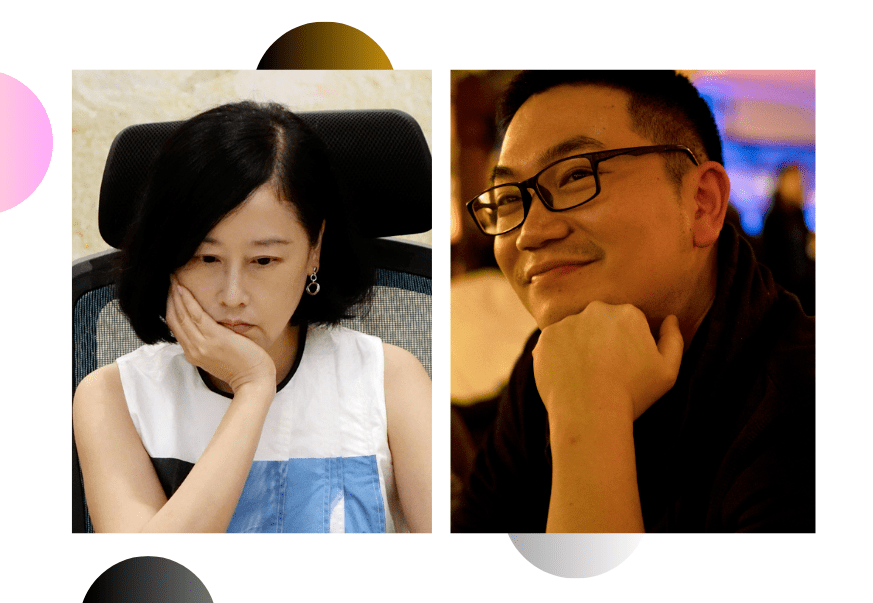
Mary Shuk-Han Wong 黃淑嫻 (author) is a Hong Kong writer. Her short story collection Surviving Central (中環人; 2013) received the “25th Secondary School Students’ Best Ten Books Award.” Her essay collections include How to Live the Sad Days (悲傷的日子如何過; 2021), Against the Grain (亂世破讀; 2017), and From Kafka (理性的遊藝:從卡夫卡談起; 2015). She has also published an online poetry collection, Cave Whispers (絕地抒情; 2022), in collaboration with Hong Kong composer and photographer. She was the co-producer and literary advisor of two literary documentaries: 1918: Liu Yichang (1918:劉以鬯紀錄片; 2015) and Boundary: Leung Ping Kwan (東西:也斯紀錄片; 2015).


Chris Song (translator) is a poet, editor, and translator from Hong Kong, and is an assistant professor in English and Chinese translation at the University of Toronto Scarborough. He won the “Extraordinary Mention” of the 2013 Nosside International Poetry Prize in Italy and the Award for Young Artist (Literary Arts) of the 2017 Hong Kong Arts Development Awards. In 2019, he won the 5th Haizi Poetry Award. He is a founding councilor of the Hong Kong Poetry Festival Foundation, executive director of the International Poetry Nights in Hong Kong, and editor-in-chief of Voice & Verse Poetry Magazine. He also serves as an advisor to various literary organisations.
 Cha
Cha 