
[Diary of the Absurd Life in 1997:
All Entries]
TH: Diary of the Absurd Life in 1997, in 28 sections, was written originally in Chinese by Mary Wong and serialised in Ming Pao 明報 in 1997. The pieces, translated into English by Chris Song, are serialised in Cha beginning from Monday 25 September 2023.

.
Girls’ Apartment
on South Street
13/28
.

When Kwong and I were in high school, we had delighted in plotting how we would share an apartment after graduation. This wish had taken on a fervent hue, especially during morning hymns. Kwong, leaning against the pole of a basketball backboard, would silently recite scriptures she had reworked for her own needs. In retrospect, the lives we had sketched were but feeble attempts to escape parental nagging. Reality diverged far from such youthful blueprints. We had thought we’d talk late into the night every day, but work commitments and our personal lives made that an unlikely scenario. Even if we did happen to meet in the living room on a bright, moonlit evening, life’s disappointments might well have rendered both of us mute.
After moving into the tenement building, the first hiccup affecting my daily routine was the newspaper delivery. The newsstand owner initially promised to tuck the paper into my mailbox, only to renege on the agreement the next day. It wasn’t a practical arrangement—the voluminous papers couldn’t easily fit inside. Despite suggesting the paper could be casually clipped to the main gate, the owner still couldn’t muster the will to climb the incline. I had to fetch the paper myself every day, breaking my breakfast-reading habit. Each morning, as they spotted me from across the street, they’d fold the paper neatly: “Morning, South Street!” In their eyes, I embodied South Street, perhaps because I was the only one who interacted with them.
Living the reality, I quickly realised South Street wasn’t the SoHo—“south of Houston”. Each morning the hardware store “uncle” greeted me. I put on my professional-woman face, acknowledged him politely, and strode away. When I got off work early, he’d comment, “Off work early, eh?” Was he tracking my daily movements? Moving here, I began to appreciate the communal intricacies of the old Sheung Wan neighbourhood. Yet, it felt like I was acting out a Susan Sontag role, only to have my father’s ghost peek in, bellowing, “Time for dinner!” Shattering my reverie. Awake, I had no choice but to listen to the market sounds of South Street.
How to cite: Song, Chris and Mary Wong. “Girls’ Apartment on South Street.” Cha: An Asian Literary Journal, 7 Oct. 2023, chajournal.blog/2023/10/07/apartment.


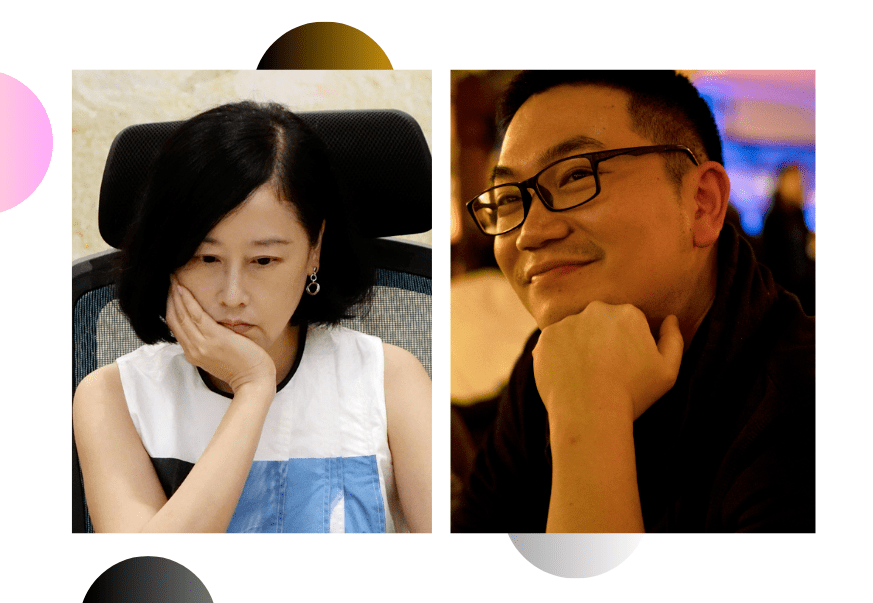
Mary Shuk-Han Wong 黃淑嫻 (author) is a Hong Kong writer. Her short story collection Surviving Central (中環人; 2013) received the “25th Secondary School Students’ Best Ten Books Award.” Her essay collections include How to Live the Sad Days (悲傷的日子如何過; 2021), Against the Grain (亂世破讀; 2017), and From Kafka (理性的遊藝:從卡夫卡談起; 2015). She has also published an online poetry collection, Cave Whispers (絕地抒情; 2022), in collaboration with Hong Kong composer and photographer. She was the co-producer and literary advisor of two literary documentaries: 1918: Liu Yichang (1918:劉以鬯紀錄片; 2015) and Boundary: Leung Ping Kwan (東西:也斯紀錄片; 2015).


Chris Song (translator) is a poet, editor, and translator from Hong Kong, and is an assistant professor in English and Chinese translation at the University of Toronto Scarborough. He won the “Extraordinary Mention” of the 2013 Nosside International Poetry Prize in Italy and the Award for Young Artist (Literary Arts) of the 2017 Hong Kong Arts Development Awards. In 2019, he won the 5th Haizi Poetry Award. He is a founding councilor of the Hong Kong Poetry Festival Foundation, executive director of the International Poetry Nights in Hong Kong, and editor-in-chief of Voice & Verse Poetry Magazine. He also serves as an advisor to various literary organisations.
 Cha
Cha 