
📁 RETURN TO FIRST IMPRESSIONS
📁 RETURN TO CHA REVIEW OF BOOKS AND FILMS
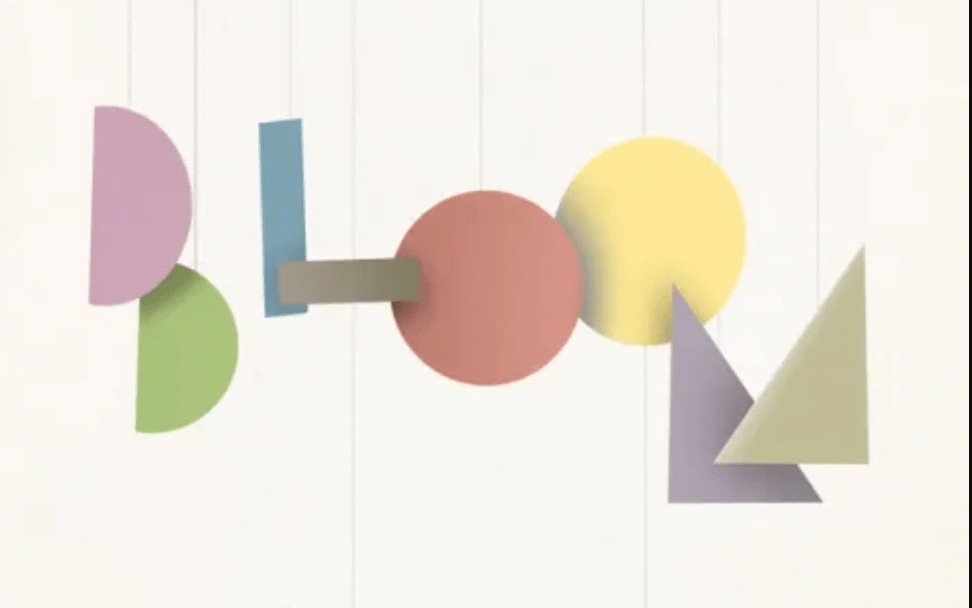
Click HERE to read all entries in Cha on Bloom.
Xi Chuan (author), Lucas Klein (translator), Bloom & Other Poems, New Directions. 2022. 204 pgs.

In a conversation with the author Xu Zhiyuan, included in the final pages of this volume, Xi Chuan refers to the transformation his own poems underwent in the early 1990s as a “shedding-of-the-skin process, a switching-out-your-bones”. It was a time of great personal tragedy for Xi Chuan, for whom the deaths of two admired friends in 1989—the poets Haizi and Luo Yihe—portended a break with the influences of his past. But in poetic terms, too, it was an “excruciating” journey: to leave behind the slogan-laden 1980s, along with the venerated masters and icons of that era, and learn to make something new of the amnesiac and consumerist era that China was then heading into.
To grasp the poems in Bloom thus requires us to step with Xi Chuan into the ferment of the 1990s and early 2000s: a period torn between the logics of cultural preservation and trade-fuelled prosperity, when what he calls a “revolutionary youth culture” transformed the media, while capital from Southeast Asia and the West provided a boost for the visual arts. To these upheavals, Lucas Klein’s Foreword adds the fascinating backdrop of a late-1990s debate among China’s literary community that “divided poets into camps of ‘Intellectual’ and ‘Populist’ writers”—within which Xi Chuan, by his own telling, found himself in the “Intellectual” camp but came to insist on the richness of the quotidian in his writing. Armed with this sensibility, Xi Chuan entered the 2000s determined not to let the decade’s ”marvels and absurdities” go to waste, by allowing his poetic voice to absorb the shape-shifting discourses of China’s internet era as well as the historical detritus left in its wake.
What results is a deliberate, sometimes overwhelming hybridity that leaps from every page and provides the central motif for Bloom’s title poem, dated to the twenty-fifth anniversary of the Tiananmen Square massacre in June 2014. To “bloom”, Xi Chuan suggests, is to inhabit the possibilities of the age as a new way of being and expression, as if “giving sight and sound to the deaf and blind // and learning how to be intoxicated”. With a nod to the historical echoes of Mao’s ill-fated Hundred Flowers Campaign, he leans into the absurdity of the idea that such spontaneity could occur by fiat (“I order you to bloom that is request you to bloom / I humbly implore you”), before revealing in a dramatic flourish that the call to bloom is taken up by a multitude of voices across the past and future: “bloom said Liang Shanbo to Zhu Yingtai” (the Butterfly Lovers of classical fame), while light years away, “the guy fixing computers on Alpha Hydrae says you should bloom” (“Bloom”).
Klein’s stripped-back syntax lends an anarchic urgency to these injunctions, capturing the “pleasurable”, “crazy”, “unstoppable” quality that fellow poet Ouyang Jianghe praised in Xi Chuan’s original poem. Similar rhythms are also deployed in other long, declamatory pieces like “Abstruse Thoughts at the Panjiayuan Antiques Market” and “On Reading”. Meanwhile, prose poems such as “Travel Diary” and “Random Manhattan Thoughts” read as peripatetic, dream-like excursions across the landscape of the poet’s mind. At their most expansive, these pieces riff off the startling visuals produced by China’s breakneck development, pausing only to reach into the past for references that cast these scenes in a sideways light. In one typical jump-cut, Xi Chuan juxtaposes the thought of “Thomas More […] locking up prisoners in shackles of gold” with an image fished from the slipstream of the everyday: “one sour guy is walking up to me / smiling, he flashes a gold tooth, like I know him” “Golden”). Another poem, whose title contains a pun on his pen name, delivers a sardonic take on the poet’s own eclectic obsessions: “Each and every Audi A6 is diving to the Han Dynasty. / Newly produced old tricycles come with electric motors” (“Travels in Xichuan Province”).
It is thanks to Klein’s efforts, of course, that Anglophone readers can even begin to understand some of these references. But Klein occasionally goes out of his way to render these poems accessible, for instance translating “百度百科” (an encyclopaedia run by Chinese internet giant Baidu) as the more familiar “Wikipedia” (which is blocked in China), and “鸡汤” (“chicken soup”) as the distinctly American “chicken soup for the soul”; in both cases, an unvarnished term might have sufficed. At other points, conversely, Klein preserves the literal meaning of common Chinese expressions that would have read more intuitively in their idiomatic sense: the phrase “五湖四海”, shorthand for “all parts of the country”, is directly—and somewhat clunkily—rendered as “the five lakes and four seas”. Granted, Klein assures us of Xi Chuan’s own close involvement in these translations, and it is not unimaginable that a poet as ecumenical as he should intend for these poems to travel as fully as possible into their readers’ contexts. But they remain somewhat puzzling choices nonetheless.
Towards the end of the collection, Klein includes a small clutch of Xi Chuan’s poems from the onset of the Covid-19 pandemic, his most recent in this volume. At first, one wonders how a poet with such an observant roving eye might be hemmed in by the realities of lockdown. But the increasingly Kafkaesque public health restrictions turn out to be perfect fodder for his gifts. We find him grousing good-naturedly at the strict controls (“I’ll wait a whole month before sneezing and coughing; if I’m still not allowed to cough in a month, then I’ll put it off for another month”), while calling out the root of his—and others’—unease (“The eyes keeping track of the spread of the pandemic are also keeping track of public opinion and the spread of pornography”) (“All Right, All Right”). Look hard enough, and historical echoes abound for the absurdities that surround him: “wear a facemask to eat, wear a facemask to smoke or drink, wear a facemask to make love, wear a facemask to spit, wear a facemask to die. The surrealists come back to haunt us again and again“ (“Ode to Facemasks”).
The final poem of Bloom, though, takes a different tack. For a poet who has said that “you can’t just write your own interiority”, the experience of a world being forced to fit within four walls seems to have prompted Xi Chuan to do just that. While it veers, like many other pieces within this book, toward the philosophical (“inside each human is darkness, obviously—there’s no starlight / everybody’s dreams gradually disappear inside them”), the poem dwells too on what each of us can ultimately be stripped down to, in the earthiest sense (“inside each human is either a village or else a pool of piss or a pile of shit”). It’s an apt coda to a book so eager, so ravenous for all that life has to offer, that it comes to rest on that most fundamental of human expressions, breath itself: “just as inside human disaster is scheming is misjudgement is foolishness / or inside breath is panic is sorrow is death” (“Inside”). At the heart of all our blooming, the poet seems to say, this is what it’s always been about.
How to cite: Kwek, Theophilus. “New Skin, Old Bones: Xi Chuan’s Bloom & Other Poems.” Cha: An Asian Literary Journal, 3 Oct. 2023, chajournal.blog/2023/10/03/new-skin.


Theophilus Kwek is the author of four poetry collections, two of which were shortlisted for the Singapore Literature Prize. His work has been published in The Guardian, Times Literary Supplement, Mekong Review, and elsewhere; and performed at the Royal Opera House. His latest collection is Moving House (Carcanet Press). [All contributions by Theophilus Kwek.]
 Cha
Cha 