
[Diary of the Absurd Life in 1997:
All Entries]
TH: Diary of the Absurd Life in 1997, in 28 sections, was written originally in Chinese by Mary Wong and serialised in Ming Pao 明報 in 1997. The pieces, translated into English by Chris Song, are serialised in Cha beginning from Monday 25 September 2023.

.
Touring IKEA with Lily
8/28
.
“Have you been to the Dawn Bookstore lately? They have some new feminism titles you might be interested in. I can actually lend them to you,” said Lily as she stroked a blue-and-white checked tablecloth with her slender fingers. She pulled out a book from the inner compartment of her boat-shaped handbag—a manoeuvre she had clearly practised multiple times. Laying the book on the table, she observed, “Ah! This blue is not that blue.” She proceeded to elaborate on how the shade of blue on the book’s cover resonated with its content. Kwong found her insights fresh and enlightening. They began to discuss the interplay between cover colours and content based on the books they’d read, momentarily leaving me feeling like an outsider. “This is IKEA’s new series,” Lily said, pausing her theoretical discourse, “Roman shades.”
“Dr Lily, I’m looking to buy a wardrobe. Which one do you think is the most ‘feminine’?” asked Kwong, who always showed deep respect for intellectual matters. Lily framed her face with the thumb and index finger of her left hand. “A wardrobe isn’t necessarily constructed from four wooden panels. That’s a traditional perspective. These bulky cabinets may not be ideal for our cramped living spaces. We, modern women, should begin by subverting these traditional norms in our daily lives.” Kwong nodded but clearly found the answer overly complex for such a straightforward question.
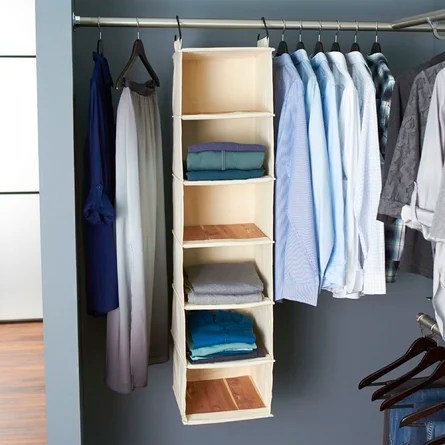
We made our way to the wardrobe section, where Lily started to analyse each wardrobe through cultural and gender-based lenses. Sometimes, to clarify her points, she would even make eccentric gestures or hop inside the wardrobes. Both Kwong and I were kept on our toes; we were uncertain whether we were at IKEA to shop or to attend a lecture. But we believed Lily would undoubtedly make an entertaining teacher in the future. After much discussion, Lily ultimately selected a beige cloth hanging rack for Kwong. It looked unassuming when folded, like a wallflower girl; unfolded, it had six compartments that could hold clothes of various shapes and sizes.
How to cite: Song, Chris and Mary Wong. “Touring IKEA with Lily.” Cha: An Asian Literary Journal, 2 Oct. 2023, chajournal.blog/2023/10/02/lily.


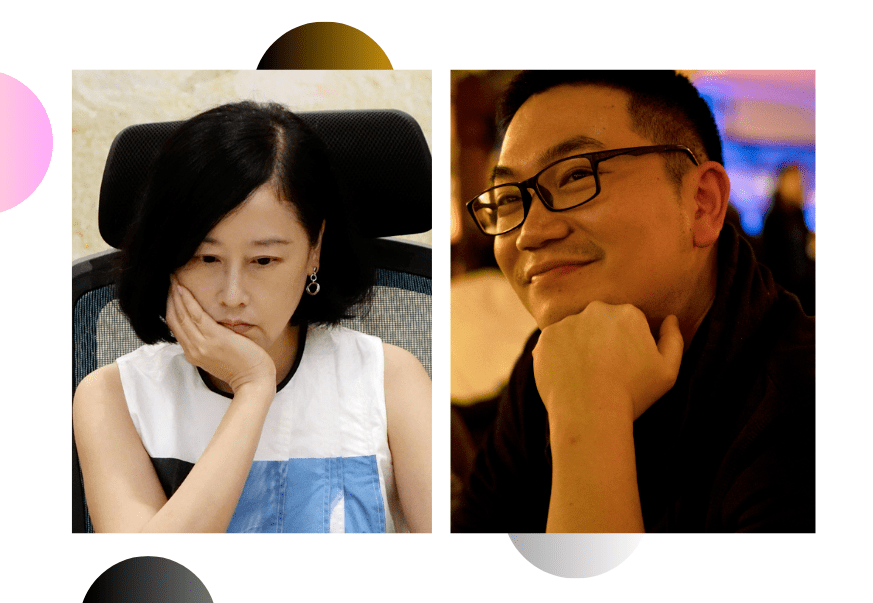
Mary Shuk-Han Wong 黃淑嫻 (author) is a Hong Kong writer. Her short story collection Surviving Central (中環人; 2013) received the “25th Secondary School Students’ Best Ten Books Award.” Her essay collections include How to Live the Sad Days (悲傷的日子如何過; 2021), Against the Grain (亂世破讀; 2017), and From Kafka (理性的遊藝:從卡夫卡談起; 2015). She has also published an online poetry collection, Cave Whispers (絕地抒情; 2022), in collaboration with Hong Kong composer and photographer. She was the co-producer and literary advisor of two literary documentaries: 1918: Liu Yichang (1918:劉以鬯紀錄片; 2015) and Boundary: Leung Ping Kwan (東西:也斯紀錄片; 2015).


Chris Song (translator) is a poet, editor, and translator from Hong Kong, and is an assistant professor in English and Chinese translation at the University of Toronto Scarborough. He won the “Extraordinary Mention” of the 2013 Nosside International Poetry Prize in Italy and the Award for Young Artist (Literary Arts) of the 2017 Hong Kong Arts Development Awards. In 2019, he won the 5th Haizi Poetry Award. He is a founding councilor of the Hong Kong Poetry Festival Foundation, executive director of the International Poetry Nights in Hong Kong, and editor-in-chief of Voice & Verse Poetry Magazine. He also serves as an advisor to various literary organisations.
 Cha
Cha 