
[Diary of the Absurd Life in 1997:
All Entries]
TH: Diary of the Absurd Life in 1997, in 28 sections, was written originally in Chinese by Mary Wong and serialised in Ming Pao 明報 in 1997. The pieces, translated into English by Chris Song, are serialised in Cha beginning from Monday 25 September 2023.

.
IKEA Philosophers
7/28
.

It was 2:20 pm when we stepped out of the cinema. The pedestrians seemed unnaturally animated under the relentless sun. Emerging from a movie, particularly in the afternoon, always feels like re-entering the world from another dimension. If you’re keen on speeding up the transition back to reality, the quickest remedy is to step into a department store—the bigger, the better. Reality then snaps back, almost ferociously. Just be sure to set a shopping goal so you don’t drift aimlessly and risk tumbling back into the movie’s illusory realm. Whether reality feels cruel or not depends largely on the relationship between your shopping list and your monthly salary.
Kwong and I went into IKEA in Causeway Bay, not to hasten our return to the real world, but because for working women like us, living away from home, reality had never truly departed. Kwong’s list featured at least twenty household items categorised “priority” or “non-priority”. She was clearly thorough.
In the wooden tables section, we met Lily, a PhD student from Victoria Peak University. She was standing in deep thought before a tabletop, muttering, “Cogito, ergo sum.” Then she’d shuffle over to a row of table legs and whisper, “Sapientia et virtus,” comparing the attributes of each set. “Have you finished your thesis yet?” I asked her. Her reaction told me it wasn’t an opportune question. I had met Lily at the Arts Centre at a retrospective of Yasujirō Ozu films. There was a time I used to go there out of sheer boredom. Each time, I noticed the same short-haired girl, bundled up in layers of clothes, seated in the back row. Eventually, we struck up a conversation in the restroom and then watched the movie together. When I asked her why she always dressed so warmly, she explained that she was in the middle of her dissertation and couldn’t afford to fall ill; the air conditioning made her cautious. Clearly, she was a serious researcher. Today, her demeanour was still one of stern focus. “I’m in the thick of writing my thesis. I need a bigger desk for my reference material,” she said. I’ve heard working on a thesis likened to being possessed by a spirit.
How to cite: Song, Chris and Mary Wong. “IKEA Philosophies.” Cha: An Asian Literary Journal, 1 Oct. 2023, chajournal.blog/2023/10/01/ikea.


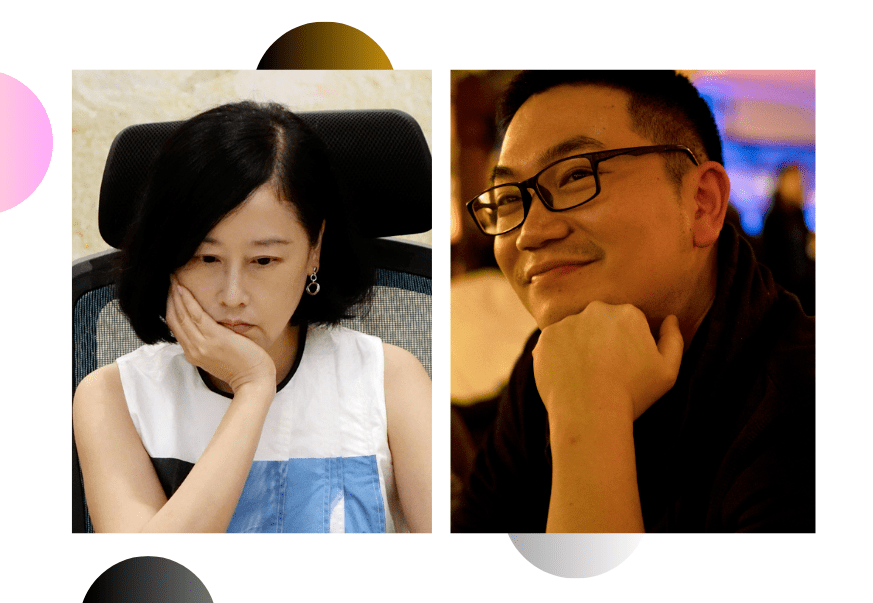
Mary Shuk-Han Wong 黃淑嫻 (author) is a Hong Kong writer. Her short story collection Surviving Central (中環人; 2013) received the “25th Secondary School Students’ Best Ten Books Award.” Her essay collections include How to Live the Sad Days (悲傷的日子如何過; 2021), Against the Grain (亂世破讀; 2017), and From Kafka (理性的遊藝:從卡夫卡談起; 2015). She has also published an online poetry collection, Cave Whispers (絕地抒情; 2022), in collaboration with Hong Kong composer and photographer. She was the co-producer and literary advisor of two literary documentaries: 1918: Liu Yichang (1918:劉以鬯紀錄片; 2015) and Boundary: Leung Ping Kwan (東西:也斯紀錄片; 2015).


Chris Song (translator) is a poet, editor, and translator from Hong Kong, and is an assistant professor in English and Chinese translation at the University of Toronto Scarborough. He won the “Extraordinary Mention” of the 2013 Nosside International Poetry Prize in Italy and the Award for Young Artist (Literary Arts) of the 2017 Hong Kong Arts Development Awards. In 2019, he won the 5th Haizi Poetry Award. He is a founding councilor of the Hong Kong Poetry Festival Foundation, executive director of the International Poetry Nights in Hong Kong, and editor-in-chief of Voice & Verse Poetry Magazine. He also serves as an advisor to various literary organisations.
 Cha
Cha 