
[Diary of the Absurd Life in 1997:
All Entries]
TH: Diary of the Absurd Life in 1997, in 28 sections, was written originally in Chinese by Mary Wong and serialised in Ming Pao 明報 in 1997. The pieces, translated into English by Chris Song, are serialised in Cha beginning from Monday 25 September 2023.

.
The Vegetable Lifestyle
1/28
.

I was sharing a 500-square-foot apartment in Sheung Wan with Pak Kwong. It was a recently constructed tenement building, six storeys tall, and our flat was on the third floor, offering us a view of the bustling market below. The monthly rent came to nine thousand dollars, inclusive of management fees. This particular unit was the result of an exhaustive search that took me through Sheung Wan, Central, and Western Districts. Kwong’s sole contribution was her adept negotiation skills, characterised by a unique blend of charm and assertiveness, which brought the rent down from nine thousand eight hundred to a more reasonable nine thousand. However, this negotiation wasn’t her biggest triumph. On a previous occasion, she had managed to secure a one-thousand-dollar reduction in rent, but that arrangement turned sour when the landlord constantly disrupted our daily lives, leading us to leave within a month. During the next house search, Kwong decided to settle for a more conservative reduction of eight hundred.
Beneath the newly constructed building lay the “Vegetable Sorting” market, which I only became aware of after moving there. Each morning, I would awaken to the rhythmic sound of bamboo baskets gently scraping against each other as the workers transported them. On days when I rose early, I might even feel a slight tremor caused by passing trucks. Initially, I dismissed it as an illusion, but once its authenticity was confirmed, I was ready to shout with exhilaration, my pulse racing, embracing this momentous event. However, as I peered downward, I witnessed the old man from the hardware store chatting with the neighbouring fruit stall owner. Their conversation revolved around topics such as why green grapes can never match the sweetness of blackcurrants. Across the street, the sisters on the second floor were getting ready for school, their lively discussions in front of the mirror and their scattered books painting a familiar scene. The ground continued its gentle sway as the delivery truck ascended the steep streets of Sheung Wan. This tremor-like phenomenon was a distinctive hallmark of the neighbourhood, and its residents had long become desensitised to its effects. Once the truck came to a halt, tranquillity was restored, and life resumed its usual rhythm.
As I went downstairs to head to work, the baskets of vegetables were already neatly arranged, poised for their journeys to various shops. It was evident that these vegetables had been meticulously sorted: a package of vibrant red tomatoes, another containing slender, fuzzy zucchinis, a mix of red, orange, yellow, and green bell peppers, a bundle of freshly washed bean sprouts, and nestled at the bottom, tender, short-stemmed bok choy. Each basket bore the buyer’s name in crisp black and white, ensuring its arrival at the right door. I had been grappling with a sense of hopelessness regarding the organisation of my chaotic life, but the sight of these vegetables ignited a determination to embark on a “fresh start campaign”, whether from this very apartment or simply by incorporating more vegetables into my diet, with the aim of rejuvenating and reorganising everything. Evidently, there existed a subtle connection between vegetables and life, a sentiment I had never discussed with Kwong.
How to cite: Song, Chris and Mary Wong. “The Vegetable Lifestyle.” Cha: An Asian Literary Journal, 25 Sept. 2023, chajournal.blog/2023/09/25/vegetable-lifestyle.


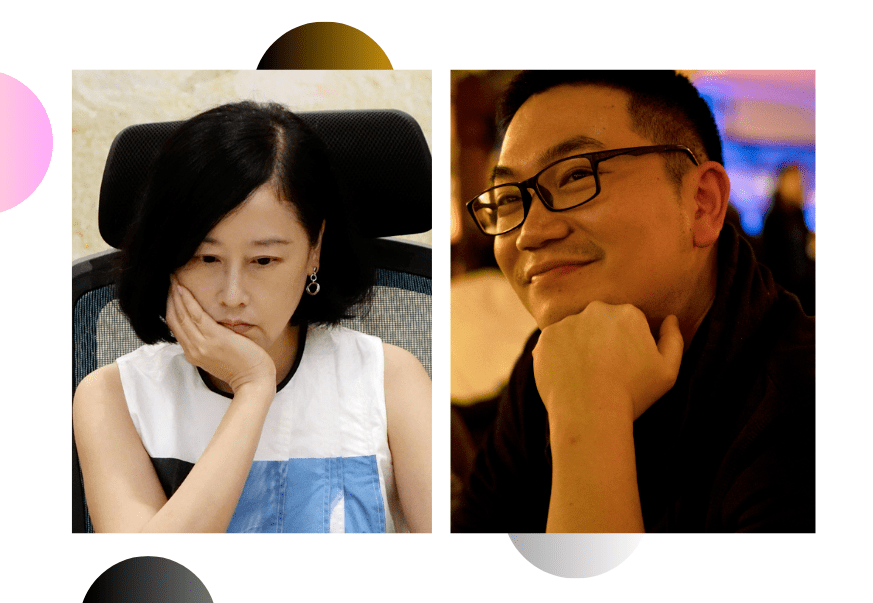
Mary Shuk-Han Wong 黃淑嫻 (author) is a Hong Kong writer. Her short story collection Surviving Central (中環人; 2013) received the “25th Secondary School Students’ Best Ten Books Award.” Her essay collections include How to Live the Sad Days (悲傷的日子如何過; 2021), Against the Grain (亂世破讀; 2017), and From Kafka (理性的遊藝:從卡夫卡談起; 2015). She has also published an online poetry collection, Cave Whispers (絕地抒情; 2022), in collaboration with Hong Kong composer and photographer. She was the co-producer and literary advisor of two literary documentaries: 1918: Liu Yichang (1918:劉以鬯紀錄片; 2015) and Boundary: Leung Ping Kwan (東西:也斯紀錄片; 2015).


Chris Song (translator) is a poet, editor, and translator from Hong Kong, and is an assistant professor in English and Chinese translation at the University of Toronto Scarborough. He won the “Extraordinary Mention” of the 2013 Nosside International Poetry Prize in Italy and the Award for Young Artist (Literary Arts) of the 2017 Hong Kong Arts Development Awards. In 2019, he won the 5th Haizi Poetry Award. He is a founding councilor of the Hong Kong Poetry Festival Foundation, executive director of the International Poetry Nights in Hong Kong, and editor-in-chief of Voice & Verse Poetry Magazine. He also serves as an advisor to various literary organisations.
 Cha
Cha 