

📁 RETURN TO FIRST IMPRESSIONS
📁 RETURN TO CHA REVIEW OF BOOKS AND FILMS
Stephen To, Eastern Approaches to Western Film: Asian Reception and Aesthetics in Cinema, Bloomsbury, 2019. 304 pgs.

What does it mean to appreciate or read a Western film from an “Eastern” perspective? While cross-cultural communication affords some clarity with respect to issues of meaning and reception, the Chinese equivalent for cinema, dianying (electric shadows) presents an intriguing deviation from the kinetic denotation of its Western counterpart. If cinema, at its etymological roots, is derived from the movement of images, then the focus of a Chinese (and by extension Asian) perspective is seemingly placed on the “shadows” or imagery brought about by the technology of the cinematic apparatus. Underlying these contrasts in definition is nevertheless an opportunity for a mutually fruitful exchange; for besides providing fertile ground for the application of Eastern thought to Western film, a dialogue between these approaches can be a valuable starting point for questioning the binaries surrounding the cultural politics of the East and West.
As an endeavour along these lines, Stephen Teo’s volume Eastern Approaches to Western Film is a unique attempt to bring Eastern philosophical perspectives into a dialogue with classic Western film texts. From the Star Wars saga to John Ford’s Westerns, Eastern Approaches presents nine critical readings of 20th century film texts in Europe and North America that contain heterogenous resonances of ancient Chinese, Japanese and Indian thought. While this curation does not neatly follow any notable developments or trends in the wider field of film studies, the comparative method of xiangbi (semblance/likeness) from the ancient text of the Guigu Zi is consistently applied, and the films in the volume are carefully surveyed for devices, images and motifs that can serve as illustrations of Eastern thought.
Such an approach is not entirely void of criticism. The relatively broad appropriation of the term “Eastern” in the overall analysis would likely fail to placate those who insist on the notion of the East as an Orientalist fascination, and even fabrication of the West. Teo’s response however, espouses greater reciprocity—by reading Western works through an Eastern lens one also uncovers what the West has taken from the East through the upheavals of colonialism and imperialism. In other words, what can be identified and interpreted as Eastern in a Western text, could also be regarded as traces of Eastern influence. This particular argument positions Teo’s volume as a relevant alternative to other works that either only make a cursory mention of Eastern themes, or substantially fall short of articulating a specific Eastern view.
Following the introduction, the first chapter is a detailed reflection of the ways the “East” is situated in the Western imaginary through George Lucas’s Star Wars saga. This is considerably the most political of Teo’s readings, given its direct investigation of Orientalism, as well as the close references to American history since the Cold War. Opposing the Eurocentric and superficial assumptions of Orientalism, Teo argues that the saga conveys a more layered commentary of the West’s anxieties with the modernisation of the East. Drawing on John Hobson’s theory of the “Oriental West”, he offers a nuanced picture of entanglement where Eastern ideas not only impacted, but contributed to the exchange of technological ideas. So even as the West subjugates the East through technological prowess, it asserts an influence that is simultaneously derived from and emulated by the East.
For Teo, this relationship is a salient yet peculiar characteristic of the Star Wars saga. On the one hand, the imagery is an unabashedly visual paragon of Western technological superiority, and the events in the saga, Teo explains, can be interpreted as an allegory of a West that is as technologically advanced as it is politically dominant. Yet, on the other hand, the conflicts and spiritual sensibilities as portrayed by the Jedi not only reflect emerging Eastern power (e.g. China and India’s growing influence in Asia) but point to an acknowledgement of Eastern ideas like the Dao. The chapter concludes that the East should not be simply be an Orientalist caricature, but an embedded cyclical feature that continues to inform and change the West. Besides identifying the patently Eastern sensibilities within the saga, the opening chapter is more broadly a reiteration of Teo’s approach to the East-West binary in the introduction, and a sampler of the xiangbi methodology that would be reapplied later on.
More astute observations of Daoist ideas in Western film can be found in Teo’s interpretation of Robert Bresson’s Au hasard Balthazar and Carl Theodor Dreyer’s Vampyr in the fifth and sixth chapters. In Teo’s view, the donkey in Au hasard Balthazar is a potent cross-cultural symbol, for although its name Balthazar is taken from the bible, the animal is also often pictured together with Lu Dongbin, a prominent figure in Daoism (the Christian parallels in Bresson’s work become starker when one considers that Christ was also on a donkey when he entered Jerusalem). More significantly, the donkey’s role in the film converges with the Daoist principle of you (wandering), as it observes and bears the burdens of human vicissitudes.
Likewise, the protagonist in Vampyr Allan Gray dresses like a Western gentleman, but as a somewhat darker imitation of the other prominent Daoist Zhuang Zi, wanders by the water with his fishing equipment before he is drawn into a supernatural cycle of life and death. Comparing Vampyr to the 1931 Tod Browning adaptation of Dracula, Teo argues that the former’s religiosity is rendered more uncertain with Gray’s curiosity towards the vampire. Dreyer’s vampire is not a monster to be vanquished by Christian faith, but an enigma that Gray uncovers as he wanders in the realm of the dead. The protagonist’s experiences can thus be taken as an intrinsically Daoist journey of transcendence rather than a battle against evil.
It is difficult to ascertain if these two readings were more influenced by Paul Schrader’s concept of the Transcendental as mentioned in the text, or developed from Teo’s own knowledge of Eastern thought. This lack of elaboration could, after all, be one of several expressions of Teo’s self-proclaimed “freewheeling” contact with his object of inquiry. Nevertheless, Teo’s Daoist treatments in these two chapters are not only innovative examples of xiangbi as an interpretive lens, but evidence of the East-West entanglement that continues to confound, and occasionally transcend, simplistic assumptions of how the East ought to be represented by the West.
While Teo is demonstrably fluent with Daoist ideas and comfortably weaves them into his other analyses, his tenuous grasp of other Eastern ideas leaves the volume less consistent and undermines the overall analysis. Despite noticeable ventures into Confucian, Buddhist and Hindu thought, the motifs discussed in other chapters are more equivocal, and Teo often augments his observation by returning to a more Daoist frame of reference, which probably will not satisfy those expecting a stronger articulation of ideas from other schools.
There is, moreover, a predilection for imagery instead of theme throughout the text. These findings are illuminating on their own, but Teo could have gone further with this xiangbi orientation by including fuller illustrations of how each film’s narrative could serve as a direct reference of Eastern thought. In the chapter on Alfred Hitchcock’s Vertigo, Teo cites a variety of Chinese influences within the colours and melodrama, but falters in tying these aspects together with the overall theme. The chapter’s examination of romantic irony, with the noted interplay of enchantment and disenchantment in erotic desire, is ripe with Daoist insights, but Teo does not allow this key point to pervade his analysis. The attention of the reader is finally drawn to the characters’ gender identities in the final section, which hardly attends to the spiral of obsession that dominated their relationship. Where Teo succeeds in the explication of different Eastern sensibilities, he falls short of developing a more focused and cohesive study of the film text.
So how might one decisively appraise Teo’s contribution to an Eastern approach of (Western) film, assuming such an approach can be concretely mapped out? Following Teo’s conclusion in the volume, this is but a modest step towards a shift in perspective, and far from a deeper theorisation of how the cinematic apparatus—or in this case electric shadows—are instrumental to an Eastern mode of objectification. How does one see, or understand cinematic composition with a Daoist lens? What, if any, are the differences between a Daoist, Confucian, or Buddhist gaze? With regard to these possibilities, Teo is reticent; instead, he aims to strike a delicate balance between Western discourse, and a distinctively Eastern response. In describing the East, he writes:
The East represents a change of outlook not only in the way that films from the East (or Asia) are studied but also on how we look at films in the West. As such, while this book offers a certain resistance to Eurocentric theory, its purpose is primarily to add to existing knowledge through the evocation of Asian or Eastern theoretical or philosophical viewpoints which are then applied to the West (258).
Though more whimsical than rigorous at certain junctures, Eastern Approaches is a persuasive option outside conventional Western readings, and a noteworthy project in cross-cultural communication. A more extensive discussion on the history and cultural significance of xiangbi could have given the volume a stronger theoretical foundation, but this minor shortcoming is, conversely, an opportunity for others to build upon this emerging field in film studies that will in time, further enrich and transform the attitudes and beliefs of both East and West.
How to cite: Gn, Joel. “A Noteworthy Project: Stephen Teo’s Eastern Approaches to Western Film.” Cha: An Asian Literary Journal, 22 Sept. 2023, chajournal.blog/2023/09/22/eastern-approaches.

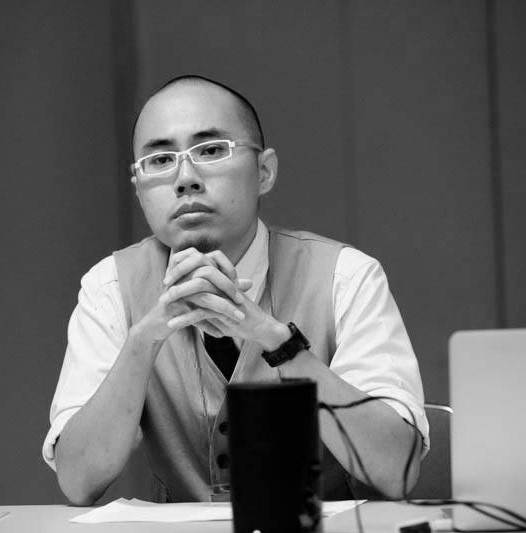
Joel Gn is an educator and writer curious about media, design and popular culture. He currently teaches cultural and contextual studies at the Faculty of Design, LASALLE College of the Arts, Singapore.
 Cha
Cha 