

📁 RETURN TO FIRST IMPRESSIONS
📁 RETURN TO CHA REVIEW OF BOOKS AND FILMS
Click HERE to read all entries in Cha on Lockdown Lovers.
Michael O’Sullivan, Lockdown Lovers, Penguin Random House SEA, 2021. 240 pgs.
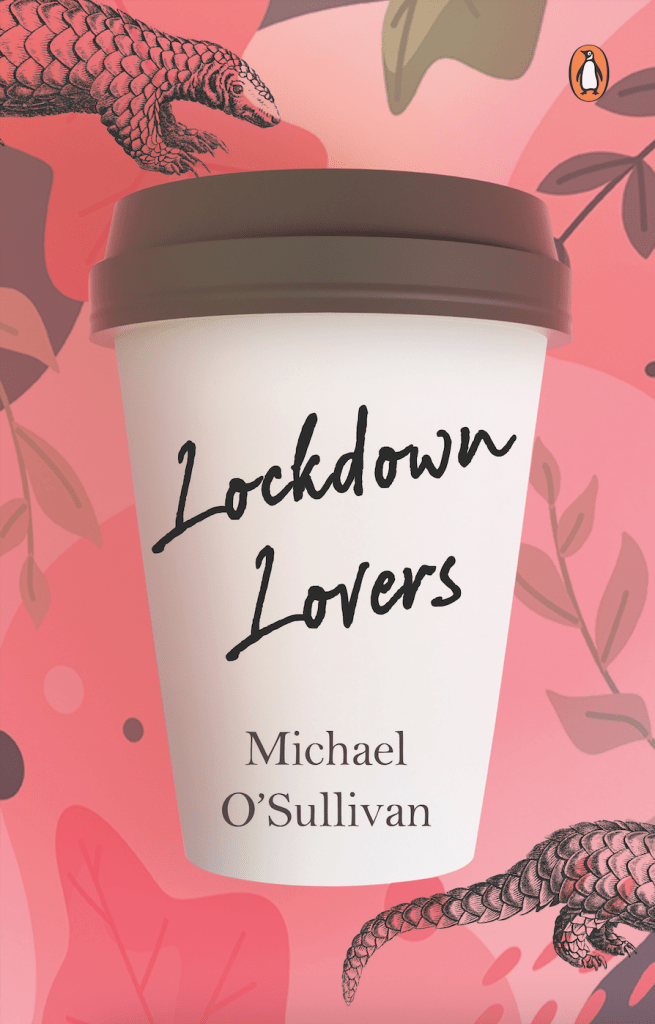
When Lockdown Lovers opens with “Hong Kong February–March, 2020”, we expect a flashback to hysteria and paranoia. Instead, the scene is muted and strangely calming. We meet John, who sits in a 24-hour McDonald’s in the Hong Kong suburb of Sai Kung, sipping warm water and ruminating on the state of the city. There’s paranoia, sure, but it’s in the minutiae, and it’s dulled by practicalities— like the best place to write and the price of facemasks in Watsons.
In O’Sullivan’s opening, he deftly illustrates that while lockdowns were spatial, defined by social distances, demarcations and the closing of borders, they were also deeply personal, intimate, and individual. Couples who had become estranged suddenly find themselves sharing a home again and in so doing, paradoxically, “feel [their] separation more intensely”. We see academics and tutors navigating the liminal space of online teaching, some forming new connections and others, cameras off, hiding inside “black boxes”. Then there is the painful immediacy of long-distance phone calls. Lockdown Lovers sheds light on the lockdowns that many of us we were already living, not just in Hong Kong but globally: the academics, scurrying between offices, avoiding social interaction; spouses uprooted hundreds and thousands of miles from home to raise a family and endure “long silent years of isolation”. O’Sullivan calls these instances “preparation for this time of lockdown”, and flitting between characters, contrasts the detachment of closeness with the intimacy of distance.
The title suggests a romance; lovers torn between public obligation and an insatiable desire to be together physically. But O’Sullivan resists this trope. Instead, the stories of Kwok-Ying, Phoebe and John are understated, authentic, and unwaveringly real. O’Sullivan penetrates deep, lending an emotional and socio-historical richness to his characters that elevates the story from a character drama to a uniquely moving social critique. Lockdown Lovers foregrounds a bleak emotional landscape, “an intense epidemic of loneliness”, which, though illuminated by the lockdown, seems to precede it.
The love story, while passionate, is fleeting and altogether less meaningful than some of the friendships in the novel. As illustrated in a beautifully melancholic meeting between John and an old friend:
We smiled and drank from our coffees. We had our facemasks hanging down past our chins. … Our receding hairlines, eye problems, and leg cramps were our next topics of conversation. They reminded us our bodies had seen better days. And our minds too. … Almost a quarter of a century and we still felt we were talking like young men. … We were comfortable letting off steam with each other and then disappearing from each other’s lives, no questions asked, sometimes for years on end.
When they part “not knowing when or where we would meet again [which feels] like the most natural thing in the world”, their separation is more affecting than the parting of the lovers from which the novel derives its name. But this is not a criticism; the inconsequentiality of the sexual love affair is its value. O’Sullivan uses it illuminates a greater, fraught romance—between whom each character believed he or she was (the traveller, the activist, the ambitious academic, the doting father) and whom they can feel themselves becoming. The lovers touch as if they are discovering, not each other, but the human body for the first time, slowly peeling away their masks, and in so doing, are re-discovering themselves:
The slow lowering of the face masks … to reveal the cheeks, the nose, the lips, then the outline of the chin, the way the chin recedes to the neck, the jawline. It was like looking at an outline of a map, enumerating the different headlands that we once had, so long ago that we could barely recall, committed to memory. We took all this in and we smiled. Our smile evoked a shared devotion that echoed the old words this is my body.
Ironically, in their hunger to regain their individuality, the person that allows them to do so—the lover—could be anyone.
It is this tension between becoming “faceless” (dismembered) and seen (re-membered) that drives the novel. As councillor Phoebe puts it: it is “a fight to cherish the individuality they’re asking us to mask”. Through his character studies, O’Sullivan embraces this fight. While the facemasks make people “indistinguishable”, O’Sullivan’s characters remain intensely unique, enduring their own manifestation of vulnerability and loneliness. While they are reduced to “fearful, darting eyes”, they are also more human than ever, with their familiar prejudices and moments of dark humour, both comforted and bored by the “mundanity” of lockdown life. The character, John, embodies O’Sullivan’s method, when he reflects: “I write to remind myself of my individuality. To remind myself of the person I once was.”
He, like so many Hong Kong writers, is writing himself and his city into (or back into) existence.
However, in this new COVID-era the landscape has changed. The illusive and unreal Hong Kong, so fitting for the flâneur, has now become so regulated as to be almost unrecognisable. But O’Sullivan riffs on this newness, and in a refreshing shift of binaries, it no longer just Beijing legislation that has transformed the city into the “dystopian vision”, but the city’s own immune system. As John traverses the city and feels the splashes of street disinfectant on his bare calves, we’re reminded that for many, it wasn’t the virus itself that left us weakened and exhausted, but the clean-up operation, the nose swabs and restrictions.
In an illuminating meeting between John and an old friend, they discuss Hong Kong’s “infection mentality” and pose Hong Kong as a city whose decision to “self-isolate” and withdraw to the margins began long before the pandemic. As Joseph neatly concludes, ”Hong Kong finds its identity the more isolated it becomes”. And COVID-19 is an excuse for “Localism” in its extreme. The virus provides a pathogen that can be named and resisted, solutions that can be purchased and hoarded: the trolleys “full of sanitary towels” and “alcohol disinfectant”. While tensions with mainland China are certainly exacerbated by the pandemic, not in the least when Hong Kong’s “huge surplus” is sent away as aid, Hong Kong is now engaged in a struggle with itself.
O’Sullivan’s unique and penetrative writing style reminds us of Hong Kong’s malleability and vulnerability to language. It is a city realised by writers, however fleetingly, for 200 or so pages, or in 20 lines of poetry. Each imposes a frame in which to fix the city, and now, just a writer, the pandemic offers a framework. Like writers, the pandemic imposes a new language, from the “new words to manage this disease” to the politics of truth, misinformation, and rumour. Hong Kong is suddenly governed by “news reports” and the whims of corporations, and for the individual, even phrases the “living room … take on new meaning now”. As John reflects: “the old form of writing has almost been forgotten”, and in this new world, O’Sullivan guides us to ask questions we hadn’t before. Questions like: when we meet online, where are we? What’s inside those “black boxes”? And what does it mean to “dread the acknowledgement of the face”?
Hong Kong is transformed. As John looks out from the pier at the “junks and old fishing boats”, he no longer thinks about the symbolism but wonders if living out there would be safer than on land; Octopus Cards now remind John of the Wuhan wet market; and shopping is no longer the city’s pastime but born of panic. Other symbols of the city, like the bolo baos they queue for, promise momentary escape; as Kwok-ying “inhales deeply […] the sweet-tangy smell of burnt pineapple sugar and freshly-baked bread”, we hear that, “something in this is not about disease”. And yet, the virus lingers in the background, transforming this scene from a moment of pleasure to a moment of pleasurable escape. “You can forget about your micro-droplets,” Kwok-ying tells us, but ironically, in so doing, reminds us that we can’t.
And yet, this novel is not bleak, but a fresh interrogation of interconnectedness. Like Hong Kong—the city which brings characters together—the pandemic is a shared experience. While people may be social-distancing, the shared experience of the virus offers a new kind of proximity. This parallel between the virus and connectedness is encapsulated by John when he returns to Ireland to care for his aging parents and sits “in self-isolation in the damp house in the dark”. In an illuminating metaphor he asks: “was there some kind of invisible connection that hung in the air between people at such times?” Throughout the novel, the lives of Kwok-Ying and John and Phoebe intersect briefly and inconsequentially but it wouldn’t matter if they didn’t. Like all Hongkongers, their connectedness is implicit.
The Sai Kung McDonald’s where John writes his story is often the sight for these interactions, and O’Sullivan’s choice of location is exceptional. The only part of Hong Kong seemingly resistant to harsh restrictions, it has become a hub for what Phoebe calls it “sanctioned loitering” for locals, gweilos and Filipinos alike. Each diner, worker, and loiterer is representative of everyone else and is yet still wonderfully distinctive. This Hong Kong McDonald’s, then, is the epitome of “glocal”: a faceless, global corporation and yet undeniably Hong Kong. The pandemic, equally global and yet personal, compounds this connectedness, and the McDonald’s is therefore a perfect anchor for a novel that does this same through its numerous characters.
Kwok-ying tells us early on that lockdown life has become about “dealing with the dead, not the living”, but O’Sullivan proves the opposite. It is not the harrowing news reports and images that define the novel but his characters’ response to them. There’s the “photograph of the man in black, lying supine on a pavement in Wuhan”. For me, the most poignant moment of this chapter is not the descriptions of the dead man or the “hazmat suits with canisters of disinfectant”, but when John asks himself, “was his last lunch preserved uneaten in the plastic bag by his side? … What would the archaeologists learn from his soup noodles or dumplings?” Just as “Hong Kong was waking up to see itself like it had never seen itself”, so are Phoebe, John, his wife Sue, and through them, so is the reader.
Lockdown Lovers celebrates the uniqueness that defies what John calls “the great unifier”. While he’s referring to the pandemic, this could also be said of any great quintessential Hong Kong writing—and indeed of any writing pitches the local against the global, the underdog against the hegemon, and individuals against faceless corporations. Even as O’Sullivan’s characters lament a lost Hong Kong, he reminds us “how individual one’s view of the future is” and that “we don’t all view it in a single, collective way”. O’Sullivan’s multi-perspective narration, incorporating the voices of academics, activists, delusional heiresses, and pangolins, and privileging neither, offers several illuminating angles on the city. As the pandemic provides the context in which to write Hong Kong anew, O’Sullivan’s takes a story we’ve tired of and makes it human again, local, and absolutely real.
How to cite: Hamilton, Lucy. “Michael O’Sullivan’s Lockdown Lovers: The Pandemic as Glocal.” Cha: An Asian Literary Journal, 29 Aug. 2023, chajournal.blog/2023/08/29/glocal.


Lucy Hamilton is a novelist and academic from Sheffield, UK. Her debut novel, The Widening of Tolo Highway (Penguin Random House SEA, 2022), set in Hong Kong’s New Territories, is now available worldwide. She lectured in Stylistics at the University of Nottingham Ningbo China, and now works at the University of Leeds. [Read all contributions by Lucy Hamilton.]
 Cha
Cha 