
📁 RETURN TO FIRST IMPRESSIONS
📁 RETURN TO CHA REVIEW OF BOOKS AND FILMS
Click HERE to read all entries in Cha on Where Else.
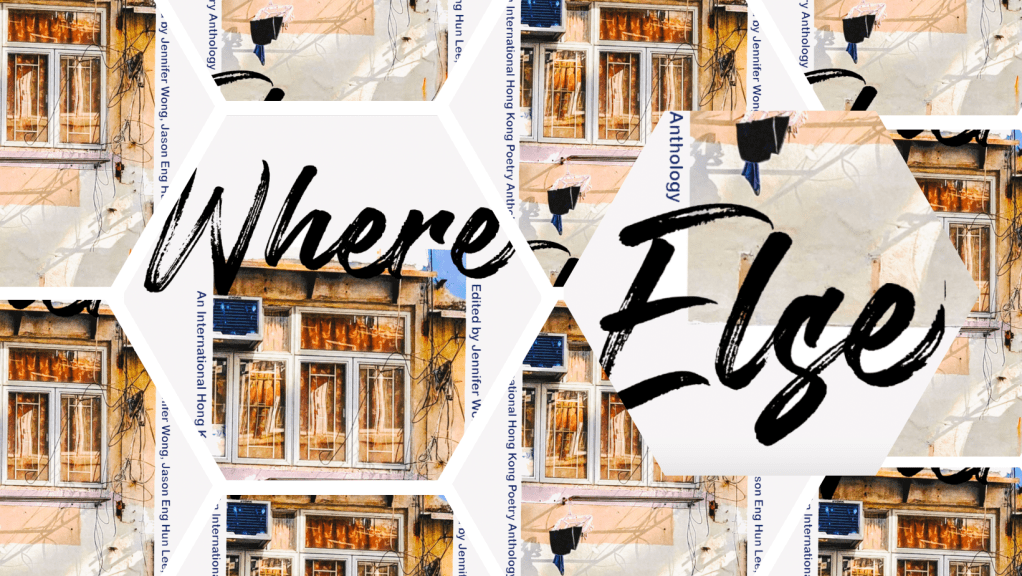
Jennifer Wong, Jason Eng Hun Lee, and Tim Tim Cheng (editors), Where Else: An International Hong Kong Poetry Anthology, Verve Poetry Press, 2023. 219 pgs.

As a writer in Hong Kong, I have always felt that the task, or duty even, of describing Hong Kong-ness is not unlike un-blending a fruit smoothie. On the one hand, one may be compelled to identify and remove the cultural remnants from our visitors, friendly or not, colonisers and refugees alike, in order to consider what is truly original and absolute to Hong Kong-ness. On the other, if one accepts the city’s identity as the fusion of cultures that it is, how do we define the state of in-betweenness or everythingness that is Hong Kong, and as a result of blending the colourful cultures of others, how can we celebrate the brownish murk that is the Hong Kong identity?
“Home the name I recognise but a face I dis(re)member. Can I claim its name if I’ve never seen the bodies?”
—“鬼”, Wai Julia Cheung
Established and emerging poets of Hong Kong bring us Where Else, an anthology that provides some answers to these questions on Hong Kong-ness, exploring the city’s unique history, dynamic cultures as well as its open secrets and intentionally obscured issues. The collection features veterans and newcomers from a range of diverse backgrounds, presenting different and unique versions of Hong Kong through the local lenses, the diasporic voices, and eyes of expatriates. Readers will be assuredly impressed by the fresh perspectives from the city’s many new and upcoming talents, while being pleasantly surprised to find several previously published and familiar poems from some of Hong Kong’s finest poets, such as Louise Ho and Mary Jean Chan, as well as internationally recognised authors such as Shirley Geok-lin Lim, Marilyn Chin and many more.
With nothing more than a single quote and a piece of art to mark the beginning of each unlabelled chapter, readers are invited to observe and identify the themes of the anthology’s seven sections. Hong Kong’s transport, weather, cityscape and food are frequent images that appear in the collection, which comfort those familiar with the city whilst encapsulating the essence of Hong Kong for those who are not. Straddling various themes, the poems serve as vessels that carry readers through the complex emotions and memories of each individual poet. On homes, borders and the fragile landscape, Chris Tse writes in Cantonese, “In the world / I share with my Dad / we’re both on the side lines expecting / each other to leap onto the court with effortless words to play a syncopated game”. The experiences shared by the poets are sincere and honest, some so unique that readers can only try to empathise with the struggles and emotions woven between the lines, catching a glimpse of the writer’s individual journeys.
Unsurprisingly, the anthology also delves into some of the more intricate problems brewing in the darker corners of Hong Kong. By weaving these larger problems into their poetry, the poets provide a nuanced and artistic perspective on the challenges faced by the city and its population. Having said that, many are not here to critique, but rather, to reminisce and comment without judgement. There is no right answer, nor any attempts to offer one; like the city of Hong Kong itself, all voices are welcome and accepted.
“you would apologise for the question
but there is nothing wrong in asking about summer”
—“Tempo is not a rhythm you sway to”, Victoria Fong
Moreover, different languages that represent the city’s population can also be found scattered across the pages of the anthology. The mixture of colonial languages such as Portuguese and French along with Chinese dialects such as Cantonese, Hakka and Putonghua used in the poems further highlights the multiculturalism and globalisation of Hong Kong. Some of these languages are phonetically rendered, others written as themselves, some with explanatory footnotes, other stand alone as gatekeepers, which stymies those unfamiliar to the city or the language. For those who clarify, they are patiently teaching their ways, and for those who don’t, perhaps it’s a statement or a stance. Either way, Hong Kong is an island: one must learn to cross the water before one can embark.
Hong Kong possesses a unique landscape, exotic creatures, exciting art and a diverse population that cannot be found anywhere else. Where Else is a sincere and candid collection where poets passionately share their love and memories of Hong Kong. They shed light on the city’s ever-changing dynamics and continue to stand up for the city’s identity despite its many flaws and issues. We are Hong Kong, they reassure us, not just a fusion of leftover cultures.
How to cite: Au, Aerith. “Not Just a Fusion of Leftover Cultures: A Review of Where Else.” Cha: An Asian Literary Journal, 24 Aug. 2023, chajournal.blog/2023/08/24/where-else.

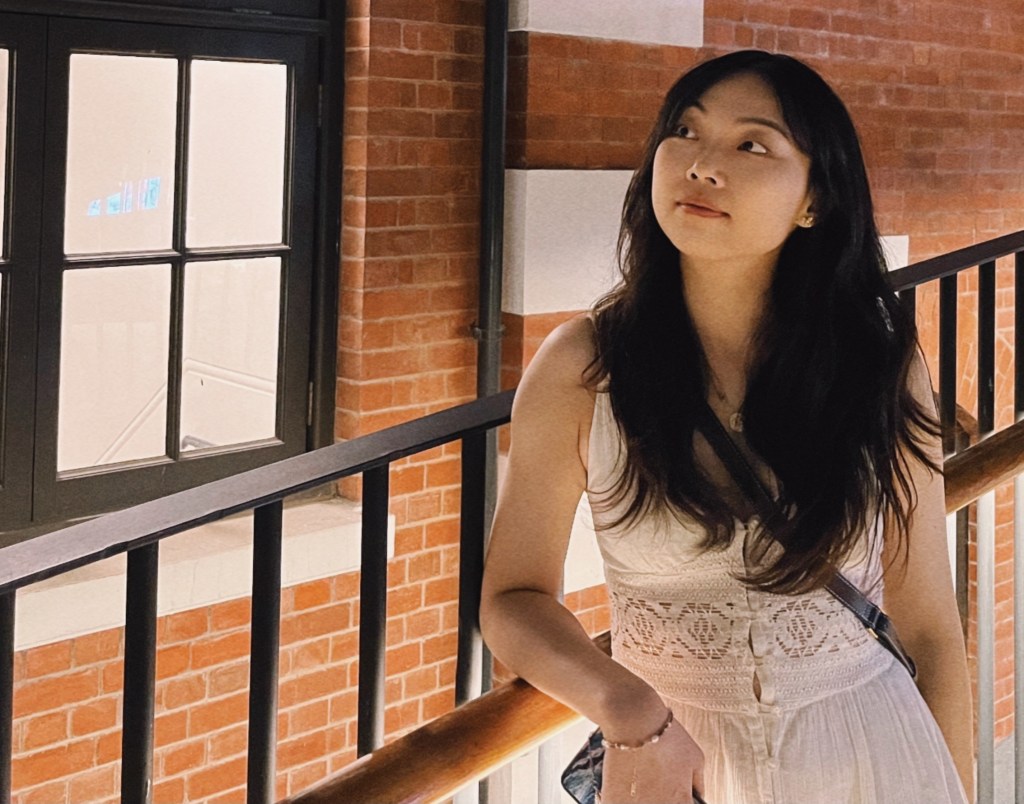
Aerith Au is a PhD candidate and aspiring writer living in Hong Kong. She received her BA in Philosophy from the University of Nottingham and her MLitt in Creative Writing with distinction from the University of St Andrews. She is currently trying to finish her first novel while fighting off her many hobbies/addictions such as crocheting, gaming and painting.
 Cha
Cha 