

📁 RETURN TO FIRST IMPRESSIONS
📁 RETURN TO CHA REVIEW OF BOOKS AND FILMS
Tang Wai-ki (director), Karen Chan Ka-yan and Sing Ip (translators and actors), Lemons Lemons Lemons Lemons Lemons, We Draman, San Po Kong, 2023.
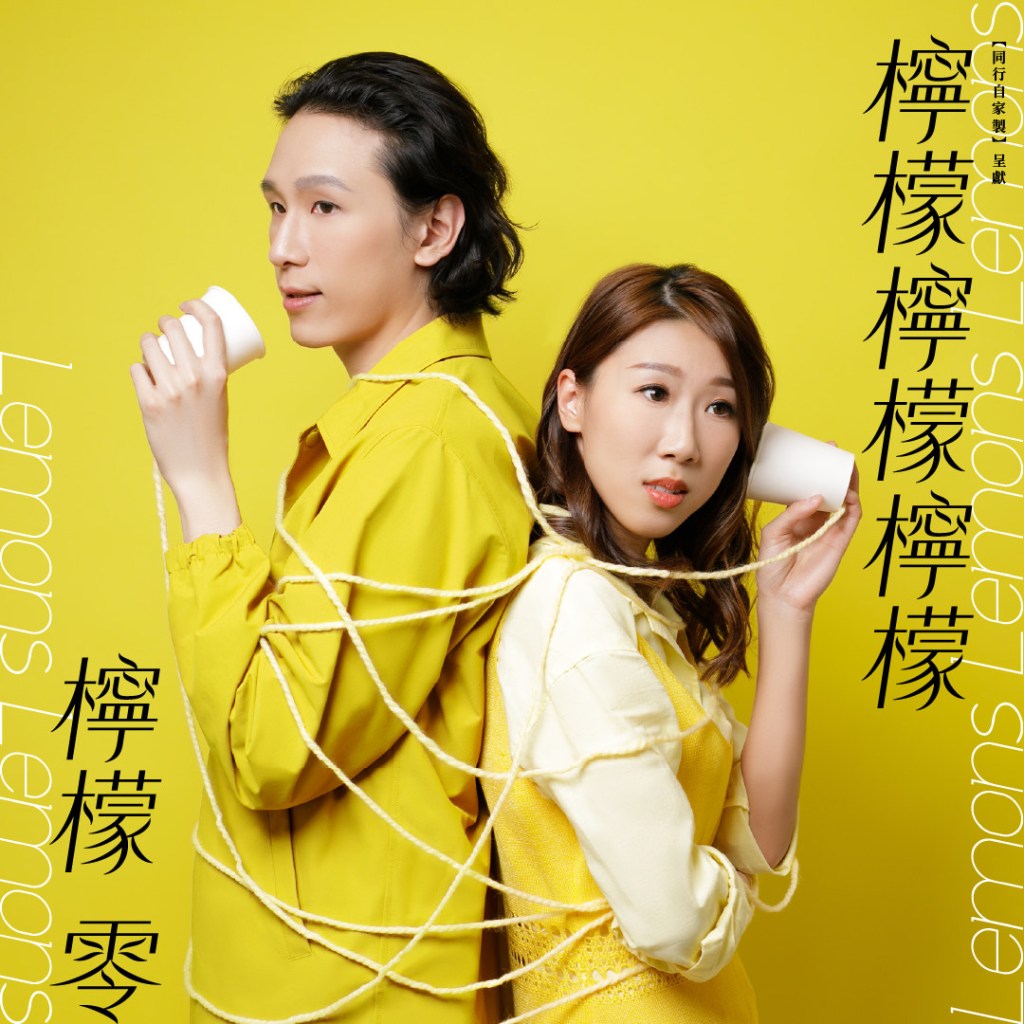
One thing about Hong Kong is there’s always far more to it than you think. While the arts have appeared to struggle in the shadow of the prolonged pandemic and government censorship, little theatres have sprung up and quietly flourished in obscure corners. One of these is We Draman, a theatre hidden in an industrial building in San Po Kong.
The company is understated, but not unknown to knowledgeable local audiences. Before one of its recent performances of Lemons Lemons Lemons Lemons Lemons, a chatty crowd gathered in the corridor outside the company’s black box theatre. As has been the case with many of their shows, there weren’t many free seats.
Although written by Manchester playwright Sam Steiner, Lemons Lemons Lemons Lemons Lemons (檸檬檸檬檸檬檸檬零), thanks to the translation by actors Karen Chan Ka-yan and Sing Ip, echoes the daily frustrations of Hongkongers, their limited freedom to speak, as well as their struggles to find the right words to express themselves. The original story is very simple—the average person will speak 123,205,750 words in a lifetime, but the government has passed a bill that restricts the number of words a citizen can speak to 140 per day. We Draman’s production stays loyal to the script. But when the two young actors perform with full sincerity in Cantonese, a language very familiar to Hong Kong audiences, another layer of meaning is added to the play.
The opening scene is set in a bare room with around ten chairs of similar type but different colours, there is no clue as to where we are and what is going to happen. By stripping the stage down to an imaginary space, director Tang Wai-kit is letting the audience know that the story will be presented in a deliberately elliptical style.
Soon, the two actors make their entrance and they exchange words normally. They are what we can call “the common people”, living and falling in love, ordinary enough to make us feel we can relate to them. One is a talented ambitious musician who has an unstable income, and the girl is a sassy lawyer who dresses in a smart blazer. The background of these characters brings to mind one of the city’s cruellest realities—one is often forced to choose between money and dreams. While many of us work in offices and get well paid for it, deep down in our hearts we constantly long for more freedom.
But the cost of living is too high, and working as a white-collar slave too comfortable, which is why we are so reluctant to change. The boy raises concerns about the bill many times and even organises protests, but the girl shrugs off his ideas and focuses on her career. Then the dystopian future comes true: each citizen is permitted to say only 140 words a day, ridiculous enough to reflect the monstrous dictatorship and pain of being unspeakable.
Since then, they struggle to communicate—they will pause awkwardly between words and use sign language. But most of the time, the actors sink into silence. The audience has no choice but to descend and immerse itself in the unpleasant experience together, as if we are also part of the characters living in distress. Guessing what they are implying is surely a tiresome and horrible activity, but we know it is always better than complete silence.
Surprisingly, Karen Chan Ka-yan’s face has its own microclimates. Although her character is realistic, Chan presents her with complicated facial expressions that make the audience question whether she really thinks the same as she says. Her eyes are brightly sunny even as her mouth stiffens; her brow can frown in frustration even as she laughs; her smile melts into an expression of love when her eyes are gazing with pity. These tensions and contradictions ultimately lead to an interior focus on the psyche and to experiments with subliminal communication; and the performance slowly falls on a wordless, sub-textual level and breaks through language in order to touch life. Don’t we all hesitate to join the strike? Aren’t we guilty about not voicing our opinions firmly enough? And aren’t we all finding it difficult to express ourselves? These weighty questions have been reverberating within our hearts for years.
On the other hand, the boy gathers a group of people and tries protesting against the bill. But he is not completely innocent, as Sing Ip indicates. He is not as noble as we think him to be, since he will have sudden bursts of anger and moody quarrels even with his fellow activists. His words are sometimes reasonable and justified, but when Sing Ip speaks them with a little ill temper, they become hurtful and aggressive. We can see the production team, instead of glorifying heroes, reveals the cruel reality of bloody confrontations, arrests during protests and survivor’s guilt, another old wound still fresh in Hongkongers’ memories.
It is saddening to see how an Orwellian story resonates so well with Hong Kong’s citizens and pulls at our heartstrings. But We Draman decides not to end it with a totally doomed note. As the couple hugging, dancing, smiling and holding each other’s hand, maybe love is the only slight hope we can cling to.
How to cite: Fung, Dawna. “Lemons Lemons Lemons Lemons Lemons Translated into Hongkongers’ Language: The Pain of Being Muted and a Slight Hope of Expressing Feeling.” Cha: An Asian Literary Journal, 6 Aug. 2023, chajournal.blog/2023/08/06/lemons.

Dawna Fung was born and raised in Hong Kong. She tried very hard to complete her degree in journalism but failed due to a small mistake calculating her credits calculation (maths is not her strength) and has been forced to defer for now. Her poems and prose have been featured in Voice & Verse Poetry Magazine, Fleurs de Lettres and Canto Cutie. In her free time, she writes as a freelance journalist and art critic (hmm, not so free at all) and has published in Hong Kong Free Press, The Theatre Times, Prestige Hong Kong, FairPlanet, and The Hong Kong Economic Journal. [All contributions by Dawna Fung.]
 Cha
Cha 