

Preface: À la recherche du temps perdu
by Leo Ou-Fan Lee
Translated from the Chinese
by Heidi Huang
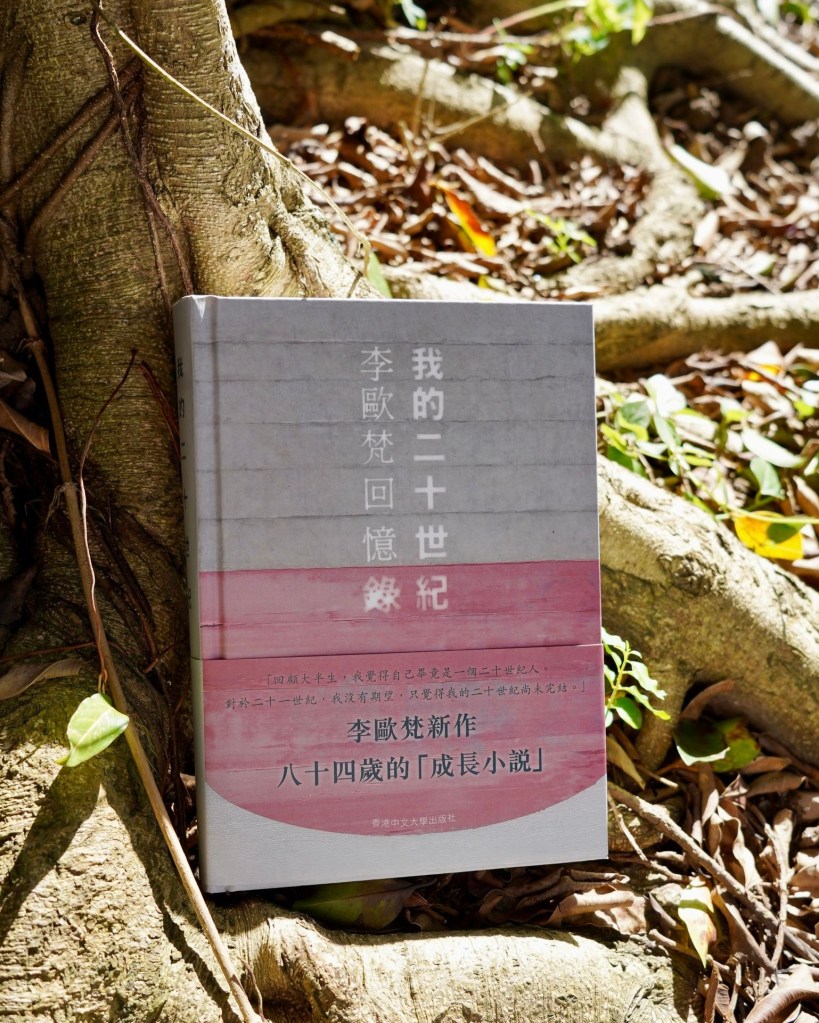
A memoir, as the word itself implies, is a personal walk down one’s memory lane “in search of the lost time” against oblivion. However, as time has already gone by,[1] how can it be retrieved? Here is my answer: write a memoir.
For me, a memoir is different to an autobiography. An autobiography usually has a temporal sequence. A conventional biography would usually develop a chronicle of one’s life. An autobiography would at least have a natural continuum. A memoir would have a freer narrative structure as it does not necessarily follow a strict temporal order. Its style may include narrative, monologues, rhetorical questions, dialogues, and other things, just like an un-edited film.
Memories are also unreliable. How can one clearly remember things that happened decades ago? However, each time I recall my memories in a cumulative process, my thoughts at the very moment would be written on top of this palimpsest of memories. Each detail seems to be “seasoned” with various flavours. The past events would reveal and conceal themselves. Sometimes they shimmer and glitter in my mind, but they mostly look like a dream. When dreams end, the morceaux of my remembrance of things past[2] will be gone too.
Speaking of this book of mine, I am setting its theme as my voyage d’études that serve to recall both how I grew up and the long journey of learning. I also connect my learning journey with my teaching experiences at six universities in the USA. I call these experiences my voyage d’études because they refer to visits to difference places, but I also want to emphasise how I learn from practical experiences. I am writing about the journey of my heart and my encounters. I am looking back at the various stages of my life—from my birth, my growth, and my ageing. I mainly write about my lived experiences instead of listing my academic achievements as in a Bildungsroman, which is a genre in German literature. In the second part of this book called “Dialogues”, Cheung Lik-kwan will introduce my reflections upon this learning, thinking and reading journey.
I was born into turmoil in the horrendous yet significant year of 1939, when China declared war against Japan and the Nazi Germany attacked Poland. Both my parents were music teachers in the Xinyang Normal School in Hunan province. They got married during the Japanese bombardment and I was born one year later. I have not written about my family history except for my memories about my parents and their time. Most the chapters are about my heart’s journey based on personal experiences from which I gradually gained a sense of life.
Now I am already in my golden years. Who in their golden years would not search for their lost time? Marcel Proust wrote his multi-volume magnus opus À la recherche du temps perdu, which literally means “in search of lost time”. I am also thinking about Oscar Wilde’s De Profundis, which unreservedly revealed the author’s gay love for the young lord. Such full disclosure deeply touched me, even as a heterosexual reader. That’s what inspired me to add a chapter about my “emotional history”, or my “sentimental education” in this memoir. On my mind there are of course the Confessions of Saint Augustine and Jean-Jacques Rousseau.
What on earth have I learned from my lived experiences? The answer is: lifelong learning matters. Now in my eighties, I am still figuring out the meaning of life—I am still so far from the highest level of wisdom of what Confucius called “understanding what Heaven intended me to do” when one turns fifty and “followed with my heart what my heart desire without overstepping the line” when one turns seventy[3]. However, in the meandering journey of my voyage d’études, I had the good fortune of making a lot of friends who truly know my heart and I met plenty of world-renowned scholars. Besides, the 1960s in the USA was an era of particular significance—the struggles for civil rights for African Americans, the protests against the Vietnam War, the popularisation of marijuana, long hair, and so on. Although I did not participate or partake, I was still a very much concerned observer who would call himself a cosmopolitan. All these past events were written in this memoir.
Looking back upon my life, I still think that I am someone from the twentieth century. For the twenty-first century, I do not have much expectations. I only feel that my twentieth century has not yet ended. This memoir is the memorandum I wrote for my twentieth century in dedication to my beloved wife Esther.
29 March 2023
CONTENT PAGE
Chapter 1. Music of No Sound: My Musical Family
Chapter 2. Fleeing from the Calamity of The Anti-Japanese: Surviving the Prey of the Jaguar
Chapter 3. After the Great Separation: My Childhood in Hsinchu Taiwan
Chapter 4. University Years in Taiwan: My Literary Education and Sentimental Education
Chapter 5. Study Tours in the USA (Part I): My Ascetic Life in Chicago
Chapter 6. Study Tours in the USA (Part II): My Years in Harvard
Chapter 7. On the Other Side of the Western Shore: My European Complex
Chapter 8. My Teaching Years in the USA: A Play in Five Acts
Chapter 9. Back to Harvard: The Last Episode of My Teaching Life in the USA
Chapter 10. Between Dreams and Reality: My Teaching Experiences at CUHK
Chapter 11. Romantic Pursuits: Apologia pro vita sua
Chapter 12. The Memoir of my Twentieth Century
Dialogues: Talks with Cheung Lik-kwan about my Transcultural Research
Chapter 13. My Century, Life Experiences and Serendipitous Thinking
Chapter 14. Crossing the Boundaries of Literary and Cultural Studies
Chapter 15. The Knowledge and Emotional Genealogy of “Two Generations”
Chapter 16. Lu Xun, Modern Literature and Interdisciplinarity
Chapter 17. Comparative Literature, Counterpart Readings and Reconstitution of Humanities
Chapter 18. Cultural History, Cultural Theories and Identity Crisis
Chapter 19. World Literature, or the Truly Liberated Literary World
Chapter 20. My Impressions of Contemporary Chinese Writers
Prologue: My Hong Kong
Post-editing Prologue: Serendipity makes the story
[1] This is to reference the song “As Time Goes By” in Casablanca, one of Leo Lee’s most favorite films.
[2] This is to reference “Remembrance of Things Past”, the title of Scott Moncrieff’s English translation.
[3] The English translation of the Chinese terms such as 知天命 and 隨心而不逾規 are borrowed from Jonathan Spence’s translation in his 2008 BBC lecture “Chinese Vistas: The Confucian Ways”.
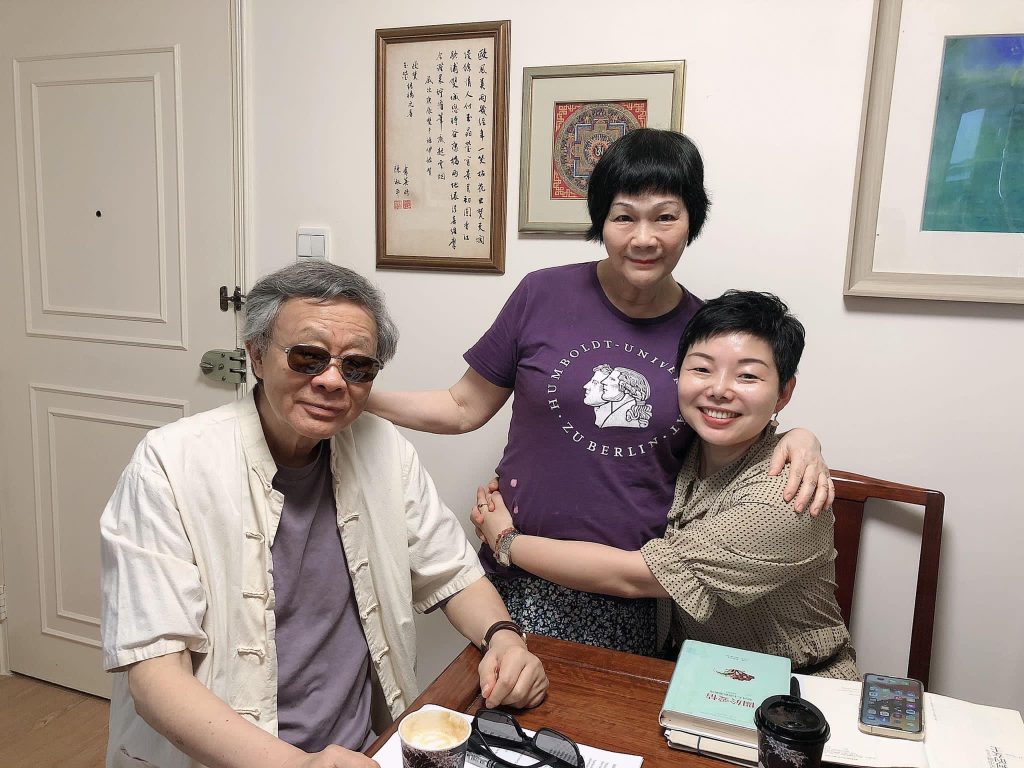
The Lee couple and Heidi Huang
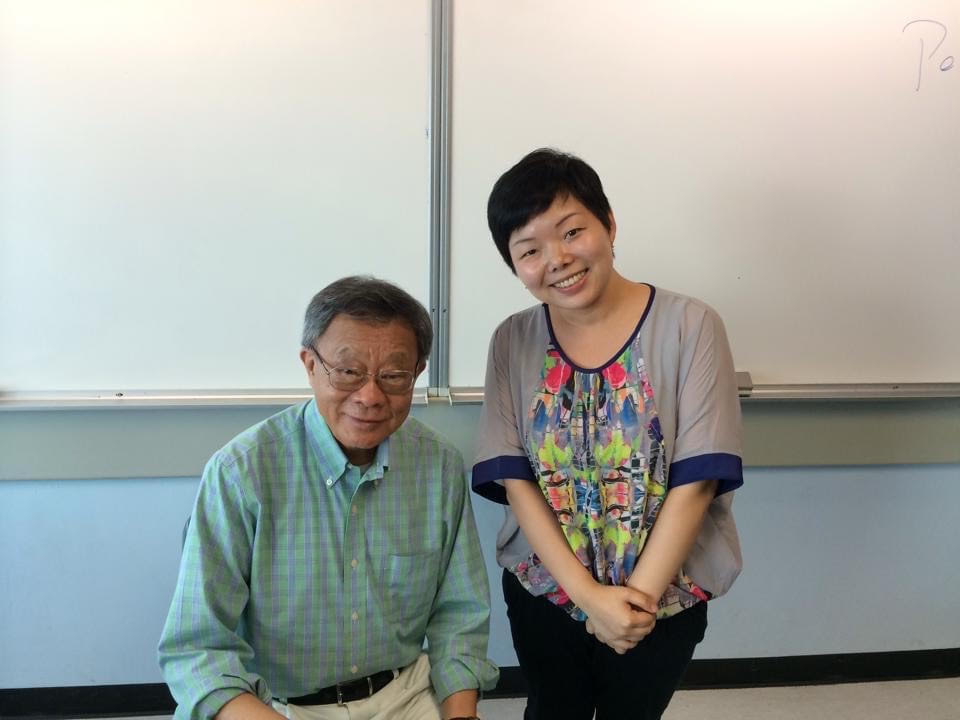
Leo Ou-fan Lee’s seminar at the Harvard Institute for World Literature held at the City University of Hong Kong, 2014
Book cover courtesy of the Chinese University of Hong Kong Press.
How to cite: Huang, Heidi and Leo Ou-Fan Lee. “Preface to My Twentieth Century: A Memoir of Leo Ou-Fan Lee.” Cha: An Asian Literary Journal, 5 Aug. 2023, chajournal.blog/2023/08/05/twentieth-century/.


Heidi Huang 黄峪 (translator) is a scholar, educator, writer, translator, editor, and coordinator for academic activities promoting Chinese culture in global dialogues. She has published more than ten English and Chinese research articles in peer-reviewed international journals. Her research interests include comparative literature, world literature, and Chinese literature and cultural in global dialogues. She has taught language, literature and culture courses in universities in France, Germany, Hong Kong, and mainland China. She was formerly associate professor of transcultural and literary studies at the School of International Studies, Sun Yat-sen University. Heidi is currently based in Hong Kong, and is a research & development manager at the Advanced Institute for Global Chinese Studies at Lingnan University. She is also the managing editor of Prism: Theory and Modern Chinese Literature.
Heidi has rich experiences translating and interpreting amongst several languages, i.e. English, Chinese (Mandarin and Cantonese), and French. She has translated and interpreted for The International Poetry Nights in Hong Kong, and some other international cultural events. Her recent translated work is 第八位中國商人與消失嘅海員/The Eighth Chinese Merchant and the Disappeared Seamen, Prof. Gregory Lee’s biographical fiction relating the life of a Cantonese immigrant in the UK (1911-1963) and the story of the forced repatriation of Chinese seamen 1945-1946 from the UK to China based on Home Office archives.
Heidi has published book and art reviews in Shanghai Review of Books, Reading Magazine (Hong Kong Joint Publishing), Mingpo Monthly, Paratext, etc.
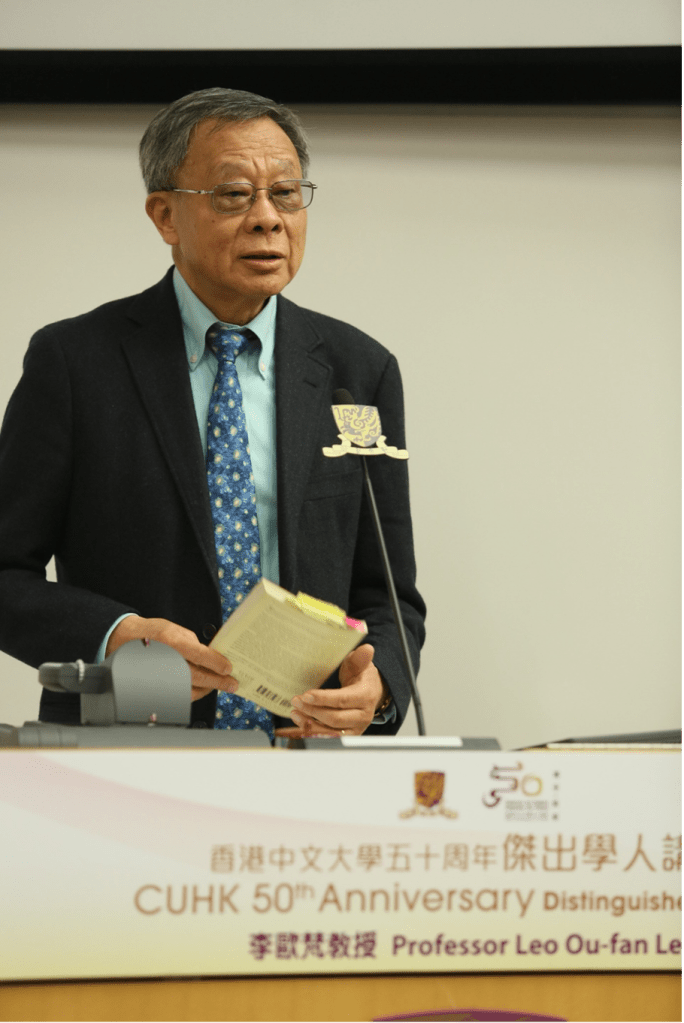
Lee Leo Ou-fan (Chinese: 李歐梵; born 10 October 1942) is a commentator and author who had published more than 30 books, including academic books and prose written in both English or Chinese. Born in China, he was brought up in Taiwan and went to the United States for graduate education where he received his Ph. D. from Harvard in 1970.
Having taught at Harvard, UCLA, Chicago, Indiana, and Princeton. He took early retirement in 2004 in order to return to Hong Kong for a second career as both an academic and a cultural critic at large, writing in both Chinese and English. He was formerly Wei Lun Professor of Humanities and a Fellow of Morningside College at the Chinese University of Hong Kong. He retired from the Chinese University of Hong Kong in 2020.
His scholarly publications in English include:
Shanghai Modern: The Flowering of a New Form of Urban Culture, 1930-1945 (Harvard University Press, 1999),
Voices from the Iron House: A Study of Lu Xun (Indiana University Press, 1987)
The Romantic Generation of Modern Chinese Writers (Harvard, 1973)
While in the United States, he received a number of fellowships and prizes, including the Guggenheim Fellowship. In Hong Kong, he has been an active writer and promoter of the cause of humanities both inside and outside the academy with a steady string of more than two dozen essay collections in Chinese. The most recent and relevant is Renwen Jinzhao 人文今朝 (Humanities Today; Hong Kong: Oxford University Press, 2010). A special book written for Hong Kong with photos is called City between Worlds: My Hong Kong (Harvard University Press, 2008).
His memoir in Chinese Wode Ershi Shiji: Li Oufan Huiyilu 我的二十世紀:李歐梵回憶錄 (My Twentieth-Century: A Memoir of Leo Lee) was published in July, 2023 by the Chinese University of Hong Kong Press.
 Cha
Cha 