
📁 RETURN TO FIRST IMPRESSIONS
📁 RETURN TO CHA REVIEW OF BOOKS AND FILMS
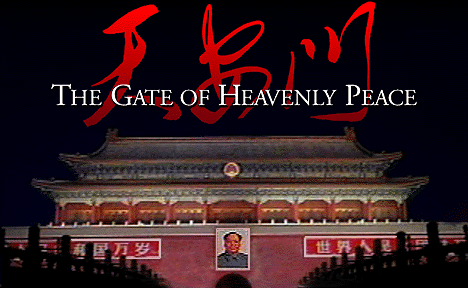
Richard Gordon and Carma Hinton (directors), The Gate of Heavenly Peace, 1995. 180 min.
i.
There was one rule in our house when I was a child back when you would record your favourite television show onto a video tape using the VCR player. Record using whatever blank tape you wanted—except for one.
On a yellowing sticker stuck to the side of the tape, my Dad had written the title: The Gate of Heavenly Peace. When I asked him what the documentary was about, he would tell me that it was one of the reasons why I had grown up in Australia and why my parents had left Hong Kong after June 4th 1989 to start afresh.
The tape was sacred. It was an act of remembrance. An attempt to commemorate and preserve a piece of history. A physical record that the events of 1989 had happened, despite attempts to erase it from our collective memory.
It wasn’t until I was in secondary school when I first sat down to watch the documentary. The tape was carefully placed into the VCR player and rewound back to its beginning. The lines of static glitching momentarily before playing images that had quickly imprinted themselves worldwide: a man standing in front of a column of tanks.
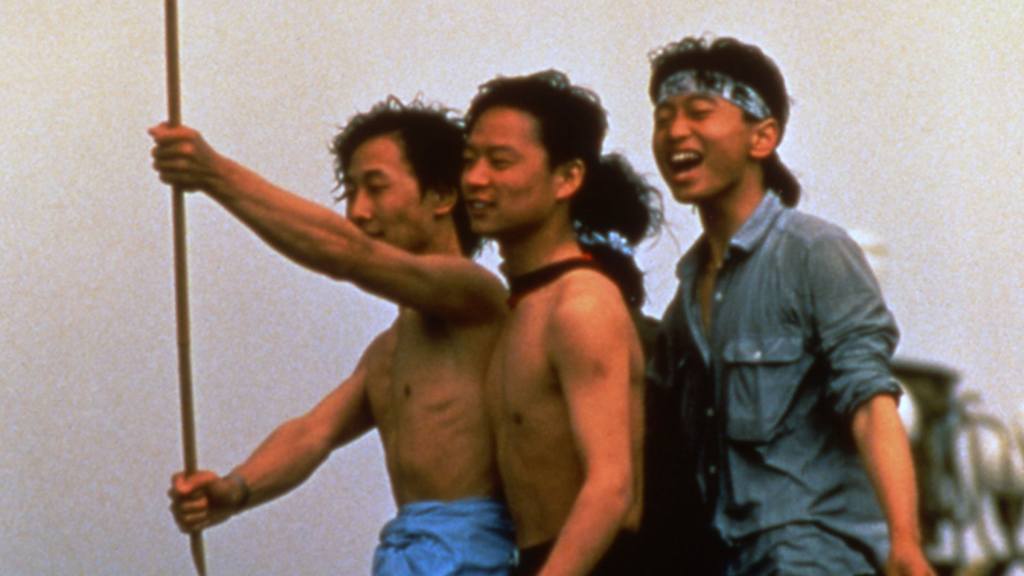
I remember my initial feelings of curiosity and emotion, quickly replaced by a gut-wrenching and overwhelming sense of shock. I watched as the grainy footage of students singing and waving flowers in the air quickly transitioned to rough, jerky movements as they ran away from gunfire and bullets. The shadow of soldiers marching against the light of burning cars and bicycles. The first-hand accounts of student leaders of that night staying with me long after the tape had finished.
Directed by Richard Gordon and Carma Hinton, The Gate of Heavenly Peace is a three-hour long documentary that explores the events leading up to the deadly night of June 3rd, 1989. The film documents how the outpouring of grief following the death of well-respected government official Hu Yaobang cumulated in a populist movement that advocated for democracy in China, ending in unimaginable tragedy.
The construction of this documentary was an arduous process. Over the course of five years, Hinton and Gordon carefully selected clips from over three hundred hours of Western news media footage. These archival clips were then combined with interviews with former student activists (now dissidents) and citizens turned observers, such as Liu Xiaobo and Wuer Kaixi. Their vivid albeit subjective recollections of the events are as important as Deborah Amos’s narration throughout the entire documentary.
Widely acclaimed, most notably in winning the 1996 George Foster Peabody Award, The Gate of Heavenly Peace does not shy away from the conflicts, tensions and differences in opinions between workers, student leaders and participants at that time. Hinton later wrote that her purpose was to “hear more from Chinese voices because… they would show a range of opinions. We felt a film could help open up people’s minds about these events. It’s not all black and white.”[1] In many ways, these interviews expose the confusion and unfamiliarity of everyday Chinese students and citizens as they explored what it meant to engage with authentic democracy during the spring of 1989.
Like much of the commentary regarding the events of June 4th, The Gate of Heavenly Peace is not without its critics. Both Hinton and Gordon were heavily criticised for their extensive use of an interview between Chai Ling and American journalist Philip Cunningham. This later resulted in lawsuit which garnered significant support from dissidents based in the Chinese diasporic community. Dissidents took offence at the documentary’s conclusion which resolved that both the Chinese Government and student leaders shared responsibility in the eventual bloodshed that occurred. Hinton (1995, as cited in Desruisseaux, 1995) later reflected on her film, stating: “when no one is willing to go on the record, we can only show their public statements and deeds”.
ii.
The Gate of Heavenly Peace was released in 1995, the same year of my birth. The film also marked the first time that I had heard about the events of June 4th narrated in English. It allowed me to access the narrative that had long been commemorated in Cantonese and Mandarin. It became an opportunity for me to participate in my own act of remembrance.
In many ways, the events of June 4th have been a motif, a recurring symbol that has reappeared at various moments in my own life.
As a child, I remember watching news clips of the crowds in Victoria Park. Thousands piling in, holding candles aloft and singing “Flowers of Freedom” 自由花 on those steamy summer evenings. My parents have tears in their eyes as they sung along.
As a teenager, I remember sitting in front of the television in Hong Kong during the Christmas of 2009 when Liu Xiaobao was sentenced for his role in drafting Charter 08 零八憲章. A muted silence cast on our extended family Christmas.
As an adult, I remember watching transfixed to the live streams provided by Apple Daily during June 2019 as I saw students, grandparents and workers on the streets of Hong Kong—streets that were so familiar to me—eventually falling asleep to the sounds of tear gas cannisters and sirens on my laptop screen.
On June 4th this year, I found myself rewatching The Gate of Heavenly Peace on Youtube. The faded VCR tape has long been disposed of.
However, thirty-four years on, I’m reminded that the very act of remembering continues to be an act of resistance—undoubtedly even more so with the recent changes in Hong Kong.
Only moments earlier, I had been scrolling on Instagram, replaying the clip of artist Samnu Chen. His voice confident as he was marched towards a waiting police van. His voice rising above the noise of the bustling crowds in Causeway Bay: “Hong Kong people, don’t be afraid. Don’t forget, tomorrow is June 4th.”
The passion and emotion in his words reminded me of the final voice we hear in The Gate of Heavenly Peace—Ding Zilin, a mother who lost her son during June 4th: “The only way to change our situation is for each one of us to make a personal effort. Every small action count.”
[1] Cited in P Desruisseaux’s “Blood in Beijing” in The Chronicle of Higher Education, 42(9): 1995.
How to cite: Chen, J. “On a Yellow Sticker: The Gate of Heavenly Peace.” Cha: An Asian Literary Journal, 4 Jul. 2023, chajournal.blog/2023/07/04/gate-of-heavenly-peace/.

J. Chen is from Sydney, Australia. He is an English teacher and second generation Hong Konger. His parents immigrated from Hong Kong after June 4th 1989. [All contributions by J. Chen.]
 Cha
Cha 