
📁 RETURN TO FIRST IMPRESSIONS
📁 RETURN TO CHA REVIEW OF BOOKS AND FILMS
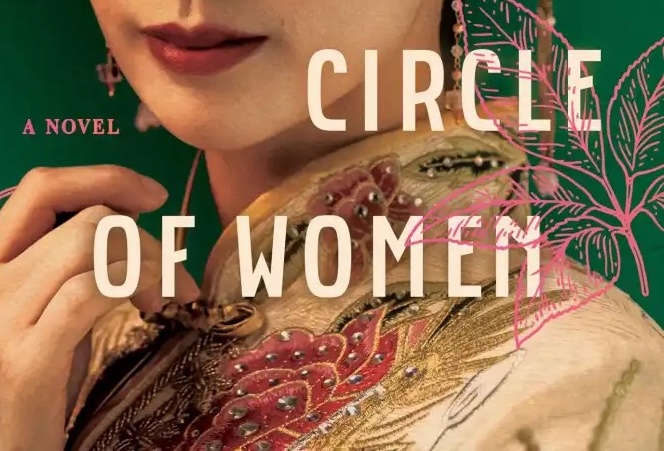
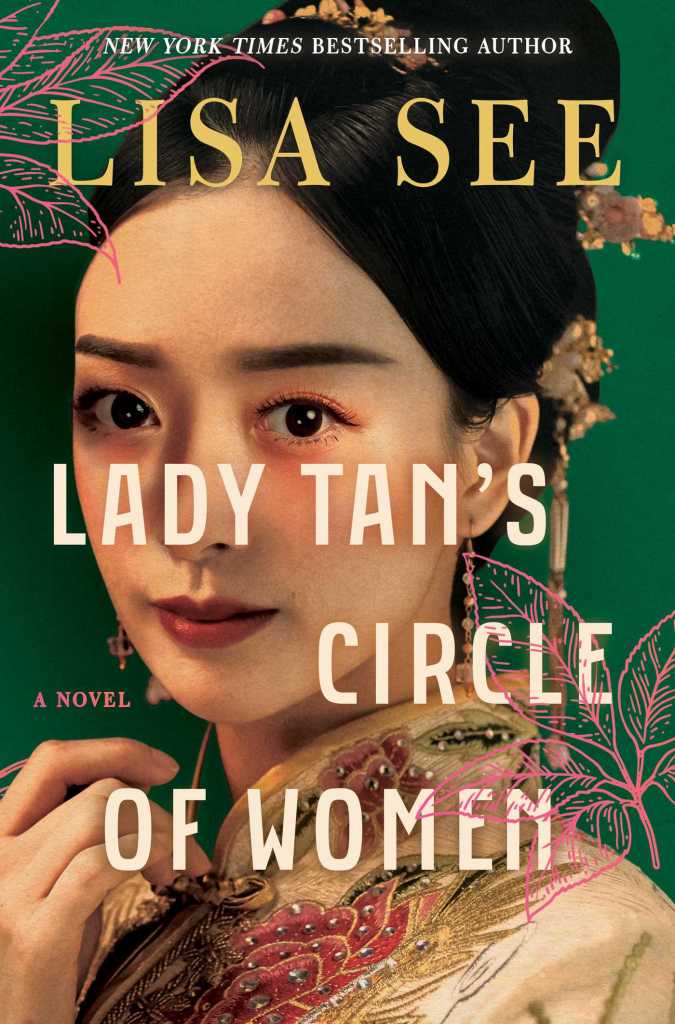
Lisa See, Lady Tan’s Circle of Women, Scribner, 2023. 368 pgs.
A thousand years in the past, a thousand years in the future—no matter where you live or how rich or poor you are—the four phases of a woman’s life are the same.
Known for her novels such as The Island of Sea Women, China Dolls, and Shanghai Girls, Lisa See further confirms her narrative prowess in her latest work, Lady Tan’s Circle of Women. Set in the vibrant era of the 15th-century Ming dynasty, the book is a fascinating historical account centred around the life of a remarkable woman doctor. See’s painstaking historical investigation forms the luminous framework of the story, resulting in a memorable heroine’s journey that lingers in the reader’s mind well after the final page.
The story revolves around Tan Yunxian, a young woman born into wealth. Yunxian understands her prescribed societal role from her formative years, navigating society’s intricate pathways with elegance and an unflinching dedication to respecting its traditions. Divided into four parts, mirroring the stages of a woman’s life—The Milk Days, The Hair-Pinning Days, The Rice-and-Salt Days, and The Sitting-Quietly Days—the story takes readers through the journey of Yunxian’s transformation.
Yunxian’s path to becoming a physician begins with tragedy when her mother, Respectful Lady, succumbs to an infection from foot binding—a savage practice to which Yunxian herself is subjected. This event sparks an interest within Yunxian regarding the human body’s complexities. Later, residing with her grandparents, both doctors, she finds guidance in her Grandmother Ru, who teaches her medicine, particularly focusing on women’s health.
During this period of transformation, Yunxian begins a multifaceted friendship with Meiling, Midwife Shi’s daughter. The two women foster a competitive bond despite their conspicuous social disparity. The advantages of Yunxian’s wealthy lineage and societal standing clash with Meiling’s predetermined role as a midwife, a profession scorned due to its association with blood. These societal discrepancies create significant obstacles in the evolution of their friendship, becoming more pronounced when Yunxian marries into the Yang family and is prohibited from associating with Meiling. Despite this separation, their mutual fondness endures, keeping readers vested in their relationship.
The book’s title, Lady Tan’s Circle of Women, appropriately represents the supportive network of women surrounding Yunxian’s life. Whether it’s her father’s concubine, Miss Zhao, her loyal maid, Poppy, her grandmother, or Meiling, these women are a continuous source of comfort during difficult times. This supportive network directly results from Yunxian’s privilege and her family’s high status. The gulf between Yunxian and Meiling widens when Meiling’s mother loses her position as a midwife.
The relationship between Yunxian and Meiling demonstrates the strain that social and status differences can impose on a friendship. The hurdles they encounter underscore the challenge of maintaining relationships amid societal norms and class hierarchies—a theme that contemporary readers can relate to, considering the influential role socio-economic status plays in shaping personal relationships today.
I will use all that my grandparents, especially my grandmother, taught me to heal women. Without fear. Without hesitation.
The bond between Yunxian and her grandmother is characterised by guidance and mutual esteem, emphasising the importance of female support and generational wisdom. This relationship accentuates the value of female mentorship, a relevant theme today when mentorship is considered critical for women’s advancement in various sectors. In contrast, Yunxian’s relationship with Miss Zhao provides a more understated examination of female relationship complexities within a patriarchal society. As her father’s concubine, Miss Zhao occupies a nuanced position of power and subservience in relation to Yunxian, further expanding the theme women’s lives within a patriarchal society.
Through her exploration of various female relationships and their struggles with gender norms and societal limitations, See crafts a narrative deeply rooted in the realities of women’s lives, both in the past and present. Her insightful examination of these themes sheds light on women’s trials throughout history and the resilience and solidarity that have helped them navigate these challenges.
As the narrative unfolds, opportunities provided by Yunxian’s grandfather and her in-laws allow her to engage in rigorous medical studies within her marital home. One of the narrative’s strengths lies in See’s ability to highlight issues that were relevant in Yunxian’s time and continue to be so today. The pressing need for the medical community to listen attentively to women and address their concerns is a theme that echoes throughout the narrative. See demonstrates how the right support can empower individuals to exceed their own expectations and that life’s adversities are more bearable when faced collectively.
You must speak if you wish to be heard.
Narrated in the first-person present tense, the novel sometimes struggles to fully immerse readers in Yunxian’s emotional world. While See excels at capturing the authenticity of the period, it isn’t always easy to connect deeply with the protagonist’s raw, inner feelings. Nonetheless, the narrative’s rich descriptions and evocative imagery make it a prime candidate for a film or TV series adaptation, where the visual medium can enhance the narrative’s resonance.
At times, the narrative becomes burdened with an excess of exposition, potentially overwhelming the reader with a flood of information. However, it’s crucial to consider that See’s readers may not have prior knowledge of certain historical Chinese phrases, and these explanations could serve as enlightening vessels of knowledge. See’s dedication to capturing the zeitgeist of the era and culture permeates the narrative, even if it occasionally results in an overabundance of detail.
Despite these minor drawbacks, Yunxian emerges as a charismatic character who displays an unwavering commitment to caring for herself and the women in her circle. She skilfully balances the societal expectations placed on her as a woman in feudal China while simultaneously pursuing her own ambitions. Lady Tan’s Circle of Women, like See’s pervious works, showcases her masterful storytelling abilities and deep understanding of complex themes. It recreates the vibrant setting of ancient China with intricate detail, enriching the narrative with a palpable sense of time and culture.
How to cite: Chan, Emma. “Vibrant Setting of Ancient China: Lisa See’s Lady Tan’s Circle of Women.” Cha: An Asian Literary Journal, 3 Jul. 2023, chajournal.blog/2023/07/03/circle.

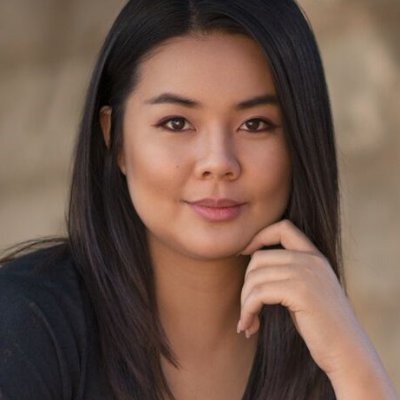
Emma Pei Yin is a Hakka-Punti Chinese writer from Hong Kong with a BA in Creative Writing from Curtin University, Australia. Her novel Chasing Echoes in the Rain was shortlisted for the Allen & Unwin + Voices from the Intersection Mentorship Programme (2022). Her works have been published in various magazines such as HerCanberra, Canto Cutie, Art View, and Aniko Press.
 Cha
Cha 