
📁 RETURN TO FIRST IMPRESSIONS
📁 RETURN TO CHA REVIEW OF BOOKS AND FILMS
Click HERE to read all entries in Cha on Identity, Home and Writing Elsewhere.
Jennifer Wong, Identity, Home and Writing Elsewhere in Contemporary Chinese Diaspora Poetry, Bloomsbury, 2023.
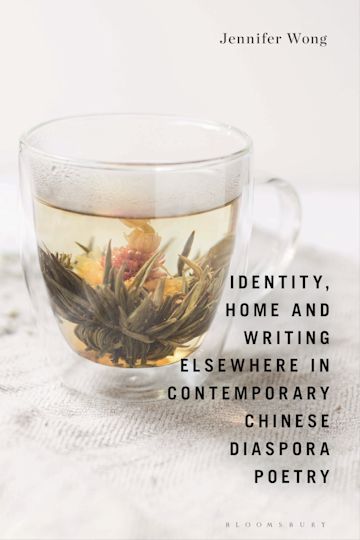
Jennifer Wong’s Identity, Home and Writing Elsewhere in Contemporary Chinese Diaspora Poetry (hereafter Elsewhere) surveys Chinese diaspora poetry, providing us with a rather fluid understanding of the complex notions of home, displacement, and identity in a world that seems to be getting smaller. The book explores the problematic nature of existing cultural labels by reading closely the works of selected diasporic Chinese poets—both established and emerging—from different racial, socio-cultural, linguistic, and gender environments, with a preface by Shirley Geok-lin Lim and interviews with some of the poets. Located within current discourse surrounding Asian poetry, postcolonial and migrant writing, Elsewhere bridges the fields of literary and cultural criticism.
Discussing the concept of “diaspora” at length, as Wong does, leads us to question what this term really means. That is, there is always a rift between “home” (ancestral or current location) and “identity”, no matter the current circumstances of the individual. Perhaps there is a kind of “sameness” of people in diaspora, but of course, expressed in different ways, often exhibiting an ambivalence about culture, language, and customs.
Although I am a long-term Australian transplant in Hong Kong, and obviously not a member of the community of Chinese diasporic poets—the subject of Elsewhere—I could not help think of myself identifying with some of the poets discussed in the book. I want to identify with Hong Kong, where I perhaps do not quite “belong”—even though I feel I “kind of” belong, despite the fact that I appear to be quite “different”. Hyphenated, like some of the poets here, I call myself an Australian-Hongkonger, a hybrid identity. But why should I (and they) worry about cultural/national identity when according to Stuart Hall (quoted in the book) there is “no utopian sense of belonging”? Why do we worry about real and imagined (ancestral) communities—with real and imagined (poetic) memories—as the poets in this volume do? Perhaps we all desire a “utopian belonging” despite what Hall postulates. In my mind, the search for a cultural/national utopia, and the failure to finding it makes for innovative and thought-provoking poetry.
My experience, I think, perhaps gives me a unique and a somewhat shared perspective on the work of the poets featured in Elsewhere. I suppose you could call it having a “diasporic mindset”. A “diasporic mindset” could be represented by problematic bodies, the prominence of colour, the constant movement or unsettlements, location, a mixing of elements of cultures into new forms. That is why I can understand why some of the poets’ break out of the so-called “standard” poetic format (whatever that is), and play around with the literary form, which is manifested in the look of the poem on the page, the unique use of punctuation and paralinguistic features as well as the focus on “diaspora” concerns such as ruminations on cultural traditions, both in the ancestral place and the new world place, as well as language, form, colour, rituals, food, and acceptance. Often these subjects/concerns are woven together, being hard to separate.
Within these contexts, some themes appear regularly in the poets’ work. Language perhaps is the most prominent. Nina Mingya Powles uses the phrase “tasting the word” and “cutting it open” to show the importance of language for bearing cultural concepts. L. Kiew, a Chinese-Malaysian poet, shifts between Hokkien, Teochew, and English and tries “suppressing the natural” use of these languages; he “swallows eating from the dictionary”, with nouns that “stick on langsat, a kilo of adjuncts, a kati of adverbs”. I believe the poet is saying that the “right words” cannot be accurately found, so only the use of a mixed combo of languages can reflect his reality. “English as an Additional Language” (EAL) a concept promoted in global language-teaching has led to the concept of “trans-languaging”, encouraging EAL learners to use their full linguistic repertoire in order to empower them. The politics of learning Chinese characters (“Saturday morning Chinese language school” mentioned by some poets) and the embarrassment of less-than-fluent ability to speak the heritage language would be overcome if we all could embrace “trans-languages”.
In Loop of Jade, Sarah Howe, another poet discussed in the book, seems to represent family history as something constantly re-imagined and re-negotiated—this history seems to be a constant “loop”, the complexity of family lineages through “intertextuality and allusions” from history according to Wong. In Loop of Jade, the poet discusses her mother’s memories, but this only serves to distance the poet from the place her mother came from. In such cases this “place” becomes mythological in nature, and becomes a touch unreal. The poet goes on pilgrimages to discover the place for herself; however, she still feels an outsider. Back to her birthplace of Hong Kong, her mixed-race identity still renders her an outsider. Mary Jean Chan says of Howe’s work that it “challenges the assumption of authenticity and expands it beyond autobiography”. In many respects, I think that poems in this book naturally fall into the realm of autobiography. In Howe’s work, and others, real (ancestral) places become “mythological”. It is difficult to enter the space of the past, but it is an attempt at least to get a foothold into this past space. Although Howe’s work is discussed at length, only a few lines of poems are given in the book; I think it would have been worthwhile to include a little more.
Cynthia Miller’s biracial international childhood is revealed in her poem “Glitch Honorifics” where “personal history, dreams, and disillusionment” of family members are connected to traditional cultural terms (i.e., “honorifics”)—illustrating the experiences of family members using “blocks of multilingual text” in a kind of familial timeline of sorts. The poet does not explain the meaning of these Chinese terms, but tells a mini story or thoughts in these blocks of the family member who comes under the term. The “glitch” (a “malfunction”) is perhaps the “me” (the poet), not quite fitting in with these cultural “honorifics”. Wong, also discusses Miller’s Poem “Homecoming”, the narrative which is spread across three columns (the poem not shown in the book), telling different us versions of what would happen, if one had never left a place. Wong does not analyse these poems at length or discusses their particular typography—which adds much significance to their meanings. In “Glitch Honorifics”—the disconnect between individuals and in “Homecoming” the “what ifs” often asked about the road that could have been taken but was not. I think how these two poems are written in “non-traditional” poetic format, is just as meaningful—if not more—than the text alone.
Food, another major poetic topic of diaspora, is seen as a sign of “exoticism”, of differences, to be often embraced, but often with ambivalence. Sean Wai Keung, for example, in “sikfan glaschu” (“eating rice in Glaschu, a city in Scotland”), gives us a sense of unsettled “Chineseness” of food which stands in for an unsettled racialised subject, one who seeks to assimilate to the city in Scotland, and the “Chineseness” that is part of his biracial heritage. This sense of feeling part of being both local and global, both of hybrid and mixed backgrounds permeates many of the poems in this volume. In Hannah Lowe’s poem “Sausages”, the poet talks about the other in terms of food rituals and exoticism. The wife in the poem watchers her husband cooking preserved sausages, yet Lowe, notes the difference between the parent’s upbringing, the father’s different origins as well as how the family is different from other families in England. We are told “Her mother told her not to marry a foreigner”—“he is like good food to her”, and the wife, remembering her mother’s ambivalence to the marriage says, “You always wanted to be different, she hissed. Now this.” Wong says of the husband, “The poet directs her gaze at the father as if he were an exotic, edible object”. And by comparing her father to food, it is an “unconscious attempt to fetishise the father”. I am not sure if this is totally the case, however. Is this always the case in “mixed marriages” though? Towards the end of the poem, Wong says, “The father takes on a more submissive role in the relationship, while mother takes on a dominant position of agency”: “Tonight they will eat sausages together /and she will lick oil and spice/ from his hands.” Could it not mean the embracing of cultural difference? Isn’t “exoticism” what many of us desire? Is it always a bad thing? I don’t think we can be certain about this in any case.
In Mary Jane Chan’s “The Importance of Tea”, asking for “normal tea” (which sounds like “normalcy” to the poet), highlights the poet’s and her partner’s awareness that “normal is contextual”—in the poem “normal tea” is Western tea. The word “normal” is placed in italics as well as the names of Western teas highlights the “foreignness and perhaps the “taken for granted-ness” of what is so-called “normal”. At the end of the poem, the categories of “normalness” are laughed off in a shared cultural “normal”.
It is obvious in the poetry in this book, that definitions and meanings are “slippery” according to Wong. Multiple meaning-making is also reflected in Natalie Linh Bolderston’s “glossary-like” poem “Middle Name with Diacritics”, in which the poet breaks down her middle name (the only part of her name reflecting her part Vietnamese identity). The poem reconfirms the narrative of the migration experience—in the misspellings, and thus mis-meanings, and disappearance of these ethnic connections: “names given up/because home did not rest easily/on unyielding tongues”.
Colour also figures prominently, perhaps understandable when “coloured”, that is, other than “white”, was considered inferior, and although time has moved on, “being different” and not mainstream still leads to marginality. The ironic use of colour in these poems seem to be acts of resistance. In “The White Jumper”, Will Harris sees the colour white as one of dominance. This reminds him of the “visibility of the other” in the very names of names of shops as he walks along the street. Marilyn Chin’s poetry collection Rhapsody in Plain Yellow suggests the ironic use of stereotypes and self-awareness to show how skin colour affects how she is seen, but that which she subverts; in the poem “Blues on Yellow”, “eggs ooze white” refers to the “influx” of migrants in the United States, migration always a contentious topic in the United States. The poem also indicates that “influxes” of culture, enriches culture and society as a whole. Chin uses repetition of colour terms, in particular the racist term “yellow” to show how there is a constant reminder of her marginality, but she refuses to act in a marginalised way, and instead turns the racist term on its head.
Wong includes a chapter on English-language poetry in Hong Kong entitled “Anglophone poetry in Hong Kong: Cosmopolitanism and a Split Identity” in Elsewhere. Hong Kong’s unique colonial/Chinese hybridity is diasporic in nature. The ever-present border with the Chinese “mainland” suggests marginality (a “secondary land”) and with Hong Kong’s change in political status, the border not only physically shifts, but the discursive space also shifts, calling into question previous notions of identity.[1] This relates particularly to revered figures such as the late Leung Ping-kwan (Ya Si) and other established Hong Kong English-language Chinese poets who were active in the 1980s and 1990s, like Louise Ho and Agnes Lam, belonging to both the Chinese and colonial worlds—this older generation of poets have a unique sense of home. There is always some dislocation.
Wong devotes a brief section on younger English-language poets in Hong Kong—in Shirley Lim’s preface she calls it a “sweeping” view—perhaps this is because they are still new on their poetic journey and have yet to build up a significant body of work to comment more in depth. I felt more could be written about them. Surely there will be more about them in the next edition of this book, but their inclusion already shows that they have had an impact on the poetic world, particularly in places like Hong Kong with a small, but thriving collection of English-language poets. I enjoyed reading about the work of the poets in Elsewhere—some of them I had not known before—not only through their poetry, but also the interviews with some of them, which are included in the appendices of the book and they provide the poets’ own reflections on their craft, which can be quite helpful. And Wong, an experienced poet herself, brings an interesting interpretation of the poems that are informed by these interviews. Elsewhere does not include the poems discussed in full, only tantalising excerpts. An excellent idea would be a companion volume containing selected poems from the poets, or in a new edition of the book to include whole poems, in the body of the text or as appendices. Then, we can ascertain more fully Jennifer Wong’s critique of them.
This volume serves as a historical document on English-language China diaspora poetry of the 20th and early 21st centuries, showing how the poets’ experimentation with poetic language serve to show how “home”, “identity” and “history” is central to human existence. Jennifer Wong seems to imply that the “mixture” of cultures and the sense of dislocation or semi-dislocation that these poets write about Makes for a richer human experience for us all. Reading this book has led me to further investigate the work of these and other poets; I am also inspired to create my own poetry befitting to my own unique “diaspora” identity in my adopted home.
[1] See my article “China Crosses the Border” and why Hong Kong is an identity issue for China” in the Mekong Review, June 2020, https://mekongreview.com/china-closes-the-border/
How to cite: Eagleton, Jennifer. “A Historical Document: Jennifer Wong’s Identity, Home and Writing Elsewhere in Contemporary Chinese Diaspora Poetry.” Cha: An Asian Literary Journal, 26 Jun. 2023, chajournal.blog/2023/06/28/identity.

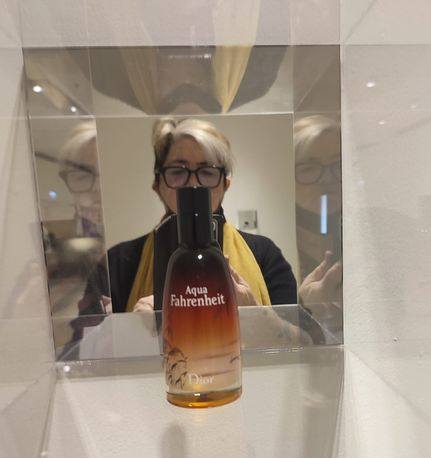
Jennifer Eagleton, a Hong Kong resident since October 1997, is a close observer of Hong Kong society and politics. She has seen it all in the city and has written about it both academically and creativity. The ups and downs of recent Hong Kong history have spurred her creative juices. [All contributions by Jennifer Eagleton.]
 Cha
Cha 