

📁 RETURN TO FIRST IMPRESSIONS
📁 RETURN TO CHA REVIEW OF BOOKS AND FILMS
Yudho Aditya (director), Pria, 2017. 22 min.
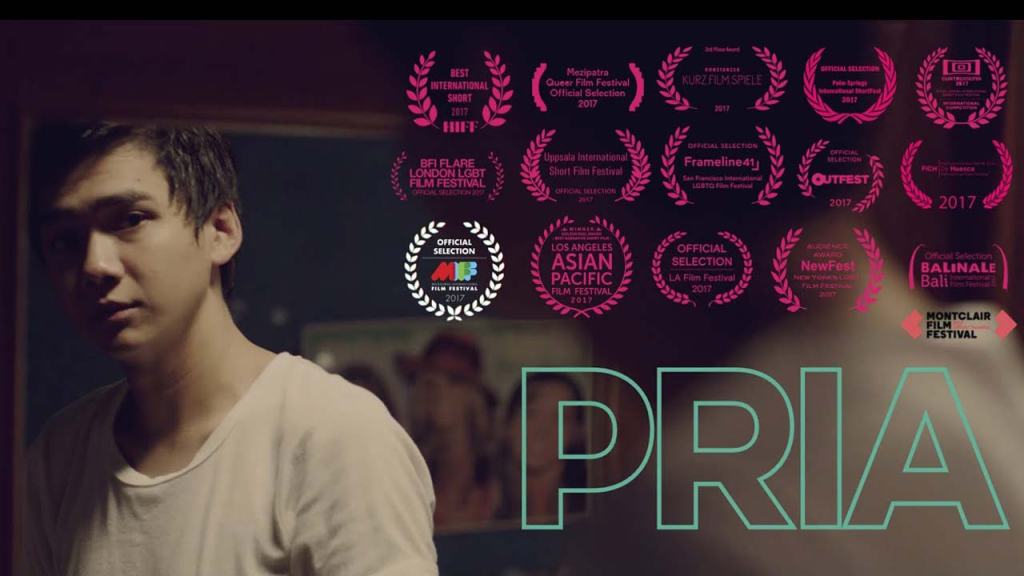
In a world where heterosexuality is still considered the norm, there remain many deterrents for LGBT people from embracing their queerness. And, even though queer identities have existed within Asian communities—be they South Asian or South-East Asian—from since long before Western queer theory was formulated, queerness continues to be viewed as a Western import. In such cases, deviance from the heterosexual norm seems to be something that must be rectified, either through wilful disregard or coercion. These very ideas form the premise of Yudho Aditya’s Pria, with its protagonist, Aris (played by Chicco Kurniawan), forced to disavow his homosexuality and enter a heterosexual marriage.
If Aris represents the conservative Indonesian world in the film, his white teacher, Peter (played by Jacob McCarthy), is associated with the West where one can apparently embrace one’s sexuality more freely. Of course, whether the West is as liberating as Aris considers it to be is open to interpretation because it is solely the protagonist’s perspective that we, as viewers, are allowed access to. Perhaps, that is the beauty of the film; it explores Aris’s dilemmas without making generalisations about what the Western and the non-Western worlds truly stand for.
Aris seems to be his authentic self around Peter—his demeanour completely changes and he exhibits joy as opposed to the anxieties that seem to surface during his interactions with his family members. However, a few material symbols in the film tie him back to Indonesian cultural orthodoxy. The first among these is a horse’s tail that Aris’s soon-to-be father-in-law uses to explain heterosexual intercourse to him. As the latter wraps the horse’s hair around his own finger to demonstrate how a marriage is consummated, one can recognise Aris’s frustration and suffocation—as if the hair were being used to strangulate him. Later, when Aris tries to express his discomfort to his mother—who is pushing him into a heterosexual union—she attempts to shovel a handful of red rice into his mouth and reassures him that it will help him feel better. Here, the red rice, which is usually associated with religious offerings in South-East Asia, is used as a tool to silence Aris. The red rice, then, much like the horse’s tail, can be perceived as something Aris is being forced to accept in order to become a person who can be considered “normal” within his society.

We realise soon enough that he wishes to be longhaired when he wears his T-shirt over his head while stroking it as though it were tresses.
As the short film progresses, Aris loses another significant aspect of his personality: his hair. Even though other male characters, including Aris’s future father-in-law, have hair the same length as his, Aris is made to shave his head in preparation for his wedding. We realise soon enough that he wishes to be longhaired when he wears his T-shirt over his head while stroking it as though it were tresses. He then goes on to dance in a carefree manner when he’s alone in his room. In the very next scene, we see chunks of hair falling on Aris’s shoulder when a barber runs an electric razor over his head. Aris sits there silently, his eyes shut. His facial expression in this scene shows that he is in great affliction; he is helpless in a society where he is not permitted to preserve what he values deeply—he is forced to forgo a part of himself and his identity.
Aris might equate the concept of freedom to the western world that Peter comes from, but the film, in its entirety, should still not be viewed as a juxtaposition between Indonesia and the West. That is because even if Peter’s character is a metaphor for Western queerness, it is just Aris who perceives him as such: Pria does not reveal to its audience what queer identities in the West are like. The need for the viewers to gain an understanding of queerness in the West stems from Aris’s constant urge to break free from the traditionalist shackles that stop him from becoming his authentic self, all connected to his Indonesian identity in some way or the other. If an alternate and better reality is to exist for him, can it be equated to Peter’s reality?
How to cite: Dandona, Upasana. “Traditionalist Material Symbols in Yudho Aditya’s Pria.” Cha: An Asian Literary Journal, 22 Jun. 2023, chajournal.blog/2023/06/22/pria/.

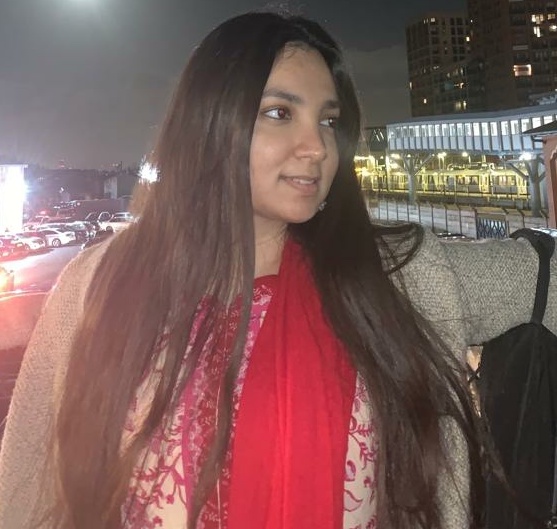
Upasana Dandona is an MA student at SOAS, University of London, where she is pursuing a degree in South Asian Area Studies. She aspires to become a novelist and hopes to be able to finish the draft she has been working on since 2020. Alongside that, she is also a pop culture enthusiast who has worked as a columnist for Women’s Web, India’s leading website for women.
 Cha
Cha 