
📁 RETURN TO FIRST IMPRESSIONS
📁 RETURN TO CHA REVIEW OF BOOKS AND FILMS
Soetsu Yanagi, The Beauty of Everyday Things, Penguin, 2018. 352 pgs.

The best book purchases are those of volumes discovered serendipitously on a shop shelf, just as the best bookshops are not those stocked with unlimited catalogues of works but those you are likely to leave with a book you were ignorant of when you walked in the door. It was in the modest bookshop of the Hong Kong Museum of Art that my eyes were drawn to a copy of the above title, a collection of essays, by the Japanese art critic Soetsu Yanagi (1899–1961). I have to admit branding played a part—the edition was from the same line of Penguin art criticism books that had previously published works by John Berger, Geoff Dyer and Marshall McLuhan. It had the same sleek white cover, with the title and author’s name in left-justified Helvetica, above a photograph of a sparse and simple Japanese tea pot.
Instantly connecting the title and the author in my head with Jun’ichirō Tanizaki’s magnificent essay In Praise of Shadows, I bought the book without hesitation. An easy sell, in other words. Probably the easiest the shop would make that day.
As is often the case, my impulse to buy the book was not matched by an impulse to read it and it sat on my shelf for a year before I finally decided to read it, finally impelled one day by a need to find something to read on the Metro before heading out the door.
There’s a sleight of hand in the title of the Penguin publication, eschewing the original Selected Essays on Japanese Folk Crafts for something more general. It’s a sneaky conceit, as everyday things will be different for people of different nationalities and different generations. Yanagi’s concern is not mass-produced items that have become so familiar in society as to be vested with an almost libidinal sacrality, but rather, their forerunners in his own country, the folk crafts of Japan. Yanagi was the father of the Japanese folk crafts movement, and coiner of the corresponding term in Japanese “mingei”. The essays collected here are written in sprightly prose, often during a period of convalescence (one details how a painted karatsu jar cheers him up after being bed-bound by diarrhoea).
If there is a criticism, it’s that the views expressed are sometimes ones we have encountered before, with his “What Is Folk Craft?” (1933) carrying more than an echo of Ruskin, and “The Japanese Perspective” (1957) inflected with nationalist and postcolonial aesthetic manifestos. Yanagi was probably absorbing those influences rather than blindly adapting them for his own ends but overfamiliarity with the arguments makes you skim these particular essays.
More rewarding are the writings on various aspects of Japanese textiles, such as the Okinawan bashofu; the fabric of woven dyed fibres, kasuri; and the kogin practice of decorative stitching. These folk crafts are not our everyday objects and are probably not those of contemporary Japan either, but there is a gentle evangelising verve to Yanagi’s prose that brings the practices to life and is as much part of their curation as the Japanese Folk Crafts Museum that the author helped establish in Tokyo in 1936.
“What Is Pattern?” is a sage collection of aphorisms that are so astute you wonder why they are not more widely anthologised. Similarly, Yanagi’s essay chronicling his discovery and championing of the 18th-century Buddhist monk and peripatetic temple sculptor Shonin Mokujiki, is a thrilling account of establishing a genealogy of a somewhat nebulous craft legacy.
Yanagi’s essays collected here span the 1920s to the 1960s, a momentous period in Japanese history, you might say. There are occasional glimpses of the rising imperial Japan—Yanagi mentions in passing a trip to occupied Korea, where he was going to help set up a folk crafts museum—but he keeps himself at one remove from politics, possibly because of a reaction to an early essay (1920), “A Letter to My Korean Friends”, in which he deplores the violent suppression of the March 1st Movement on the Korean peninsula.
This long missive is refreshingly short on the paternalistic equivocating of metropolitan liberals. “I feel the need as a Japanese to offer my apologies. I feel the need to ask God’s forgiveness. It is difficult for me to see Japan, a country blessed by the gods, looked upon on as morally wicked.” The letter was published in heavily censored form at the time but presumably disappeared from print soon afterwards. Nothing so political features elsewhere in the book and you suspect that Yanagi was either nervous at stepping out of line in an increasingly militaristic Japan or despaired at seeing his hopes expressed in the essay that Japanese people would revolt against the outrages in Korea evaporate. He does, however, repeatedly state his love and reverence for Korean arts and crafts, and the respect was reciprocated in post-war South Korea, which posthumously award Yanagi with the Order of Cultural Merit, making him the first non-Korean to receive it.
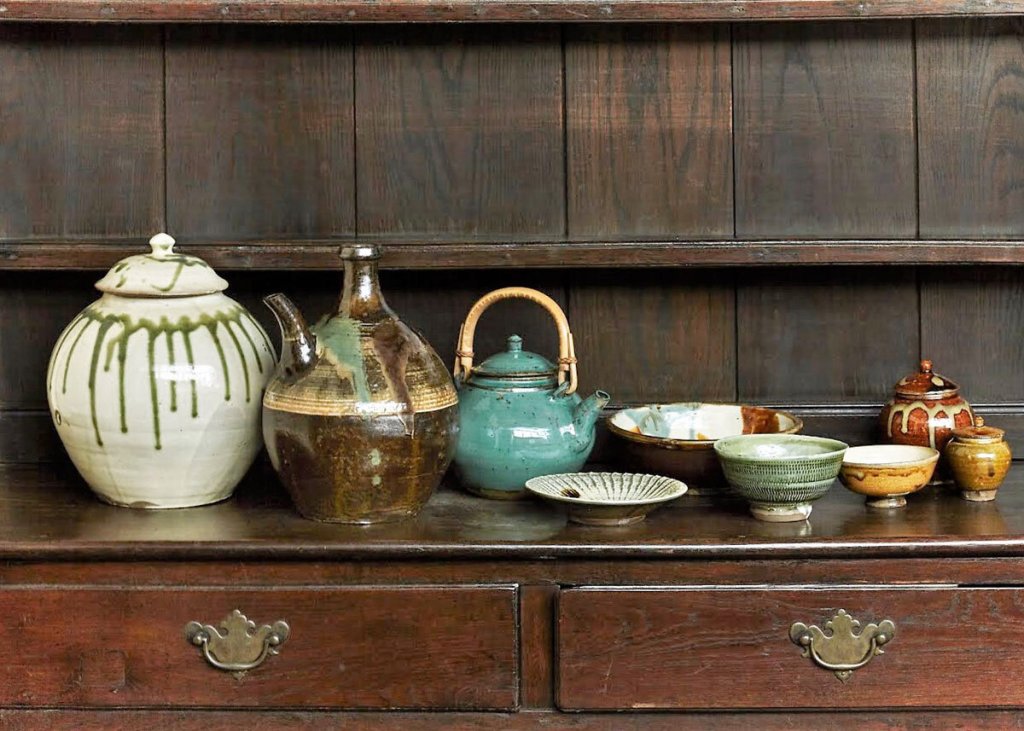
Header image © The Japan Folk Crafts Museum, Onta Ware collected by Soetsu Yanagi
How to cite: Farry, Oliver. “Craft Work: Soetsu Yanagi’s The Beauty of Everyday Things.” Cha: An Asian Literary Journal, 17 Jun. 2023, chajournal.blog/2023/06/17/everyday-things.


Oliver Farry is from Sligo, Ireland. He works as a writer, journalist, translator and photographer. His writing has appeared in The Guardian, The New Statesman, The New Republic, The Irish Times, Winter Papers, The Dublin Review, The Stinging Fly and gorse, among other publications. Visit his website for more information. [All texts by Oliver Farry.] [Oliver Farry and chajournal.blog.]
 Cha
Cha 