


In Kuala Lumpur space is on steroids. Swelling, bulging, limitless. Perhaps that’s exactly the reaction you’d expect from someone from an island city-state, where land is so limited that we constantly renegotiate our boundaries with the sea. Brandon Liew, Malaysian writer and friend, tells me in our car as we traverse another unending expressway to another one of KL’s suburbs, that sections of the city are in reality owned and operated by property developers. Some of their names have become place names: Tropicana, Sunway… (The latter’s famous for their water park, but I’m bemused to discover that Sunway also has its own university. )
We’re here to meet the family of the late Wong Phui Nam, to discuss what we want to do about his work and legacy. KL will always be, to me, Phui Nam’s city, where I first met him in 2017, after years of email correspondence. In his slightly rickety car, he insisted on driving me through the streets of KL, filling them with spectres, conjuring up visions of the past. As he got more into it, the car would slow down, and the honks behind us would intensify. A fragment of a poem of his comes to mind now, about a car journey from KL to Singapore: beetling into the obsessive shell of a parched landscape.
Even then I sensed the deep and perhaps unbearable isolation he felt, as Malaysia’s greatest poet in English, largely unrecognised by national institutions. More than once, he expressed despair at the future of Malaysian writing in English. Back from KL, I write a poem I subsequently dedicate to him: I am the last fruiting of the withered vine.
Brandon and I speak meanderingly over drinks, with his fiancé Chloe (an art historian), about Brandon’s project, provocatively titled A Wasteland of Malaysian Poetry in English. Brandon’s been recording the poetry of Malaysian poets in English for years now—some in their own voices, some in others’. The name was inspired by Phui Nam, who referenced Eliot’s seminal poem in an essay about writing in English in Malaysia, “Out of the Stony Rubbish”.
It struck Chloe and me that Brandon’s Wasteland was no simple archive, but perhaps best viewed as activist art, given how English writing in Malaysia has been situated as a ‘sectional literature’ distinct from the national literature. When the exhibition was held in KL, visitors could listen to these recordings on headphones, and participate in workshops and open mics on site. Wasteland tries to forge a community that demands to be heard. It is a clarion call for Malaysian writers in English to continue to be.
On the day of Phui Nam’s death (I saw him just two days before), I was in the Kinokuniya in the KL City Centre mall. I couldn’t find a copy of his books anywhere. I imagine his voice intoning, wryly, a prophet is not without honour, but in his own country.
How to cite: Lim, Daryl Wei Jie. “Just Another Day: Daryl Lim Wei Jie.” Cha: An Asian Literary Journal, 4 Jun. 2023, chajournal.blog/2023/06/04/daryl-lim-day.

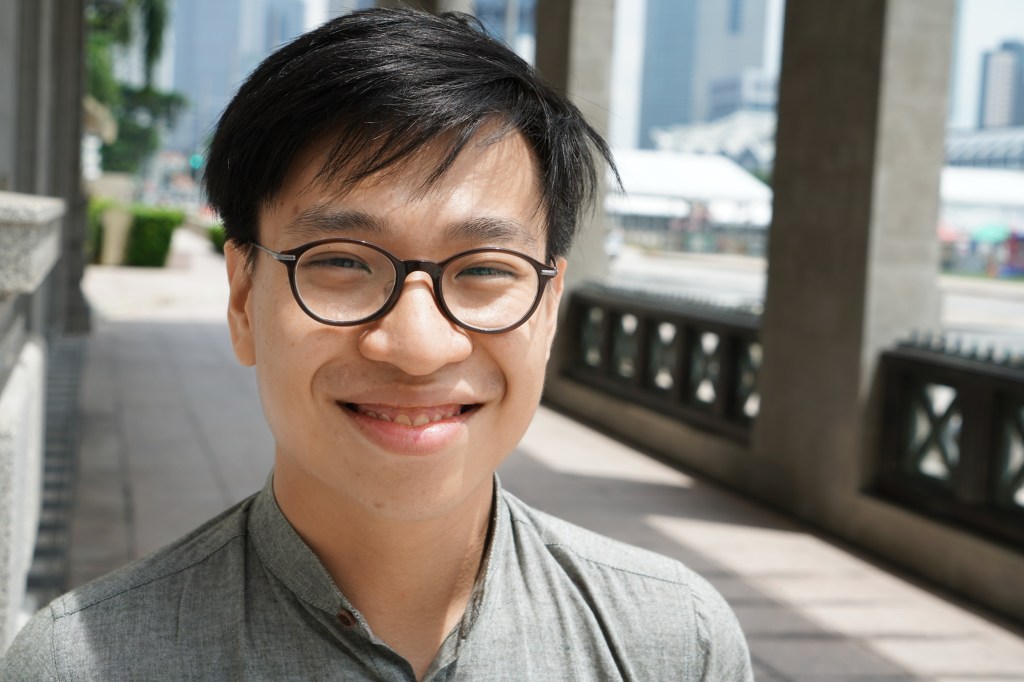
Daryl Lim Wei Jie 林伟杰 is a poet, translator and editor from Singapore. His latest collection of poetry, Anything but Human, was shortlisted for the 2022 Singapore Literature Prize. He co-edited and conceptualised Food Republic: A Singapore Literary Banquet, which received a Special Award at the Gourmand World Cookbook Awards. His latest translation is Wang Mun Kiat 黄文杰’s Short Tongue. Visit his website for more information. [Daryl Lim Wei Jie and chajournal.blog.]
 Cha
Cha 