


Never Forget, an Echo will Then Arise
In 1993, Charles S. Maier asked, “Are we suffering from too much memory?” “The fault is not with memory,” he argued, “but with our current balance of past and future. As a historian I want a decent public awareness of the past and careful reasoning about it… But I do not crave a wallowing in bathetic memory. I believe that when we turn to memory it should be to retrieve the object of memory, not just to enjoy the sweetness of melancholy.”[1]
A few months ago, the ninth anniversary of Ukraine’s Revolution of Dignity passed without much attention. This is understandable, given that everything in Ukraine has been overshadowed by the ongoing Russian invasion. Yet, the relatively modest commemoration of the 2014 revolution neither means Ukrainians have forgotten it, nor that it is unimportant. The Revolution of Dignity showed the world the courage and resilience of a democratic people, as well as the insatiable imperialist appetite of an autocratic regime. The illegal annexation of Crimea, a barbaric violation of international law allegedly aimed at “returning” a democratic region to its despotic “motherland”, foreshadowed the full-scale invasion of Ukraine eight years later. Nonetheless, against all odds, the Ukrainians have thus far succeeded in repelling wave after wave of invaders. Putin has found himself surprisingly unable to subjugate the seemingly weak and powerless Ukraine as he was able to in 2014. What has changed? Political scientists or military experts may have plenty to say on this topic. Yet to many Ukrainians, the answer is simple: “We have learned from our past.” Ukrainians spent those eight years radically reforming their military and their mentality. They mourned the martyrs of the 2014 revolution and honoured their memory. But, most importantly, they prepared for the looming aggression and looked forward toward the future.
As a Hongkonger, let me ask: are we suffering from too much memory? This seems like a horribly senseless question to ask. Unlike the Ukrainians who valorously remain independent, Hongkongers do not even have the right to commemorate a memory, light a candle, or sing a song during a day on which nothing supposedly happened thirty-four years ago. Yet despite the mounting obstacles to memory, we must remember that our duty is not just to remember. We should learn from our past in addition to remembering our past. When just another day in the year passes, when both the bitterness and sweetness of melancholy pass, we shall stop wallowing in the bathetic memory, we shall deal with the present, and we shall prepare for the future.
“Never forget, an echo will then arise; If there is light, there is hope.” (念念不忘,必有迴響,有燈就有人。)
[1] Charles S. Maier, “A Surfeit of Memory? Reflections on History, Melancholy and Denial,” History and Memory 5, no. 2 (1993): 150.
How to cite: Chow, Shue Fung. “Just Another Day: Chow Shue Fung.” Cha: An Asian Literary Journal, 4 Jun. 2023, chajournal.blog/2023/06/04/chow-shue-fung.

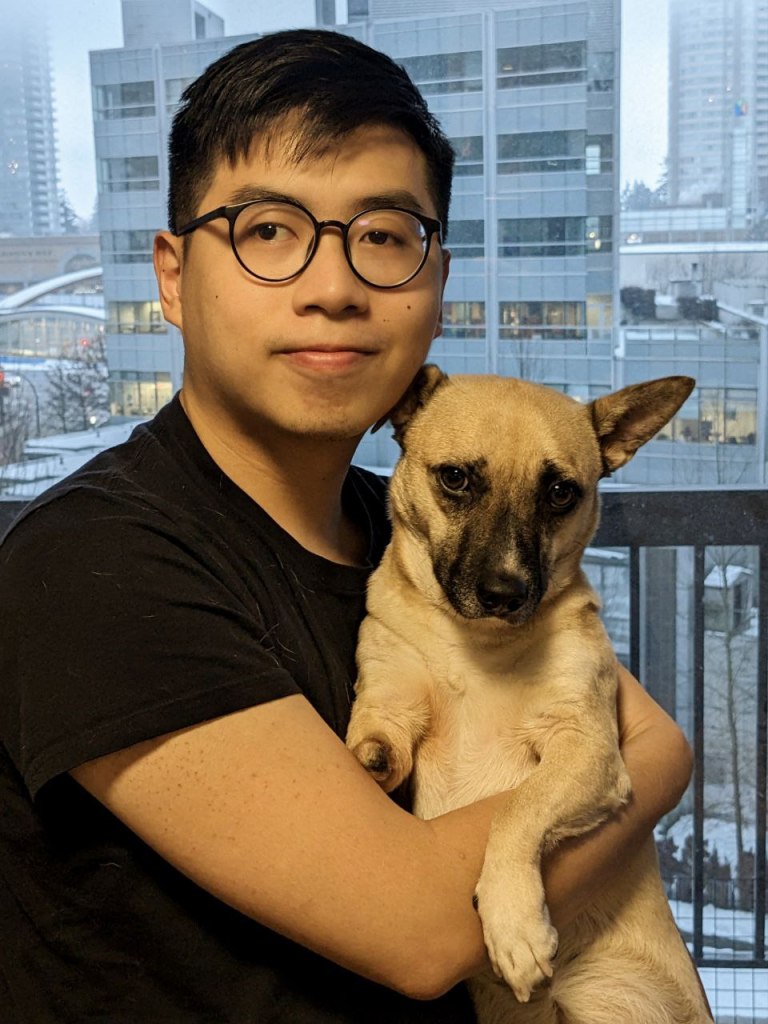
A young activist from Hong Kong, Chow Shue Fung was president of the Student Union of the Chinese University of Hong Kong and Secretary-General of a pro-democracy political party. He is currently an MA student in history at the University of British Columbia, and is focusing on modern Hong Kong history and Hong Kong’s democracy movement.
 Cha
Cha 